
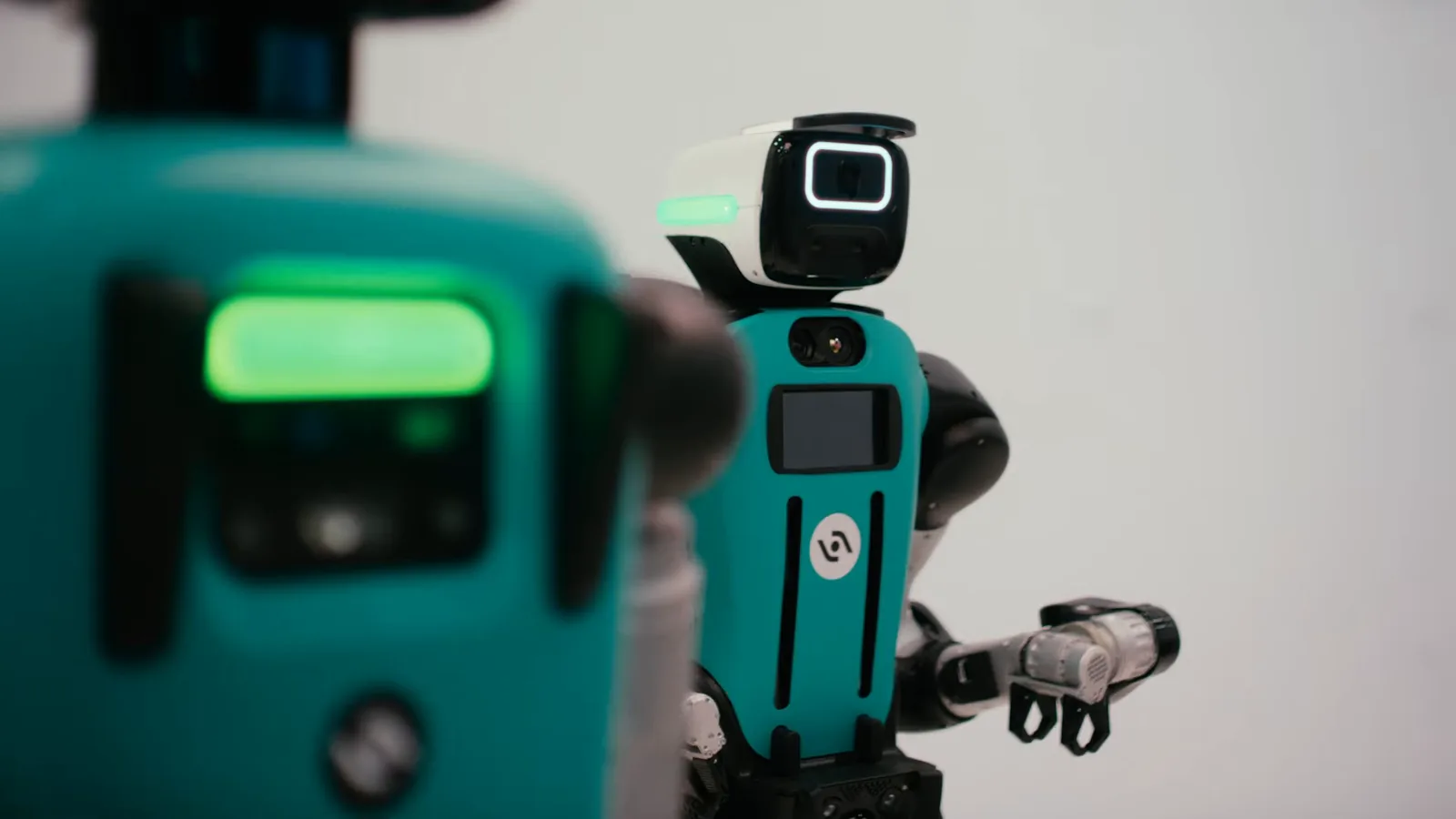
A humanoid robot capable of working for 90 minutes straight and recharging in just 9 minutes already exists, at least on paper. It is called Digit 5 and is manufactured by Agility Robotics, a company that is back in the news for an unusual reason: the self-criticism of one of its own creators.
The topic is gaining relevance now because the first deliveries to customers are scheduled for the first half of 2027, placing this robot at the center of the global race to bring humanoid robotics into real industrial environments, such as warehouses and logistics centers.
What is Digit 5 and why does its own creator compare it to a wheelbarrow?
Jonathan Hurst, co-founder of Agility Robotics, made a rare confession in the sector in an article published in IEEE Spectrum. In his own words, Digit 5 looks more like a forklift than the slender humanoid he originally imagined.
The reason is purely functional. The robot weighs over 120 kilograms and is designed to lift totes weighing up to 23 kilograms, a limit that matches the recommendation from the U.S. National Institute for Occupational Safety and Health (NIOSH) for human workers. It can also reach shelves located 1.75 meters high.
Hurst acknowledges that this weight and robustness come at a cost: Digit 5 can no longer run or jump as previous versions of the robot could. According to his explanation, every element of the design, including the human-shaped legs, responds to a specific functional need rather than an attempt to imitate the competition.
The battery, the big change for this generation
The data point that has attracted the most attention is the charging speed. Digit 5 works for about 90 minutes and needs only 9 minutes to recharge. The battery and its cooling system occupy nearly 75% of the robot's torso, and the charging connector delivers 240 amps at 48 volts.
As reported by the German magazine heise on October 19, and subsequently picked up by Humanoid Guide, Agility will equip Digit 5 with batteries manufactured by the company Nyobolt. This would allow for a shift from a work-to-recharge ratio of approximately 2 to 1 in the previous model, Digit 4, to a 10 to 1 ratio in this new version.
Calculating with the figures provided by Hurst, 90 minutes of work for every 9 minutes of charging equates to nearly 22 useful hours per day, a figure that matches the more than 20 hours promised by the company. It is worth noting, however, that this does not mean the robot operates for 20 hours straight, but rather in 90-minute shifts interspersed with 9-minute charging breaks.
Safety without physical barriers
Another relevant change compared to previous generations has to do with safety. If a person approaches Digit 5 while it is working, the robot drops the load it is carrying, sits on the floor, and cuts power to its motors before any contact can occur.
This marks an important difference compared to installations with Digit 4, where robots had to operate behind physical barriers to avoid risks. Reducing the need for fences would allow robots to share space with human workers more directly.
Regarding regulations, Digit 5 must comply with the CE marking required in Europe, the UL electrical certifications in force in the United States, and the radiation limits established by the FCC.
Mass production from Oregon
Agility Robotics has a plant called RoboFab, located in Oregon, with an area of 70,000 square feet, about 6,500 square meters. According to the company, this facility has the capacity to produce more than 10,000 units of Digit 5 per year.
The company officially unveiled the robot in a video published on September 15, 2026, on its YouTube channel, titled Introducing Digit 5. In the video's description, Agility describes the robot as a prototype, clarifying that its features and design may change and that the safety functions do not eliminate all operational risk.
What is still unknown
Most of the available figures come from the company itself or from statements by its co-founder, with no independent tests yet to confirm them. Digit 5 is not commercially available: the first deliveries will arrive in the first half of 2027 and, according to heise, wider availability would take an additional six to nine months.
It is also unknown how this pace of frequent recharging will affect the battery lifespan, a detail that specialized media such as Humanoid Guide point out the company has not yet quantified publicly.
What this implies for warehouses and logistics companies
For those who manage warehouses or industrial facilities, the underlying message is that the main obstacle for these robots is no longer just their processing capacity or artificial intelligence, but battery autonomy and operational safety.
A robot that recharges quickly and does not need physical barriers takes up less space and can be integrated more easily alongside human workers. However, these are machines weighing over 120 kilograms designed for large logistics facilities, not a solution intended for small workshops.
The task described by Hurst, moving totes from one point to another within a warehouse, is precisely the function that this type of robot will attempt to take on first in real environments.
Frequently Asked Questions
How long does Digit 5 work before recharging?
According to Agility Robotics, the robot can work for approximately 90 minutes straight before needing a recharge.
How long does it take for Digit 5 to recharge?
A full recharge takes about 9 minutes, thanks to batteries manufactured by the company Nyobolt and a connector that delivers 240 amps at 48 volts.
How much does Digit 5 weigh and what can it lift?
The robot weighs over 120 kilograms and is designed to lift totes weighing up to 23 kilograms, in addition to reaching shelves located 1.75 meters high.
Why can’t Digit 5 run or jump like previous versions?
According to its co-founder Jonathan Hurst, the increase in weight and robustness required to lift industrial loads means sacrificing capabilities such as running or jumping, which were present in previous generations of the robot.
When will Digit 5 be available?
The first deliveries to customers are scheduled for the first half of 2027, although wider availability could take an additional six to nine months, according to estimates from specialized media.
Where is Digit 5 manufactured?
It is manufactured at Agility Robotics' RoboFab plant, located in Oregon, United States, with the capacity to produce more than 10,000 units per year according to the company.