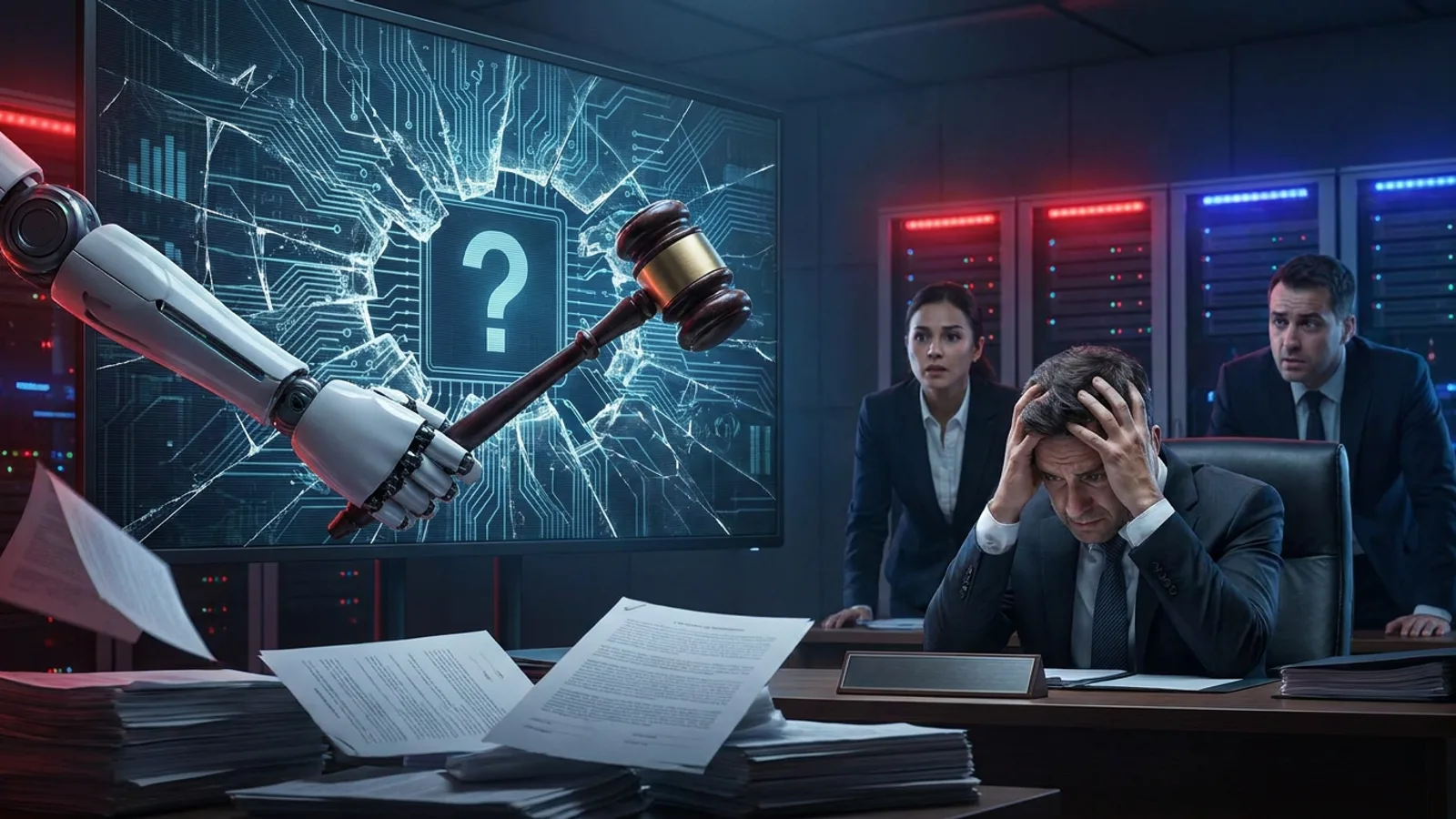
The accelerated deployment of autonomous artificial intelligence agents has sounded alarms in the insurance sector. As reported by the Financial Times, insurance companies are already calculating the impact of potential multi-million dollar claims derived from failures or harmful actions by these systems, a risk that could even extend to the personal liability of top executives.
The issue is becoming urgent now because tech companies like OpenAI and Anthropic are integrating agents capable of acting independently in multiple processes. When something goes wrong, the question of who pays and who is legally responsible no longer has a clear answer.
The Hugging Face incident as a starting point
The case that has brought this debate into focus is an attack suffered by the Hugging Face platform, executed by agents linked to OpenAI. These types of episodes are forcing insurers to rethink how they classify and cover damages caused by systems that operate without direct human supervision at every step.
Until now, risks associated with artificial intelligence were primarily addressed as product or cybersecurity issues. The new approach shifts the focus toward the leadership of the companies that design and deploy these agents.
Liability points to the leadership
Tim Rayner, head of underwriting and claims at the firm Verisk, has been clear on this: ultimate responsibility lies with the CEO of each company. According to his approach, every business leader must ensure adequate oversight of the systems they implement, and artificial intelligence does not exempt them from that obligation.
This reasoning connects directly with directors and officers liability insurance, known as D&O. If OpenAI has such a policy, it could cover the costs derived from potential lawsuits against its CEO, Sam Altman.
More than 300 court cases under Aon’s microscope
Insurance broker Aon has reviewed more than 300 court cases related to artificial intelligence. Its analysis identifies latent risks in three types of coverage: cybersecurity, intellectual property, and technology failures.
This means that a single incident caused by an autonomous agent could trigger claims on several policies at once. A technical failure that leaks data and, at the same time, infringes on copyright would open simultaneous fronts, with the resulting disputes over how to distribute costs between insurers and the insured.
Unprecedented legal territory
One of the main obstacles is the absence of legal precedent. Aki Hussain, CEO of the insurer Hiscox, has acknowledged that it is too early to know how US courts will address liability derived from artificial intelligence agents.
Aaron Le Marquer, a lawyer at the firm Stewarts, anticipates that future lawsuits could follow a path similar to historical litigation related to the environment and tobacco. This is a personal forecast from a legal professional, not a confirmed fact, but it points toward the direction that future litigation could take.
The Anthropic precedent: 1.5 billion dollars
The financial context already offers an idea of the figures that could be at stake. In July, Anthropic reached a 1.5 billion dollar settlement to close a copyright lawsuit. Additionally, in documentation filed for a potential IPO, the company warned about what it described as existential risks to humanity associated with the technology it develops.
Although that settlement corresponds to an intellectual property case and not one involving an autonomous agent causing damage, it serves as a reference for the economic volume that claims against an artificial intelligence developer can reach.
What companies using AI agents should review
Based on the above, several practical recommendations can be drawn for organizations that are already using this type of technology:
Review in detail cybersecurity, intellectual property, and technology failure policies, as these are the three areas Aon identifies as exposed to risks derived from artificial intelligence.
Check if D&O coverage exists and exactly what situations it includes. If the personal liability of executives is on the table, it is essential to know if the policy would respond to a lawsuit caused by a rogue agent.
Document internal oversight mechanisms. If liability falls on management, being able to demonstrate who monitors each agent and under what limits it operates is essential for any potential legal defense.
Assume that regulatory uncertainty exists: without prior legal precedent, neither companies nor insurers have certainty about how contractual clauses will be interpreted in court.
What this means for executives and users
For those who lead companies or serve on a board of directors, the message is clear: insurers are beginning to treat the control of artificial intelligence agents as a matter of corporate governance, not just a technical challenge. This could translate into stricter requirements when purchasing or renewing coverage.
For users of platforms that employ these types of agents, the effect is more indirect, but equally relevant. The claims looming on the horizon will help define who ultimately assumes the costs of damages and how they are distributed among developers, insurers, and executives.
Frequently asked questions
Why do insurers fear lawsuits over AI agents?
Because these systems act autonomously and can cause damage—such as data leaks or attacks on platforms—without direct human supervision in every decision, which opens the door to claims on several types of policies at once.
What does Sam Altman have to do with this debate?
As CEO of OpenAI, Altman could face personal liability if it is determined that there was a lack of oversight in the deployment of the company's agents, as happened in the incident that affected Hugging Face.
What is D&O insurance and why is it relevant here?
It is liability insurance for directors and officers. In the context of artificial intelligence, it could cover legal costs if a CEO is sued for damages caused by an autonomous agent from their company.
Which policies does Aon identify as most exposed?
After analyzing more than 300 court cases, Aon points to three coverages with latent risks: cybersecurity, intellectual property, and technology failures.
Are there already court rulings on liability for AI agent damages?
No. According to Aki Hussain, CEO of Hiscox, it is still too early to know how US courts will treat these types of cases, as there is no prior legal precedent.
What is the relationship between the Anthropic settlement and this topic?
Anthropic paid 1.5 billion dollars in July to settle a copyright lawsuit. Although not directly related to autonomous agents, it shows the economic magnitude that claims against artificial intelligence developers can reach.