
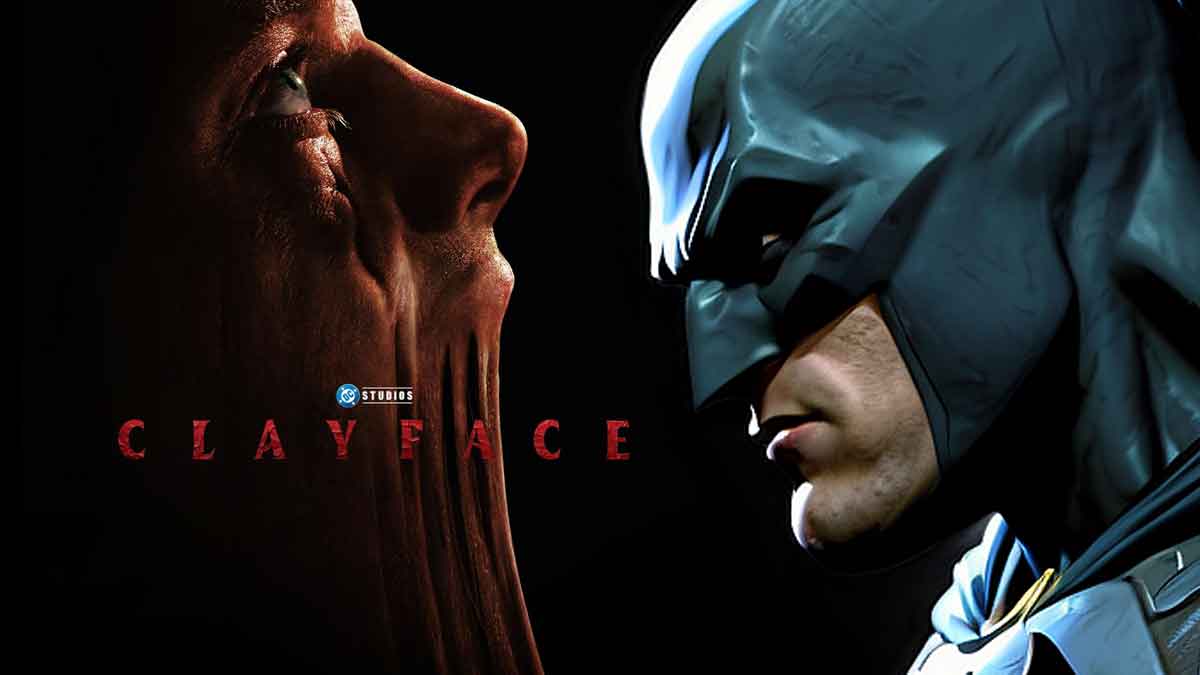
Just days before its theatrical release, Clayface has become the center of attention within the DC Studios cinematic universe, known as the DCU. The film, scheduled for release on October 23, 2026, marks the studio's first foray into body horror and has generated interest regarding the role Batman plays in its timeline, even without appearing directly on screen.
The topic is relevant now because it confirms how DC Studios is building its shared universe from different narrative angles, allowing villain stories like Matt Hagen's to coexist with the implicit existence of Batman without relying on cameos or explicit mentions.
Batman is active, according to DC Studios
DC Studios co-CEO Peter Safran spoke with the portal Collider about the Dark Knight's position within the context of Clayface. As he explained, although the character is not mentioned by name nor appears directly, his presence is already a fact within the DCU chronology.
Safran noted that they have not delved into what Batman is doing during the specific events of the film, but he remarked that the character is already operating in the city. He also recalled that a silhouette of the hero was previously shown in the animated series Creature Commandos, which suggests that the public was already aware of his activity in Gotham before this first live-action foray within that universe.
The atmosphere of Gotham as an indirect nod
Director James Watkins, responsible for titles such as Speak No Evil and The Woman in Black, explained in an interview with SFX Magazine how the visual design of the city seeks to convey Batman's vigilance without resorting to forced appearances.
Watkins detailed that the creative team analyzed street photography from the 80s and 90s, including references from the documentary Everybody Street, to capture an urban aesthetic marked by deterioration and constant threat. The goal was to build a corrupt Gotham, with dirty streets and a sense of institutional decay that, according to the filmmaker, makes the shadow of the night vigilante felt naturally.
Gore, realism, and MPA resistance
Another point highlighted by Safran was the level of body horror present in Matt Hagen's transformation into Clayface. As he recounted, the MPA rating board showed strong resistance to the film's most explicit sequences.
Despite this, the creative team managed to maintain the director's original vision. Safran recalled that from his first presentation, Watkins defended a realistic approach, with scars and surgical interventions depicted in a raw manner. As he indicated, both he and James Gunn viewed those images with difficulty, but considered that level of rawness necessary to generate empathy for the character and convey the physical suffering he endures.
Creative team and cast of Clayface
The film's screenplay was written by Mike Flanagan, known for The Haunting of Hill House, alongside Hossein Amini, screenwriter of Drive, based on an original story by Flanagan. The plot follows the downfall of Matt Hagen, an up-and-coming actor who ends up becoming a monster driven by revenge, exploring themes such as the loss of identity and the risks of scientific ambition.
The cast is led by Tom Rhys Harries in the role of Matt Hagen / Clayface, alongside Naomi Ackie, David Dencik, Max Minghella, Eddie Marsan, Nancy Carroll, and Joshua James. The production is handled by Matt Reeves, Lynn Harris, James Gunn, and Peter Safran.
Divided opinions on the absence of direct references
Safran's statements have divided part of the DC universe fan community. While some consider that the lack of explicit allusions to Batman could detract from the cohesion of the shared universe, the studio has chosen to prioritize the creative freedom of each director.
This strategy seeks to ensure that the origin stories of the villains can stand on their own, without depending on constant nods to the main heroes of the catalog.
A commitment to auteur horror within the DCU
Clayface represents an unconventional move for a superhero franchise, moving away from traditional action to delve into body horror, with noted influences from filmmakers like David Cronenberg. This proposal seeks to attract an adult audience interested in darker and more complex stories.
The film's box office performance will be decisive in evaluating the viability of future projects focused on the darker facets of DC's catalog of villains.
Frequently asked questions about Clayface and Batman in the DCU
When is Clayface released?
The film arrives in theaters worldwide on Friday, October 23, 2026.
Does Batman appear in Clayface?
Not directly, nor is he mentioned by name, but Peter Safran confirmed that the character is already active in Gotham during the events of the film.
Who directs Clayface?
The direction is handled by James Watkins, known for Speak No Evil and The Woman in Black.
Who plays Clayface in the film?
Actor Tom Rhys Harries plays Matt Hagen, the character who becomes Clayface.
Who wrote the screenplay for Clayface?
The screenplay was written by Mike Flanagan and Hossein Amini, based on an original story by Flanagan.
Why did the MPA have resistance to the film?
According to Peter Safran, the rating board showed discomfort with the scenes of body horror and gore, although the team managed to maintain the level of realism sought by the director.
