
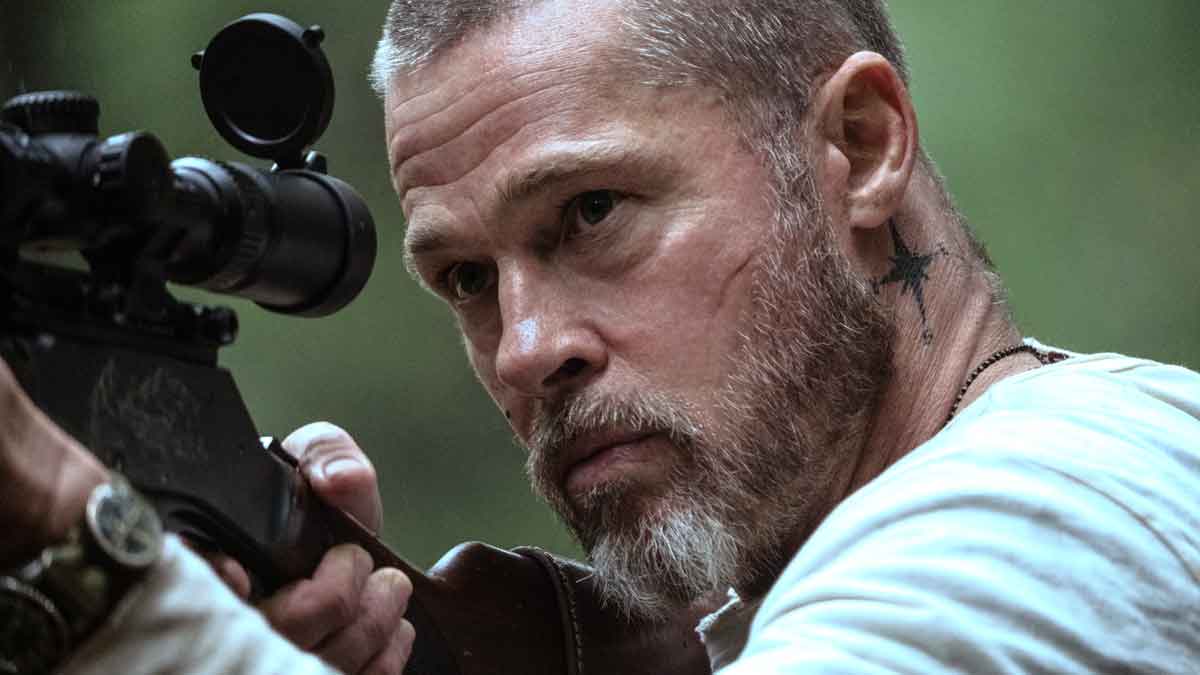
David Ayer releases Heart of the Beast, a survival film hitting theaters with Brad Pitt as its main draw. The movie, running 101 minutes, centers on the relationship between a Special Forces veteran and his military dog, arriving at a moment when adventure cinema is once again betting on intimate stories set within extreme landscapes.
The film doesn't try to reinvent the survival genre. Its mechanics are familiar, and much of what the protagonists go through follows codes typical of this kind of story. However, the real engine of the film lies elsewhere: the bond between James Belmont, played by Brad Pitt, and Odin, the German Shepherd who has shared years of service and war with him.
A Veteran and His Dog, Two Survivors of the Same War
James Belmont is a former member of the US Special Forces who, after thirty years of service, lives withdrawn from the world. His constant companion is Odin, a German Shepherd who also served alongside him in combat and carries his own scars: a prosthetic on one of his legs, physical damage from his service, and nightmares that make clear trauma isn't exclusive to humans.
The film makes it clear from the start that the relationship between the two isn't the typical owner-and-pet dynamic. They are two veterans who returned together from a war neither of them has fully left behind. James finds in Odin a silent companion; Odin finds in James the only safe place to let his guard down.
An Accident in Alaska Changes Everything
James and Odin fly in a small plane to the mountains of Alaska for a few days of fishing and quiet. During the trip they briefly meet Watkins, played by J.K. Simmons, in a short appearance that adds a bit of human contact within a deliberately solitary plot.
A storm forces them to move up their return, but the real disaster strikes when James suffers a heart attack while piloting the plane. The resulting crash leaves both of them stranded in the middle of a hostile, indifferent wilderness.
From there, James must rely on his military training to get his bearings, find a road, and cross miles of unforgiving terrain while his heart threatens to fail again. Along the way come violent rivers, cliffs, a grizzly bear, and a wolf pack, obstacles that wear down both man and animal.
Brad Pitt, Restrained and Physical, With No Need for Big Speeches
One of the film's strengths is understanding that Brad Pitt doesn't need monologues to carry the story. James is a man used to keeping his feelings to himself, so the character is built through silences, small gestures, and the way he interacts with Odin.
Pitt is convincing talking to the dog with the ease of someone who has spent years sharing his life with him. Details like the moment he removes the prosthetic to tend to his leg, or when he tries to calm him after a nightmare, add more to the relationship than any wartime flashback could.
The film also avoids turning Odin into a mere emotional device. The dog protects James, tries to help him during the heart attack, and makes decisions of his own, reinforcing the sense that these are two companions trying to make it through together, not a man saving his pet.
David Ayer Moves Away From His Harsher Style
David Ayer has built much of his career around male characters in extreme situations, with titles like End of Watch or Fury. In Heart of the Beast he uses some of those same ingredients, but steers them toward more vulnerable territory.
James's heart condition makes him physically fragile from the start, while Odin's condition adds a constant source of worry. Ayer builds tension around their mutual need for one another, so that every injury readjusts the balance between the two protagonists.
Nature is also never framed as an enemy to defeat, but rather as an environment that is beautiful and dangerous at once. Mauro Fiore's cinematography makes the most of New Zealand's landscapes, used to stand in for Alaska, creating both contemplative moments and an uncomfortable sense of isolation.
An Emotion That Feels Earned
A story about a lonely veteran and his dog has every tool needed to hit the right emotional buttons, and the film doesn't hide the fact that this is exactly what it's aiming for. There's music, glances, and sacrifices designed to build concern for Odin right from the start.
However, that emotion doesn't feel artificial, because Ayer spends a good part of the runtime building the relationship between the protagonists before asking the audience for an emotional response. Anyone with a dog will recognize gestures and looks from Odin that make it even harder to keep an emotional distance from the story.
The Film’s Weak Points
The film's structure is fairly predictable: once James and Odin become trapped, it's easy to anticipate that each stretch of the journey will introduce a new danger. Some of the animal encounters rely on digital effects that don't always match the credibility of the natural setting, especially in the scenes with the wolves.
There are also moments where Odin is overly humanized, particularly in the very explicit depiction of his nightmares. The final stretch also requires accepting a fairly convenient plot turn for the resolution.
A Story About Loneliness and Companionship
Beneath the survival adventure lies a simple story about loneliness, trauma, and the kind of bond in which two beings end up being the only possible home for each other. The military flashbacks provide context, but they aren't essential to understanding what James and Odin mean to one another.
David Ayer could have chosen a survival adventure focused solely on Brad Pitt against nature, but instead he builds a story in which the real conflict is the possibility of losing the only companion who has stayed by the protagonist's side after everything else has been lost.
Conclusion
Heart of the Beast doesn't reinvent survival cinema, nor does it try to. Anyone who has seen enough films about characters lost in the wilderness will recognize much of its mechanics and anticipate some of its obstacles.
Even so, Brad Pitt carries the film with a restrained, physical performance, David Ayer maintains a solid pace throughout its 101-minute runtime, and Odin manages to work as a real character rather than a mere device for tears. The result is a film that moves audiences more than expected, especially for those who have a dog.
Frequently Asked Questions
Who directs Heart of the Beast?
The film is directed by David Ayer, with a screenplay by Cameron Alexander.
Who stars alongside Brad Pitt in the film?
The cast includes Brad Pitt as James Belmont, J.K. Simmons as Watkins, and Anna Lambe, along with Odin, the military dog who accompanies the protagonist.
What is Heart of the Beast about?
James Belmont, a Special Forces veteran, travels with his military dog Odin to the mountains of Alaska. After suffering a heart attack while piloting his plane, the two become trapped in the wilderness and must rely on each other to survive.
How long is the film?
The film runs 101 minutes.
Where were the Alaska landscapes filmed?
Although the story takes place in Alaska, the landscapes were filmed in New Zealand, with cinematography by Mauro Fiore.
Is this a good movie for dog owners?
Yes, although the review notes that the scenes centered on Odin can be especially emotional for those who live with a dog.
