
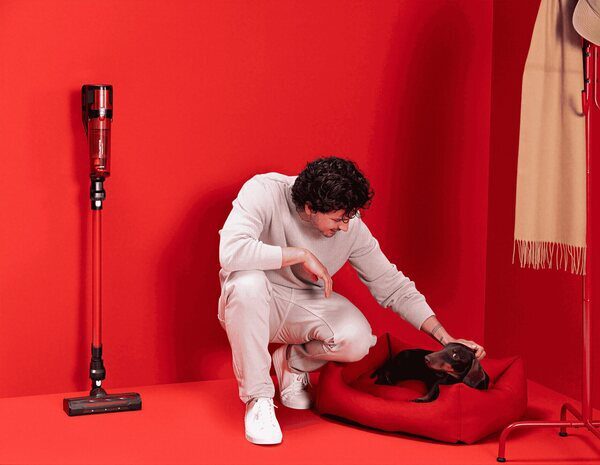
Anyone who lives with a dog or a cat knows the feeling: you vacuum in the morning and, hours later, hair is covering the sofa, the rug, and the corners of the house again. It is not a lack of consistency in cleaning. The problem has a more technical explanation, related to the very nature of animal hair and the limitations of conventional equipment.
With the arrival of Black Friday, many households take advantage of the sales to upgrade their vacuum cleaner. Understanding which features make the difference when there are pets at home can prevent an unhelpful purchase.
Hair does not behave like dust
A standard vacuum cleaner works well with dust, crumbs, or sand, but pet hair follows a different logic. It is fine, adheres to fabrics, and tends to get tangled in brushes and rollers easily.
It also does not just stay on the floor. It embeds itself in carpets, hides between sofa cushions, and accumulates in corners and baseboards. With a conventional device, it is usually necessary to go over the same area several times, and the brush ends up getting clogged frequently.
Added to this is another drawback: as the bin fills up, the suction power decreases significantly, just when it is needed most.
Which specifications make the difference
Real suction power
It is not enough to just look at the watts. The determining factor is the overall efficiency of the system: the airflow design, the aerodynamics of the head, and, above all, the ability to maintain stable suction even as the bin fills with lint.
Brushes designed for animal hair
Rollers specifically designed for pets incorporate anti-tangle systems or rubber bristles that trap hair without getting blocked. This avoids having to disassemble the accessory every few days to clean it by hand.
Motorized mini-brushes are also useful for removing hair embedded in upholstery, mattresses, stairs, or car seats.
Simple maintenance and filtration
A bin that empties easily, without the need to touch the dirt directly, and quick-access washable filters simplify daily use of the device.
If the model includes a HEPA filter, capable of retaining microscopic particles such as animal dander, the air quality in the home improves noticeably, which is relevant for people with allergies.
The noise factor
Many dogs and cats are scared by the sound of the vacuum cleaner. Opting for a quieter model can reduce the animal's stress during cleaning.
Cordless vacuum cleaners, an option for everyday life
With Black Friday promotions in mind, cordless vacuum cleaners are gaining appeal for those who live with pets and need to remove hair frequently.
In addition to eliminating the hassle of the cord, they allow you to pick up in seconds the hair that the dog leaves in the hallway or that the cat accumulates on the sofa, and they facilitate access to stairs and narrow corners.
Living with animals does not mean resigning yourself to finding hair in every corner. A vacuum cleaner with good suction power, specialized brushes, simple maintenance, and adequate battery life significantly reduces the time spent on daily cleaning.
If you decide to take advantage of the offers during these dates, it is worth remembering that the best purchase is not the one that advertises the biggest discount, but the one that best fits the real needs of the home.
Frequently asked questions
Why is pet hair harder to vacuum than dust?
Because it is fine, adheres to fabrics, and gets tangled easily in brushes, unlike dust or crumbs that conventional vacuum cleaners pick up without a problem.
What should I look for before buying a vacuum cleaner for pets?
The real suction power, the design of the brushes (preferably anti-tangle), the ease of emptying the bin, the presence of a HEPA filter, and the noise level of the device.
What is a HEPA filter used for in these cases?
It retains microscopic particles, such as animal dander, and improves indoor air quality, which is especially useful in homes with allergies.
Are cordless vacuum cleaners suitable for homes with pets?
Yes, they are useful for picking up hair quickly and frequently, and they make it easier to access stairs, corners, and upholstery without depending on a nearby outlet.
Why does the vacuum cleaner lose power as I use the bin?
Because as it fills with lint and hair, the airflow is reduced and the suction drops, an effect that is more pronounced in conventional models than in those specifically designed for pets.