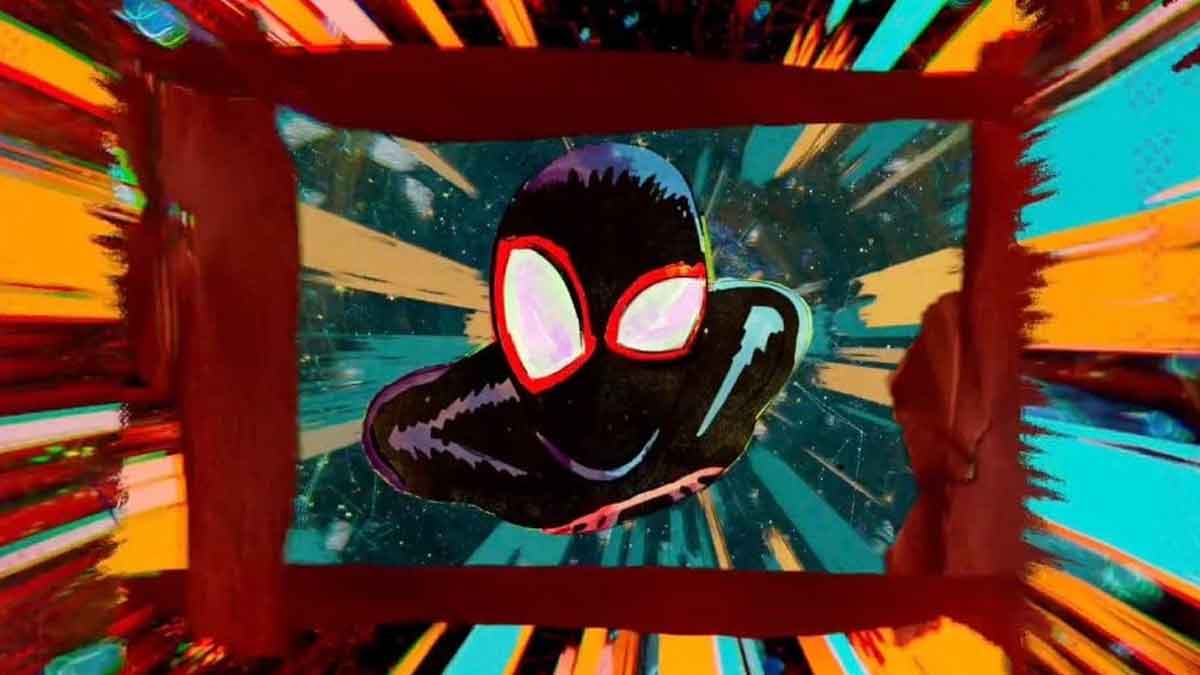
The conclusion of the Miles Morales animated trilogy continues to generate anticipation, and now for a very specific reason: its creators have revealed that Spider-Man: Beyond the Spider-Verse will incorporate visual techniques that break away from what has been seen so far in animation, even within its own saga.
The details come directly from Phil Lord and Christopher Miller, the franchise's masterminds, who participated in a conversation for The Town with Matthew Belloni podcast. The talk was recorded in front of students at the University of Southern California's School of Cinematic Arts, where both filmmakers offered clues about how the production is evolving.
The interest in the announcement lies not only in the aesthetics of the characters or the settings, but in something deeper: the way the film's images themselves are being constructed and filmed.
A return to multiplane animation, but with digital tools
As Christopher Miller explained, the visual style they are developing for this third installment moves away from the usual conventions of 3D animation. The result, in his words, is much closer to what is known as 2D multiplane animation.
This technique is not new. Its roots go back to the first great experiments of classic animation, especially during the golden age of Disney. It consists of organizing different visual elements into several layers placed at different depths, so that when the camera moves, each layer shifts at a different speed. The result is a sense of depth achieved without the need to model everything in three dimensions.
What is striking is that Beyond the Spider-Verse will recover that visual philosophy, but apply it using current digital tools. This could lead to settings and characters with the appearance of two-dimensional illustrations, yet endowed with a depth rarely seen in computer-generated productions.
For now, Lord and Miller have explained the procedure, but have not shown definitive images that would allow us to see how this technique translates on screen.
From Into the Spider-Verse to an even riskier proposal
To understand the scale of this endeavor, it is worth remembering the franchise's journey. Spider-Man: Into the Spider-Verse surprised audiences in 2018 by mixing digital animation with techniques typical of printed comics: color dots, drawn lines, and graphic effects that made each frame look like it was pulled from a comic book panel.
Spider-Man: Across the Spider-Verse took that idea further, giving each reality its own artistic identity. Gwen Stacy's universe was built like a constantly transforming watercolor, while Spider-Punk's world was inspired by a collage of cutouts and photocopies.
With that precedent, choosing to repeat the formula for the third film would have been the easy path. Lord and Miller, however, have decided to make the creative process even more complex.
Real cameras for an animated film
The second major innovation has to do with the camera work. The directors have revealed that they are using a cinematography system inspired by live-action filming, rather than relying solely on digitally programmed movements.
In practice, this means having operators who handle virtual cameras and replicate physical movements within the digital environments, as if they were filming on a real set. The goal is to achieve a feel closer to handheld camera work, common in live-action productions.
The potential for action sequences is evident. A chase between dimensions could convey a different energy than what has been seen so far, while more intimate moments could benefit from less artificial camera movements, closer to the language of traditional cinema.
Cinematographer Alice Brooks, known for her work on Wicked, is participating in this process. According to those responsible for the project, the results obtained with this new camera system are exceeding initial expectations.
Why the wait might be worth it
These revelations also partly explain why the production of the third film is taking so long. Making an animated film is already a complex process in itself. Simultaneously reinventing tools, visual techniques, and filming procedures multiplies that difficulty.
Added to this is the narrative pressure. Spider-Man: Across the Spider-Verse ended with Miles Morales trapped in an alternate reality, facing a version of himself that had made very different choices. Meanwhile, Gwen Stacy began gathering allies to try to rescue him.
Beyond the Spider-Verse will have to resolve that cliffhanger and satisfactorily close one of the most original superhero trilogies in recent cinema. The two previous installments raised the visual and narrative bar so high that matching them would already be a considerable achievement.
The interesting thing is that Lord and Miller do not seem to be looking for just a bigger adventure, but for new ways to tell it. We will have to wait for the premiere to see if these innovations work on screen, because technology, no matter how striking, does not replace a well-constructed story.
Spider-Man: Beyond the Spider-Verse will hit theaters on June 18, 2027.
Frequently asked questions
What is 2D multiplane animation?
It is an animation technique that distributes visual elements into different layers with varying levels of depth, so that when the camera moves, each layer shifts at a different speed, creating a sense of depth without resorting to three-dimensional models.
Who is directing Spider-Man: Beyond the Spider-Verse?
The film is being helmed by Phil Lord and Christopher Miller, who were also responsible for the two previous installments of the animated Spider-Man saga.
When is Spider-Man: Beyond the Spider-Verse released?
Its confirmed release date is June 18, 2027.
What camera innovation will be used in the film?
A system of virtual cameras operated by individuals who replicate physical movements within digital environments, mimicking live-action filming to achieve a handheld camera feel.
How does Spider-Man: Across the Spider-Verse end?
The film leaves Miles Morales trapped in an alternate reality, facing a different version of himself, while Gwen Stacy seeks allies to rescue him, a conflict that Beyond the Spider-Verse must resolve.
Who is the project’s cinematographer?
Alice Brooks, known for her work on Wicked, is participating in the development of the film's new cinematography system.