
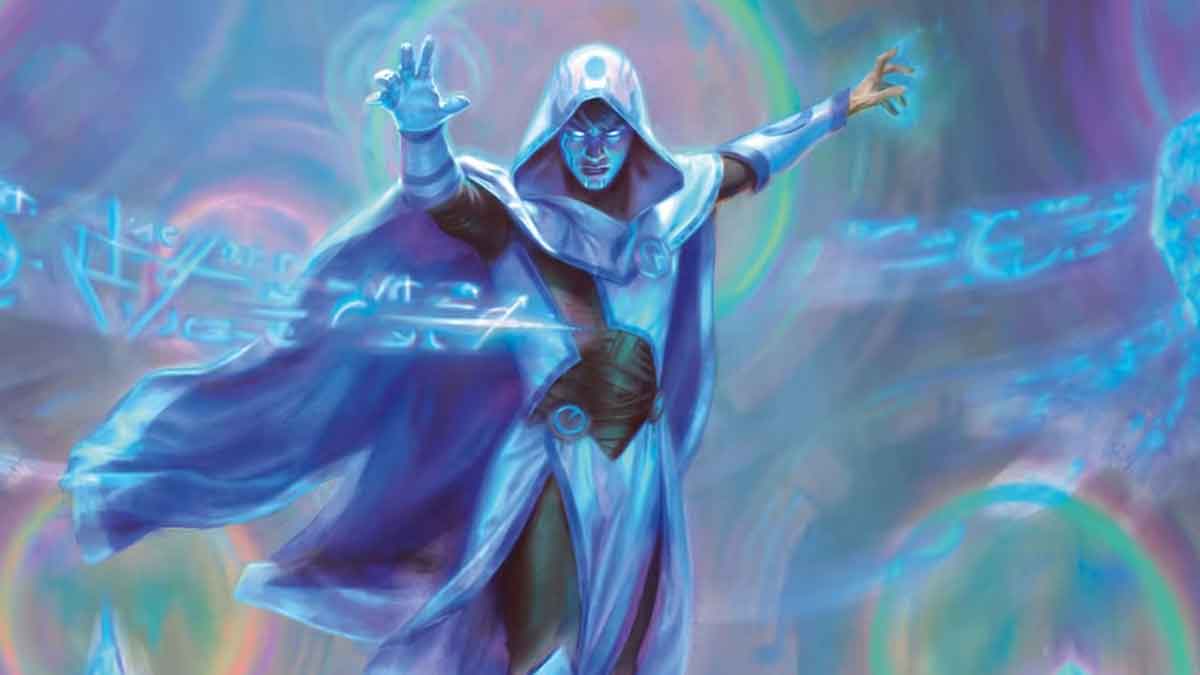
Magic: The Gathering adds a new standalone expansion at a time when much of the game's conversation revolves around Universes Beyond crossovers. Fractured Reality arrives precisely to remind us that the original Multiverse still has stories capable of surprising us, and it does so through an idea that could have sounded repetitive: an alternate reality where the usual heroes and villains made different choices.
The expansion, signed by Wizards of the Coast, turns that premise into the so-called Echoverse, a world created by the planeswalker Jace Beleren as a response to years of wars, invasions, and losses that marked those around him. The result is a collection that combines narrative, new mechanics, and a notable number of cards usable in formats like Commander and Limited.
Jace attempts to erase suffering and creates a different Multiverse
The starting point of Fractured Reality does not present the Echoverse as just another alternate dimension. Jace Beleren, after going through conflicts with Eldrazi and Phyrexians, concludes that much of the Multiverse's pain comes from the tragedies that marked its inhabitants. His solution consists of building a reality where those wounds never occurred.
The problem is that eliminating suffering also erases the experiences that made many characters who they are. The expansion plays with that paradox, showing that an apparently better life does not always produce better versions of those same people.
Ajani, for example, never processes his brother's death in the same way and ends up being a more vengeful figure. Chandra follows another path and ends up working for the Consulate. Liliana manages to save her brother and never embarks on the journey that led her to necromancy. Jiang Yanggu also changes significantly, as do other characters from Magic's classic lore.
Echoed Pairs, the mechanical and narrative heart of the expansion
The great success of Fractured Reality is transferring that premise directly to the experience of opening packs. The so-called Echoed Pairs present characters from the traditional Multiverse alongside their versions born in the Echoverse, and that structure provides a narrative component that is usually lost when one only looks for the rare or mythic of the moment.
Garruk is one of the clearest examples. Garruk, Veiled Butcher turns him into a black planeswalker focused on sacrifice and discard, while Garruk, Curse Breaker returns to a more recognizable green identity, oriented toward large creatures and Beast generation.
Something similar happens with Vraska. Vraska, Soul of Stone moves away from her usual combinations to become a piece focused on artifacts, while Vraska, the Cutting Glare offers a deathtouch body capable of eliminating rival permanents.
What is relevant is not just that different versions exist, but that they play differently. The composition of Play Boosters reinforces this idea by reserving specific slots for cards linked to these pairs, in addition to the usual rare or mythic.
Commander receives useful cards at all rarities
Commander is probably the format where the distribution of interesting cards throughout the entire collection is best appreciated. Beyond the most eye-catching pieces, several commons and uncommons can fit directly into already built decks.
Flickering Hound, a variant of Displacer Kitten, allows you to temporarily exile your own creature each time another creature spell is cast. Tetsuko Umezawa, Fugitive returns with a simple but useful ability for small creature decks, while Rescue Girl, First Responder provides interesting possibilities alongside finality counters. Something Worth Saving, at a less flashy rarity, combines automill, card recovery, and life gain.
Empower Jace, Heartwood, and Prepare: variety without saturation
The expansion introduces three main mechanical ideas. Empower Jace allows you to create and strengthen Jace planeswalker tokens, adding loyalty counters and abilities that can turn that initial token into an advantage engine.
Heartwood tokens are red and green artifacts that produce mana of either of those colors, but they can also be integrated into artifact or sacrifice strategies, as shown by Tenured Tethermage. For its part, Prepare recovers a mechanic that allows you to associate abilities with certain creatures to cast them later, providing flexibility without overly complicating the rules.
Limited rewards reading the table over the bomb
In Draft and Sealed, two-color archetypes are sufficiently defined without locking the player into a single path from the first picks. Cards like Bloombrute, Saheeli, Jewel of Avishkar, Warrior's Blades, or Twisted Fates function as clear signals of the available strategies.
In the high range, cards like Uldaros Theorix appear, capable of generating advantage by taking advantage of the graveyard, although not all mythics are equally practical within a Limited game. Emrakul, the Exigent Doom, for example, demands so much mana that it does not always manage to deploy its potential before the game ends.
An artistic section built around the Echoverse
Visually, Fractured Reality makes good use of its own premise. The Sculptor's Stronghold treatments resort to a deformed architecture typical of the world created by Jace, while the Braintwister cards take the feeling of unreality even further through deliberately impossible compositions.
The borderless versions that pit each character against their Echoverse double are especially effective at conveying the central idea of the expansion without needing to read the full narrative background. There are also Japanese treatments, broken mirror cards, and a serialized textless version of Bloodline Recollector as a standout piece for collectors.
Multiverse Reforged, the weakest link
The Commander deck associated with the expansion, called Multiverse Reforged, is headed by a four-color Jace and an alternate version of Nissa. Conceptually it fits with the general approach, but its cohesion as a ready-to-play product out of the box does not reach the level of its individual pieces, so it usually requires adjustments to find a more solid direction.
Conclusion: an expansion that gives reasons to open packs again
The greatest achievement of Fractured Reality is not in a single mechanic or a mythic destined to dominate the metagame, but in recovering the feeling that almost any card can open a new possibility for some deck. The Echoed Pairs provide identity, the Echoverse sustains a story with substance, and both Commander and Limited find enough depth to reward deck building and reading the format.
There is room for improvement in Multiverse Reforged and a certain saturation of special treatments, but none of those points overshadow the whole. Fractured Reality is shaping up to be one of the most stimulating standalone Magic: The Gathering expansions in recent times.
Frequently Asked Questions
What is the Echoverse in Magic: The Gathering – Fractured Reality?
It is an alternate reality created by the planeswalker Jace Beleren to eliminate the suffering of the Multiverse, in which well-known characters follow different paths than usual.
What are Echoed Pairs?
They are pairs of cards that present the same character in their traditional Multiverse version and in their version born within the Echoverse, each with different mechanics and gameplay focuses.
What new mechanics does this expansion introduce?
The main ones are Empower Jace, focused on Jace planeswalker tokens, and Heartwood, linked to red and green mana artifacts. It also recovers the Prepare mechanic.
Is Fractured Reality good for Commander?
Yes, the expansion distributes useful cards at low and high rarities, which makes it easy to find usable pieces for decks already built in this format.
What problem does the Multiverse Reforged deck have?
Despite having interesting cards and good reprints, its cohesion as a ready-to-play product is lower than the rest of the expansion, so it usually needs adjustments.
Which classic Magic characters appear with alternate versions?
Among others, Ajani, Chandra, Liliana, Garruk, Vraska, and Jiang Yanggu receive Echoverse versions with different backgrounds and mechanics than usual.