
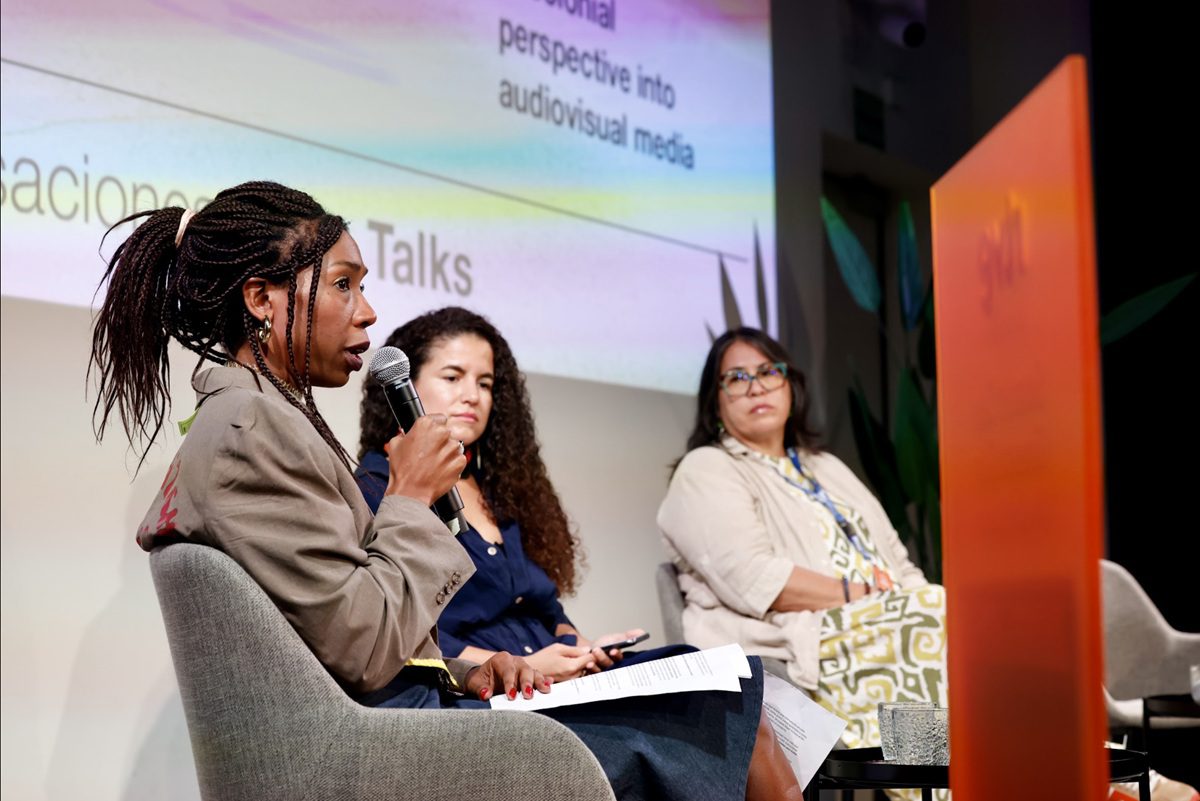
The 74th San Sebastián Festival was the setting this month for a session dedicated to analyzing the gender and racial inequalities that persist in the Spanish audiovisual industry. The event carries particular weight at a time when the cultural sector is reviewing its structures of representation and funding, and when concrete data on the scarce ethnic-racial diversity both in front of and behind the camera is beginning to be published.
The event, titled '¿Quién tiene derecho a imaginar? Por un audiovisual feminista, antirracista y decolonial', was organized by the Interterritorial Working Group for Gender Equality in the Audiovisual Sector (GTI) and held at Tabakalera. The GTI brings together associations such as AAMMA, AMMA, CIMA, Dona i Cinema, Dones Visuals, (H)emen and MIA, and received support from the Ministry of Culture, RTVE's Equality Observatory, and the San Sebastián festival itself.
A Space to Question the Sector’s Structures
The session opened with remarks from Maialen Beloki, deputy director of the San Sebastián Festival; Beatriz Aparicio, head of the Equality Observatory Unit; and Jazmín Beirak, general director of Cultural Rights.
The first panel, titled 'Prácticas y políticas inspiradoras para incluir una perspectiva antirracista y decolonial en el audiovisual' (Inspiring Practices and Policies for Including an Anti-racist and Decolonial Perspective in the Audiovisual Sector), brought together researcher and cultural manager Dagmary Olívar and producer and filmmaker Wendy Espinal. Moderated by Beatriz Mbula, a member of CIMA's board of directors, the conversation focused on identifying who has real capacity to drive change in the sector and what mechanisms can be activated to achieve it.
The discussion addressed unequal access to training, funding and decision-making spaces, as well as the systematic scrutiny faced by racialized creators, both regarding the quality of their work and the stories they are expected to tell.
New Narratives Against Stereotypes
The second panel, titled 'Nuevas narrativas para nuevos imaginarios / Cineastas que transforman el relato' (New Narratives for New Imaginaries / Filmmakers Who Transform the Story), shifted the conversation toward on-screen representation. Participants included director Xisi Sofía Ye Chen, actress Herminia Loh, screenwriter Eva Montoya and producer Daysi Cruz, moderated by director and screenwriter Lucía G. Romero.
The dialogue centered on the lack of role models for women of diverse races on Spanish screens and how this absence affects the identity formation of new generations. The participants stressed the need for children to find characters they can identify with, free from the stereotypes historically associated with certain communities.
They also discussed the difference between including a racialized character as a mere quota and building a fully realized character with their own desires and conflicts that go beyond their ethnic identity.
The Data Revealing the Inequality
In the afternoon, at the Kursaal Press Club, the conclusions of two studies focused on the inequalities and violence affecting the sector were presented. Jenifer de la Rosa presented the report 'Mujeres migrantes y/o racializadas en el audiovisual español' (Migrant and/or Racialized Women in the Spanish Audiovisual Sector), produced by CIMA, while Sofia Esteve and Fátima Kamaso presented the 'Estudio sobre violencias y desigualdades en el audiovisual catalán' (Study on Violence and Inequalities in Catalan Audiovisual Media), by Dones Visuals.
The Dones Visuals study, conducted with the University of Barcelona based on interviews with 52 women and dissident gender identities with disabilities, who are LGBTI and/or racialized, identifies multiple forms of violence: from verbal questioning of their abilities to professional typecasting, lack of accessibility, workplace harassment and bureaucratic barriers. The report concludes that these situations are not isolated incidents, but rather reflect structural dynamics within the sector.
Meanwhile, the CIMA study, based on 47 interviews with migrant and/or racialized professionals, points to insufficient and stereotyped representation, particularly among performers, who tend to be cast in underdeveloped supporting roles tied to clichés about their origin.
Figures from the CIMA 2025 Report
The presentation also previewed some data from the new CIMA 2025 Report, based on an analysis of more than 120 fiction feature films submitted to the 40th Goya Awards. The results show that only 9.66% of performers are people of races other than white.
The presence drops even further behind the camera: only 4.13% of directors are non-white, a figure that falls to 1.65% among women. In screenwriting, non-white people represent 6.25%, while non-white women screenwriters barely reach 2.88%.
Both studies point to shared barriers: constant questioning of professional authority and competence, the demand for a higher standard of excellence to achieve the same recognition, and the sense of not belonging to an industry whose structures are not always prepared to incorporate diversity. The reports also warn of the professional impact of these dynamics, as some of those interviewed have left their positions or paused their careers.
A Manifesto with Five Demands
The session closed with a collective reading of the GTI Manifesto, which calls for diversity not to be limited to who appears on screen, but to run through all structures of the sector, from writing and directing to the selection and funding of projects.
Its main demands include:
- Measuring and publishing ethnic-racial representation both on and off screen.
- Incorporating verifiable diversity criteria into public grants and funding.
- Ensuring a more diverse composition of committees, juries and decision-making bodies.
- Promoting measures that facilitate access for professionals of other races and immigrants to positions of responsibility.
- Creating specific resources for their development, training and professionalization.
Frequently Asked Questions
What is the Interterritorial Working Group for Gender Equality in the Audiovisual Sector (GTI)?
It is a platform that brings together associations such as AAMMA, AMMA, CIMA, Dona i Cinema, Dones Visuals, (H)emen and MIA, dedicated to promoting gender equality in the Spanish audiovisual industry.
Where was the session on racial and gender inequality held?
The event took place at Tabakalera in the morning, continuing in the afternoon at the Kursaal Press Club, both venues linked to the 74th San Sebastián Festival.
What data does the CIMA 2025 Report provide on racial representation in Spanish cinema?
According to an analysis of more than 120 feature films submitted to the 40th Goya Awards, only 9.66% of performers are people of races other than white, and only 4.13% of directors are non-white, a figure that drops to 1.65% among women.
What are the studies presented by CIMA and Dones Visuals based on?
The CIMA study was based on 47 interviews with migrant and/or racialized professionals in the Spanish audiovisual sector. The Dones Visuals study, conducted in collaboration with the University of Barcelona, was based on 52 interviews with women and dissident gender identities with disabilities, who are LGBTI and/or racialized, in Catalonia.
Which institutions supported the GTI session in San Sebastián?
The initiative was supported by the Ministry of Culture, RTVE's Equality Observatory, and the San Sebastián Festival itself.
What are the main demands of the GTI Manifesto?
Among others, it calls for measuring and publishing ethnic-racial representation in the sector, incorporating diversity criteria into public grants, ensuring more diverse juries and committees, and creating training resources for migrant and racialized professionals.