
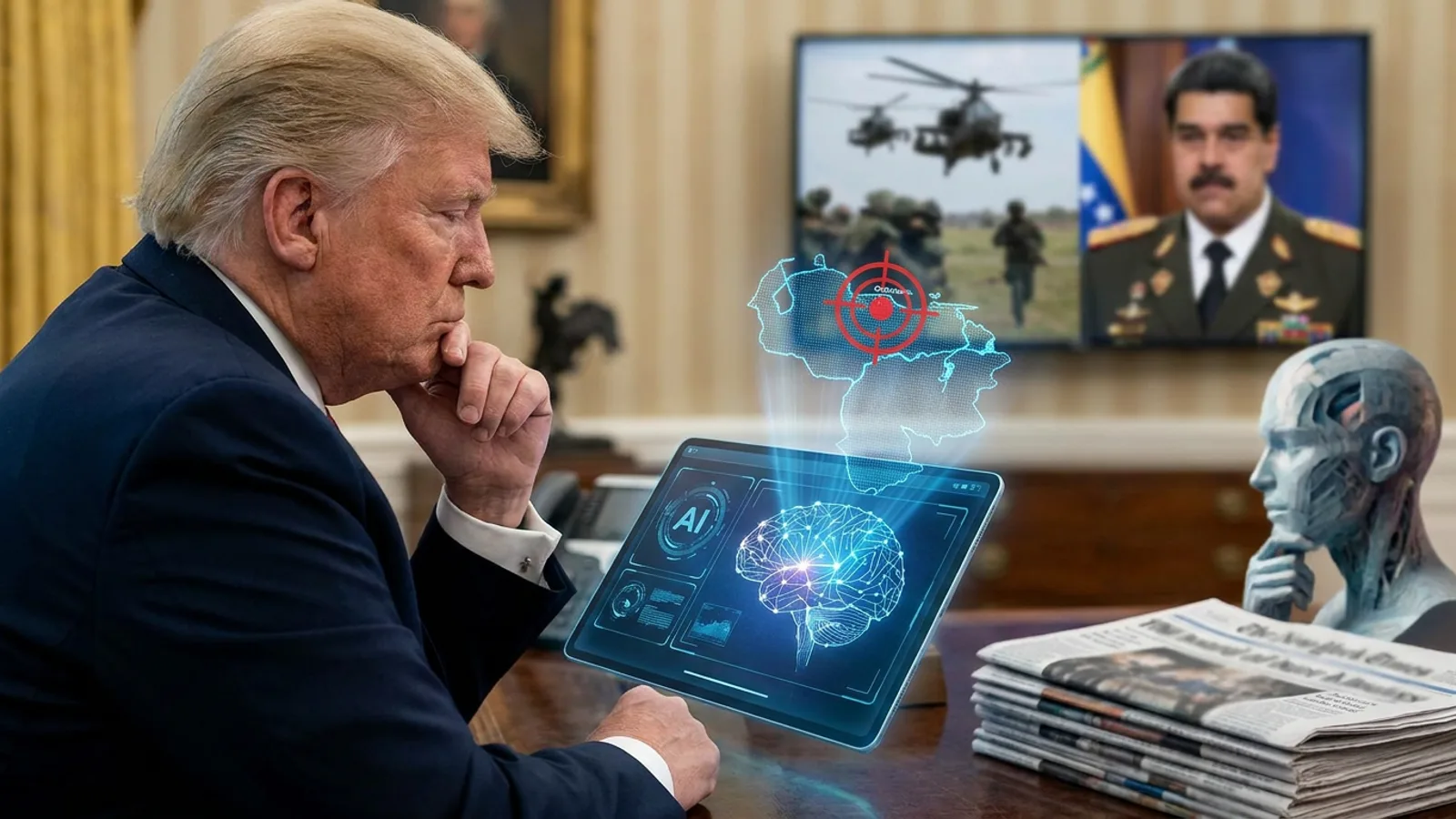
A private meeting between Donald Trump and Elon Musk, which took place months before the U.S. invasion of Venezuela, is once again under scrutiny. According to an investigation by Time magazine, the U.S. president turned to Grok, the chatbot developed by Musk's company, to analyze how the Venezuelan population would react if Nicolás Maduro were captured.
The episode is now gaining relevance because it exposes, with a concrete case, the extent to which artificial intelligence systems are present in foreign policy and national security decisions in the United States. The revelation also comes at a time when the Pentagon itself has confirmed the military use of AI tools, including Grok.
A secret meeting in December 2025
According to the Time report, the meeting between Trump and Musk took place in December 2025, approximately one month before the United States executed a military operation in Venezuela that ended with the capture of Maduro.
The meeting occurred about seven months after Musk stepped down from his role leading the Department of Government Efficiency (DOGE), the entity he headed within the Trump administration.
A source cited by Time claims that, during that meeting, the president "spent hours" interacting with Grok. Among the questions he posed to the chatbot was how the Venezuelan people would respond to the detention of their own leader.
What Grok answered about Maduro
According to the account gathered by the magazine, Grok described Maduro as a "deeply unpopular dictator" and estimated that a large portion of the Venezuelan population would celebrate his downfall.
This is an assessment generated by an automated system regarding the mood of an entire country. Neither the source consulted by Time nor the outlet itself details what data or methodology the chatbot used to reach that conclusion.
The fact is that the prediction aligned with what happened afterward. When the United States invaded Venezuela on January 3, celebrations were recorded in different parts of the country, just as Musk's tool had anticipated.
The success that impressed Trump
After observing those reactions, Trump was reportedly convinced that Grok was "ingenious," according to the same anonymous source cited by Time. The accuracy of the prediction, in other words, reinforced his confidence in the chatbot.
It is worth distinguishing between two issues, however. It is documented that Trump consulted Grok and that he found the result convincing. What is not confirmed in the report is that this consultation was the factor that motivated the decision to invade Venezuela. The source describes a conversation about the possible popular reaction, not a military order or a verified operational recommendation.
The previous context: boat attacks and public consultations on Venezuela
The meeting between Trump and Musk did not occur in isolation. Since September 2025, Trump had ordered military strikes against Venezuelan vessels that, according to the White House, were linked to drug trafficking.
In parallel, outlets like The Atlantic reported that numerous users were turning to Grok to learn about those attacks and the political situation in Venezuela. The chatbot was already operating as a source of public information on the conflict before Trump used it directly.
Grok and the Pentagon: from the war with Iran to a new military study
The link between the U.S. government and Musk's technology extends beyond this episode. In June of this year, the Pentagon's head of artificial intelligence acknowledged that the military used a version of Grok adapted for government use, known as Gov Grok, for target identification and strike tasks during the war with Iran.
Grok is not the only AI model with a presence in the Department of Defense. OpenAI also maintains an agreement with that institution, while Anthropic is engaged in an open debate regarding the limits of using its models in military intelligence.
This same week, the Pentagon announced that Musk and Palmer Luckey, founder of the defense company Anduril, will co-lead a study on the current and future use of advanced technology in combat operations.
What to keep in mind about this case
For those who turn to chatbots as a source of information on politics or international conflicts, this episode leaves some practical lessons.
- An accurate prediction does not guarantee that the method used is reliable or transparent.
- It is important to know who controls the tool: Grok belongs to Elon Musk, who collaborated with the Trump administration and today co-chairs a technology study for the Pentagon.
- It is advisable to cross-reference chatbot responses with identifiable human sources, such as polls, analysts, or correspondents, before drawing political conclusions.
The limits of what is known so far
The account rests on a single anonymous source cited by Time, and outlets like TechCrunch have disseminated it using the "reportedly" formula. Neither the White House nor Elon Musk has publicly confirmed or denied the described meeting.
What is verifiable, for now, is limited to a sequence of events: a meeting in December 2025, an invasion on January 3, attacks against vessels since September 2025, and the military use of Gov Grok acknowledged in June by the Pentagon itself. The actual weight that Grok had in the final decision to invade Venezuela remains unconfirmed by additional sources.
Frequently asked questions
What did Trump ask Grok about Venezuela?
According to Time, Trump asked the chatbot how the Venezuelan population would react if the United States captured Nicolás Maduro.
What did Grok answer about Maduro?
The chatbot described him as a very unpopular dictator and anticipated that many Venezuelans would celebrate his fall, which coincided with what happened after the January 3 invasion.
When did the meeting between Trump and Musk take place?
The meeting took place in December 2025, approximately one month before the military operation in Venezuela.
Did Grok make the decision to invade Venezuela?
There is no evidence of that. The Time report only confirms that Trump consulted the chatbot about the possible popular reaction, not that this consultation determined the military order.
Does the Pentagon use Grok for military purposes?
Yes. In June of this year, the Pentagon's head of artificial intelligence confirmed that a version called Gov Grok was used to identify and strike targets during the war with Iran.
Who owns Grok?
Grok is a chatbot developed by Elon Musk, who also led the Department of Government Efficiency (DOGE) during part of the Trump administration.