
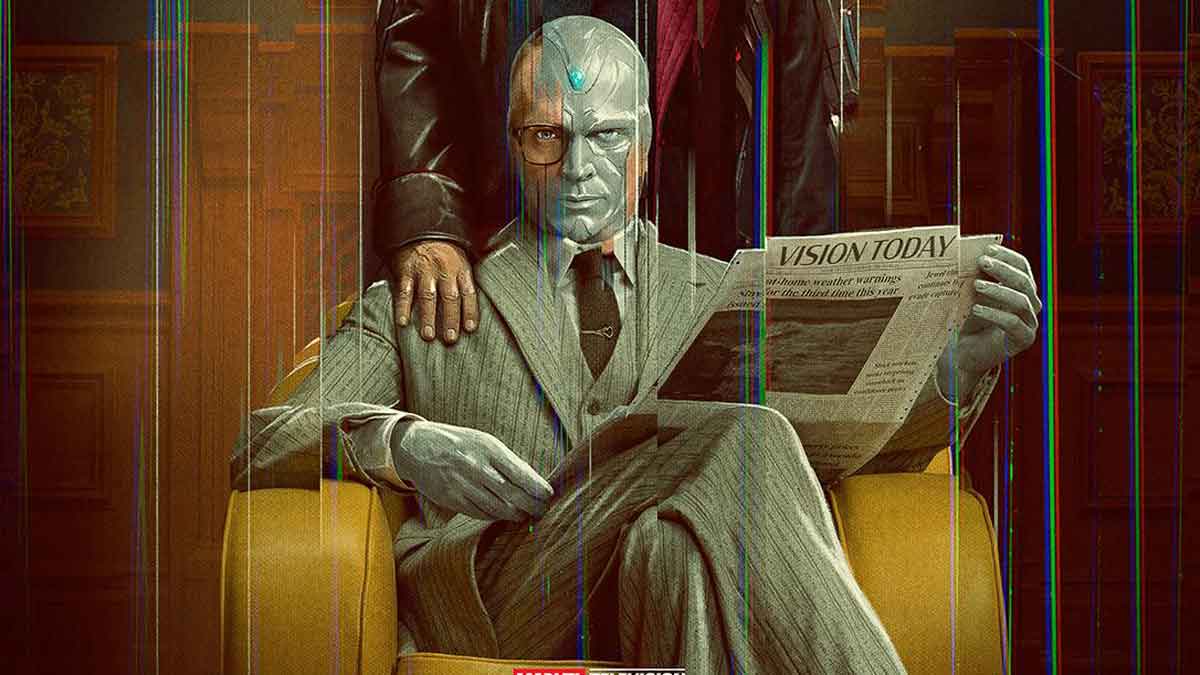
Paul Bettany steps back into the shoes of Vision more than a decade after his first appearance in the Marvel Cinematic Universe, and he does so at a key moment: VisionQuest, the series that will conclude the trilogy started with WandaVision, arrives on Disney+ on October 14, 2026. The actor spoke with Cinemascomics during San Diego Comic-Con Málaga to discuss the return of Ultron, the challenges of playing a character who has changed radically, and the conclusion that awaits viewers.
The interview, conducted by Eva Villalba, comes in the midst of the series' promotional campaign, which Bettany continued later at New York Comic Con. But beyond the release dates, the actor offered insights into how this new stage of Vision was built and why it needed to bring back one of his most important antagonists.
Why VisionQuest needed to bring back Ultron
One of the biggest challenges of the series was maintaining the consistency of a character who has gone through multiple versions of himself. The Vision from Avengers: Age of Ultron is not the same one who fell in love with Wanda Maximoff, and the White Vision in this new series retains those memories without being able to relate to them emotionally as before.
Bettany acknowledged that this continuity was one of his main concerns when starting work on the project. As he explained, the challenge was to ensure that the audience would still recognize the character despite the changes. The turning point came when showrunner Terry Matalas proposed bringing back Ultron as a central part of the plot.
The idea from Terry Matalas that redefined the character’s journey
Before that decision, Bettany felt that there was a lack of a clear engine for Vision's story. The actor admitted that, in the early versions of the script, he did not clearly perceive what the character's quest was.
Everything changed when Matalas proposed bringing Ultron back. For Bettany, that decision allowed the series to revolve around something deeper: Vision's identity, who he really is, and why he exists. The connection between the two characters goes back to Vision's very origin, so bringing back Ultron reopens questions that have accompanied him since his first appearance, such as whether he can feel, choose, or build his own identity from his memories.
Video interview with Paul Bettany
During his visit to Málaga, Paul Bettany spoke with Cinemascomics about the evolution of Vision, his relationship with Ultron, and how he has built this new stage of the character for VisionQuest.
Why Vision decides to keep Ultron instead of destroying him
Another highlight of the interview arose when he was asked if, as a viewer, he would support Vision's decision to keep Ultron instead of eliminating him permanently. Bettany replied without hesitation that he supports that decision, as he considers Ultron a character too interesting to be destroyed.
The actor argued that it makes sense for Vision to keep an isolated copy of Ultron behind a firewall, motivated by the curiosity that defines the character. According to Bettany, Vision needs to understand Ultron, something he could not do during the brief encounter they shared in Avengers: Age of Ultron.
More than ten years after that film, VisionQuest resumes that relationship with more narrative space. James Spader returns to bring Ultron to life once again, which is one of the great attractions of the series alongside the reunion with Bettany.
Bettany, also an executive producer, sets the tone on set
In addition to starring in the series, Bettany serves as an executive producer, a role he takes on with responsibility. The actor explained that he sought to create a safe environment for the team, although he was clear on one non-negotiable point: punctuality.
He recounted that, during the first day of filming, upon detecting a delay because part of the crew was still having breakfast, he asked to be taken directly to the set to make it clear that he was already waiting. According to him, no one was late again after that episode. For Bettany, respecting everyone's time is essential, remembering that there are always colleagues who have been working on set for longer hours.
An ending designed to satisfy Marvel fans
When asked if there was any idea or scene he would have liked to include that ultimately did not make it into the series, Bettany assured that he did not miss anything. The conversation turned to the conclusion of VisionQuest, which the actor described as especially satisfying, expressing his confidence that viewers will feel the same way when they reach it.
Bettany also praised Terry Matalas' work as a writer and argued that the series manages to connect both with long-time Vision followers and with fans who were introduced to the character through WandaVision.
The series takes on an important narrative responsibility, as it closes the television trilogy started with WandaVision in 2021 and continued by Agatha All Along in 2024.
What to expect from VisionQuest on Disney+
VisionQuest, produced by Marvel Television, will consist of eight episodes focused on the White Vision and his search for a new meaning for his existence. On that path, he will reunite with Ultron, played by James Spader, and with Thomas Shepherd, played by Ruaridh Mollica.
The cast is completed by Todd Stashwick, T'Nia Miller, Emily Hampshire, Orla Brady, and James D'Arcy.
As can be inferred from the conversation with Bettany, the true axis of the series is not only the return of Ultron or its links to WandaVision, but a more intimate question: what remains of a person when they retain their memories but have lost the emotional relationship they had with them?
VisionQuest premieres on October 14 on Disney+ and will close a chapter that began with WandaVision.
Frequently asked questions about VisionQuest and Paul Bettany
When does VisionQuest premiere on Disney+?
The series arrives on Disney+ on October 14, 2026.
Why does Ultron return in VisionQuest?
According to Paul Bettany, showrunner Terry Matalas proposed bringing back Ultron to give the series a narrative axis focused on Vision's identity, his origin, and his purpose.
Who plays Ultron in the series?
James Spader returns to bring Ultron to life, reuniting on screen with Paul Bettany more than a decade after Avengers: Age of Ultron.
How many episodes will VisionQuest have?
The series will consist of eight episodes produced by Marvel Television.
Is VisionQuest related to WandaVision?
Yes. The series closes the television trilogy started with WandaVision in 2021 and continued by Agatha All Along in 2024.
What role does Paul Bettany have besides acting in the series?
Bettany also serves as an executive producer for VisionQuest, getting involved in the work environment and the discipline of the shoot.