
The calling of a snap general election has once again left one of the most anticipated regulations for the Spanish audiovisual industry in limbo: the Cinema and Audiovisual Culture Law. Prime Minister Pedro Sánchez's announcement to move the elections to Sunday, November 29, effectively means the paralysis of dozens of legislative projects that were in the midst of parliamentary processing.
The Official State Gazette published the Royal Decree dissolving the Cortes on October 6, a step that certifies the early end of the legislative term. Among the regulations that remain frozen is, once again, the Cinema Law draft, which was scheduled to hold a new working group session in the Congress of Deputies to advance its urgent processing.
The situation is particularly striking because it is not the first time this law has been left halfway through. The snap election in May 2023, which began the legislative term that is now ending abruptly, already caused the paralysis of more than 60 bills in progress, including this same audiovisual regulation, which was also being processed under the urgent procedure.
A sector that had been demanding certainty for months
The repeated paralysis leaves the audiovisual sector in an uncomfortable position. For many professionals, the new interruption means further extending the uncertainty regarding a regulatory framework they consider essential to update as soon as possible.
Just a few days before the snap election announcement, the main federations and associations of independent producers, grouped in the Audiovisual Producers Platform (P.A.P.), held their 4th State Meeting within the framework of the 31st Ourense International Film Festival (OUFF). There, they once again expressed their concern that the future law should effectively incorporate the sector's contributions and respond to the real needs of independent companies.
For the P.A.P., the definition of an independent production company was a central and non-negotiable issue in the text. They argued that the regulation's ability to guarantee effective independence, preserve these companies' decision-making power over their projects, and recognize their creative, cultural, and industrial role depended on that definition. The platform, which represents more than 90% of Spanish independent production, is made up of more than 750 companies grouped into entities such as AECINE, DIBOOS, PIAF+MAPA, PROA, and PROFILM.
A joint letter to the Ministry of Culture
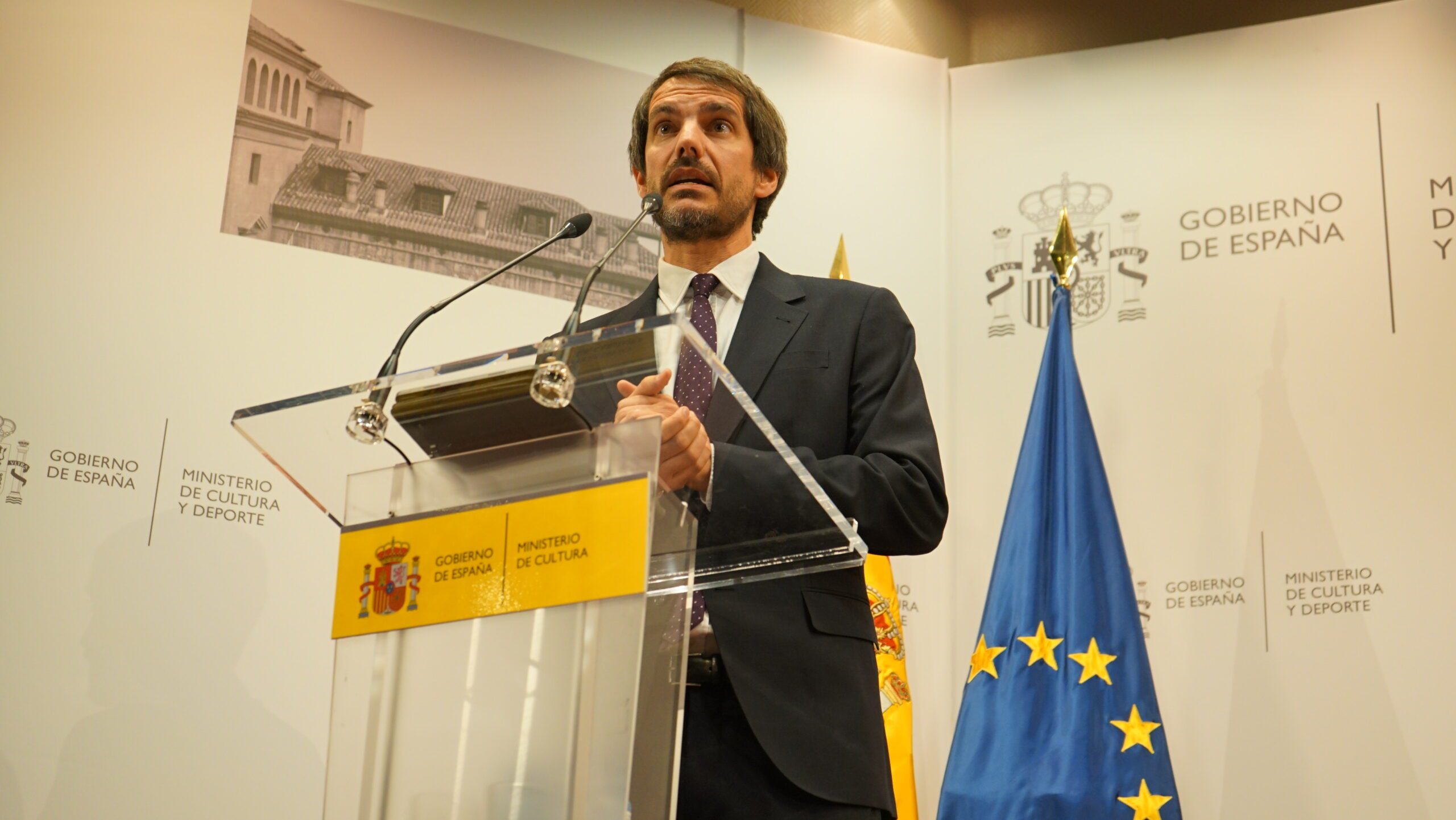
The sector's unease was not new. In June, the associations representing production, distribution, exhibition, direction, and television sent a letter to the Minister of Culture, Ernest Urtasun, requesting more time and detailed information on the modifications introduced in the draft law.
In that letter, the signatories welcomed the reactivation of the legislative process and reiterated their willingness to collaborate in building a solid regulatory framework supported by the entire industry. They also asked for a wider timeframe and additional data that would allow them to rigorously analyze a regulation they considered transcendental for the future of the sector.
Among the entities signing the letter to Urtasun were AECINE, AEVOD, ACCIÓN, DIBOOS, FECE, NAECE, PATE, PIAF/MAPA, PROA, PROFILM, PROXIMA CINE, and UTECA.
The truncated parliamentary journey
The draft law had passed significant milestones in the previous months. On June 18, the Plenary of Congress rejected, by 172 votes in favor and 175 against, the amendments to the entirety presented by the Popular and Vox groups. After that debate, the Chamber approved the referral of the initiative to the Plenary, and the text continued its processing in the working group and committee to debate the articles and the amendments presented.
Once that phase in Congress was concluded, the text was sent to the Senate to continue its parliamentary procedure, a step that will no longer be completed in this legislative term. Minister Urtasun himself had insisted in May that the approval of the law remained a priority objective for his department. "We continue working to get it through. We have no reason to give up on this approval," he declared at the time, arguing that updating the audiovisual regulatory framework was essential.
That same will was reiterated on June 23, on the occasion of the appointment of Marta Serrano as the new director-general of the Institute of Cinematography and Audiovisual Arts (ICAA). At that time, the Ministry of Culture again pointed to the final approval of the law, which had been paralyzed four years earlier, as one of the institute's main pending challenges.
Another key regulation is also paralyzed
The Cinema Law is not the only one affected by the early end of the legislative term. The processing of another relevant regulation for the sector is also lapsing: the regulation of Artificial Intelligence in the cultural sphere, which was also in the parliamentary process.
With the general elections set for November 29, the future of both initiatives is conditioned by the election result and the composition of the next Government, which will have to decide whether to resume these texts from scratch or based on what has already been worked on during the current legislative term.
Frequently asked questions
What is the Cinema and Audiovisual Culture Law?
It is a draft regulation intended to update the legal framework that governs audiovisual production, distribution, and exhibition in Spain, adapting it to the new realities of the sector.
Why is this law being paralyzed again?
Because the snap general election on November 29, announced by Pedro Sánchez, implies the dissolution of the Cortes and, with it, the interruption of all laws that were still in parliamentary processing, including this one.
Is this the first time this law has been paralyzed?
No. It already happened in May 2023, when another snap election left more than 60 laws in progress unapproved, including this same audiovisual project.
What stage of processing had the project reached?
It had passed the debate on amendments to the entirety in Congress and was in the working group and committee phase, prior to its passage through the Senate, a procedure that will ultimately not be completed in this legislative term.
What was the audiovisual sector asking for regarding this law?
The producers' associations were demanding a clear definition of an independent production company, more time to analyze the modifications to the text, and greater dialogue with the Ministry of Culture.
What other regulation is also paralyzed?
The specific regulation on the use of Artificial Intelligence in the cultural sphere, which was being processed in parallel and also lapses with the early end of the legislative term.