
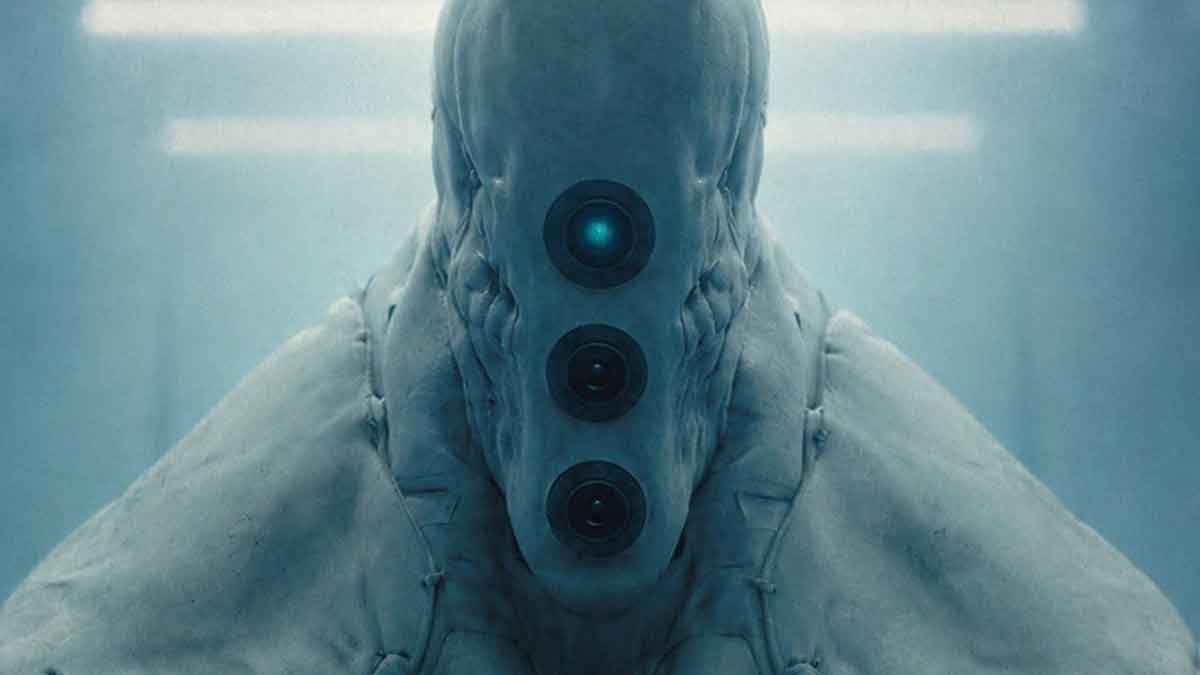
A production made with artificial intelligence has set its sights on something that until recently seemed unthinkable: competing for the Oscar for Best Animated Feature. The film is Gods Don't Give Gifts, which will hit theaters on December 4, 2026, with the explicit intention of entering the awards race for the 99th Academy Awards, scheduled for March 2027.
The announcement comes at a particularly sensitive time for the film industry, which has been debating with concern for months the role that generative artificial intelligence should play in the creation of audiovisual content. The Hollywood Academy itself has had to update its rules to address, for the first time explicitly, how to treat works created with these tools.
What changes in the Academy’s rules on AI
On May 1, as reported by the Reuters agency, the Academy published the regulations for the March 2027 ceremony. For the first time, the institution spoke directly about the use of generative artificial intelligence in productions eligible for an Oscar.
The stance adopted is not one of total prohibition, but neither is it one of absolute permissiveness. It is an intermediate position that leaves room for interpretation by voters and the various branches of the Academy.
What the Academy allows
According to the new regulations, the use of artificial intelligence tools does not automatically benefit or harm a film's chances of securing a nomination. However, the Academy and each of its branches will evaluate the degree of human creative authorship present in the project.
Furthermore, the institution reserves the right to request detailed information from the responsible teams on how artificial intelligence was used during the production process. In practice, this means that any film using these technologies must be able to clearly explain which creative decisions were made by people and which were generated or assisted by machines.
What remains prohibited
In other categories, the Academy has been much stricter. In the acting section, only performances by real people who appear in the legal credits and who have given their consent will be considered valid. This leaves out figures such as the synthetic actress Tilly Norwood, generated entirely through artificial intelligence.
The same logic applies to screenplays: they must be written by people, without AI being able to appear as an author or co-author of the text.
Can an AI-made film compete in Animation?
The specific regulations for the Animation category do not mention the use of artificial intelligence at any point, neither to allow it nor to expressly prohibit it. This leaves the door open for projects like Gods Don't Give Gifts to attempt to register.
The requirements the film must meet
To be considered an animated feature film by the Academy, a work must exceed 40 minutes in length. In addition, the movement and performances of the characters must have been created using animation techniques. In the case of narrative films, it is required that a significant portion of the main characters be animated.
None of these conditions makes direct reference to artificial intelligence, which makes the case of Gods Don't Give Gifts a real test for interpreting how the new rules will be applied.
The theatrical release process
To be eligible for the award, the film needs to comply with the general rules for theatrical release and submit an official entry that includes a digital copy identical to the one exhibited on screen. This administrative step will be decisive in knowing whether the chosen date, December 4, 2026, is strategic or becomes a last-minute obstacle.
Where the ambiguity lies
The ban on actors and screenplays generated by artificial intelligence directly affects the acting and screenplay categories, but not the Animation category. Even so, the general criterion of requiring central human authorship extends implicitly to the entire evaluation process.
It will be the Academy's Short Films and Feature Animation branch that will be responsible for deciding what exactly it means to have a person "at the center" of creative authorship when faced with a work like this.
The underlying debate: what authorship means in the age of AI
The case of Gods Don't Give Gifts opens several questions that the film industry has not yet resolved. If a team of artists directs, corrects, and edits every shot generated by an artificial intelligence tool, can that be considered creative authorship in the same sense as traditional animation work?
The question of fairness also arises in the face of productions that have required years of manual labor from hundreds of animators. And, above all, what will happen if an AI-made film manages to slip into the final five nominees, displacing another made entirely by traditional methods?
These questions do not yet have an official answer, but the release of Gods Don't Give Gifts on December 4, 2026, could become the first major test case for the Hollywood Academy's new rules on artificial intelligence.
Frequently Asked Questions
What is Gods Don’t Give Gifts?
It is an animated film made with artificial intelligence, scheduled for theatrical release on December 4, 2026, and whose creators are looking to compete for the Oscar for Best Animated Feature.
When is the film released?
Gods Don't Give Gifts will hit theaters on December 4, 2026.
Does the Academy prohibit the use of artificial intelligence in the Oscars?
Not totally. Since May 1, the Academy has allowed the use of generative AI, but it will evaluate the degree of human authorship in each project and may ask for explanations about how the technology was used.
Can an AI film win the Animated Feature Oscar?
The regulations for the Animation category do not mention artificial intelligence, so, in principle, there is no explicit impediment for a work of this type to compete.
What restrictions exist for actors and screenwriters generated by AI?
In acting, only performances by real, credited people who have given their consent are accepted, which excludes synthetic actresses like Tilly Norwood. Screenplays must also be written by people.
What requirements must a film meet to enter the Animation category?
It must be over 40 minutes long, and the movement and performances of the characters must be created with animation techniques. If it is narrative, a significant portion of the main characters must be animated.