
Microsoft has introduced Autopilot, a new capability within Copilot that allows an artificial intelligence agent to keep working in the cloud even after the user has logged off. The announcement comes alongside a deep shift in the pricing model: the flat fee is being replaced by billing based on actual consumption.
The announcement matters because it fundamentally changes how businesses use and pay for Microsoft's AI. Until now, the Copilot license included a closed package of features. With this update, chat and basic Office integrations remain included, but intensive use of automated agents will be billed separately, based on what is actually consumed.
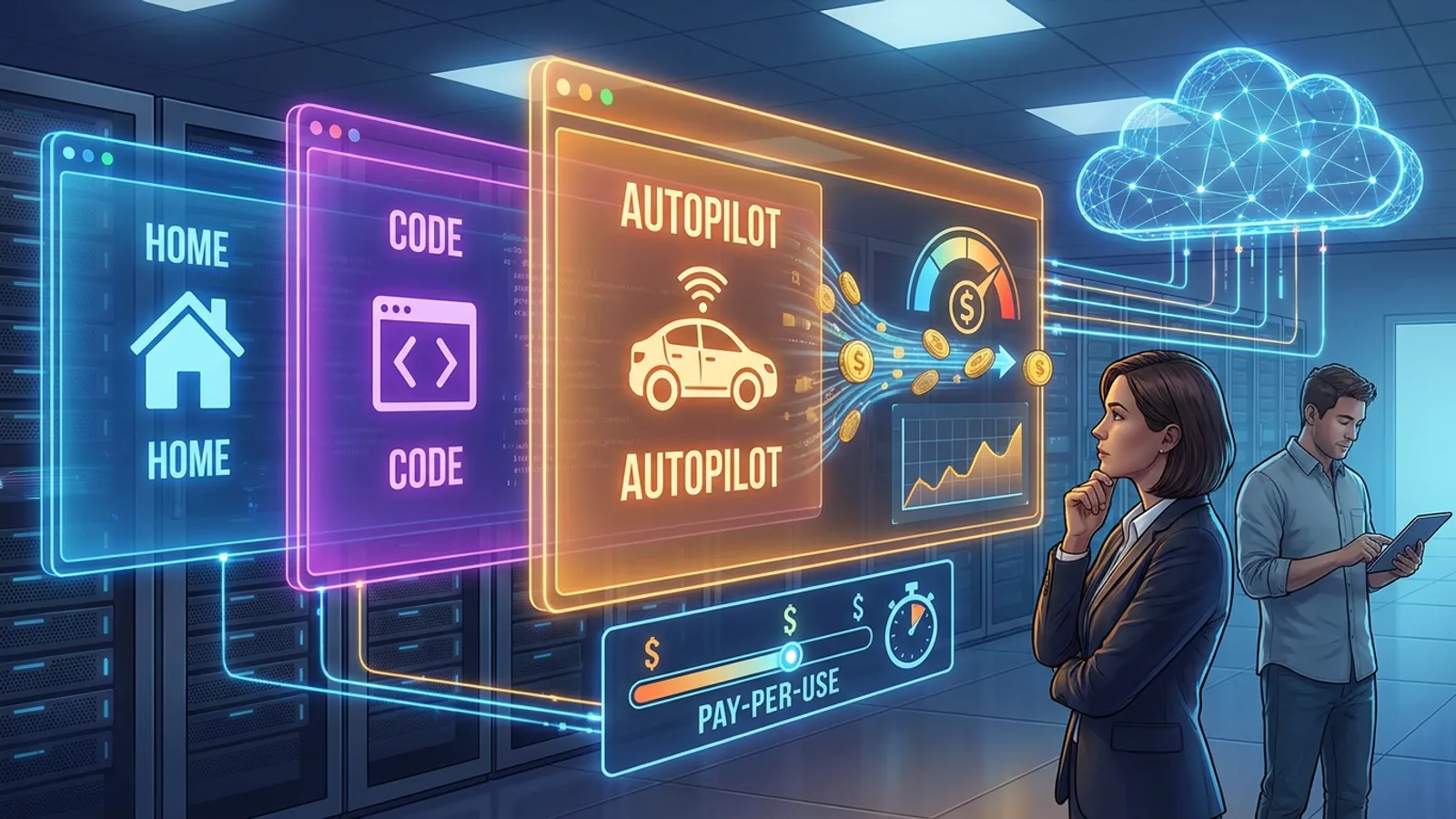
Copilot is reorganized into three blocks: Home, Code and Autopilot
Microsoft has split its Copilot app into three sections with distinct functions.
Home concentrates the usual chat and collaboration tools. Code allows users to create apps, dashboards and automations using natural language, without needing to write code. Autopilot, the most novel piece, is an autonomous agent with its own cloud environment: it has its own storage, identity and workspace.
Each Autopilot instance can monitor Teams channels, coordinate vendor evaluations or handle repetitive tasks without a human having to oversee every step. To activate it, simply mention it with an @autopilot in Teams, Outlook or within a document. From there, the agent keeps executing the task even if the user disconnects.
The Code section uses the same technology base as GitHub Copilot and runs within a controlled environment that Microsoft calls Copilot Managed Runtime. In addition, Word, Excel and PowerPoint are now integrated directly into the Copilot interface.
OpenClaw, the platform behind Autopilot
Autopilot is built on OpenClaw, the agent platform developed by Microsoft to support this type of proactive assistant. The system uses a layer called Microsoft IQ, designed so the agent understands how an organization actually works: its internal workflows, permission hierarchies and audit processes.
Jared Spataro, head of AI marketing at Microsoft, has noted that the system's design incorporates permission controls, auditing and governance from the outset. IT administrators can decide which AI model families are available to each group of users within the company.
Goodbye flat fee: how the new billing works
The change to the economic model is as significant as the technical novelty. Microsoft is replacing the flat fee for Autopilot, Code and Cowork with a pay-per-use scheme, in line with what ChatGPT Enterprise already applies once a certain quota is exceeded.
The standard Copilot license now covers exclusively chat and integrations with Office applications. Any intensive use of agents and automations will be billed separately, based on actual recorded consumption.
Within the Office integrations, an automatic router selects the most suitable AI model for each request, factoring in accuracy, speed and cost. Microsoft has confirmed that pay-per-use features will be able to access frontier models such as Astra, from OpenAI, and Fable, from Anthropic. To accompany this change, the company is also launching AI-specific FinOps tools, designed to help businesses keep spending under control.
A practical example: procurement that moves forward without constant supervision
Microsoft illustrates how Autopilot works with a concrete use case. A procurement department needs to evaluate ten new vendors before the end of the month. The manager launches the task with a mention in Teams, attaches the selection criteria, and the agent begins gathering information, cross-referencing data and drafting a comparative report, while the team attends to other meetings.
The agent does not stop to ask for confirmation at every step. When the team returns to the task, they find it advanced, along with an audit log of every action taken. That traceability record is what Microsoft presents as the key difference between Autopilot and a conventional chatbot: every decision is documented and can be reviewed by the IT administrator.
Satya Nadella’s plan: from enterprise to end consumer
Satya Nadella has announced that Autopilot will not remain confined to the corporate sphere. The executive has cited a base of more than 100 million subscribers within the Microsoft ecosystem as a starting point for bringing the feature to consumers as well.
In the enterprise segment, Nadella believes the AI agent market will end up surpassing the cloud market in size. For the general public, he suggests these agents could eventually replace intermediaries that currently exist across various digital services.
The rollout schedule is staggered. Home and Code will arrive in the coming weeks through Microsoft's Frontier program. Autopilot will launch as a private preview at the end of September. Code, meanwhile, will be available later this year for Microsoft 365 Premium and Pro subscribers.
Within Home, the Today feature will also be added, bringing together email, calendar, Teams messages and pending tasks into a single dashboard. This feature will enter private preview in October.
What changes for businesses using Microsoft 365
For organizations that already have a standard Copilot license, the current scope is limited to chat and Office integrations. Any use of Autopilot or Code will generate additional costs based on consumption, so it is worth reviewing with the IT team which features are active and what spending limits have been set.
Administrators retain control over which AI models each group of users can use, allowing them to adjust the balance between capability and cost according to each department's needs. The new AI FinOps tools are designed precisely for this kind of spending oversight.
Before activating Autopilot in a production environment, it is advisable to verify that audit logs and permissions are properly configured. The agent acts even when the user is not connected, and each of its actions is linked to the identity of whoever launched it.
Frequently asked questions
What is Autopilot in Microsoft Copilot?
It is an autonomous artificial intelligence agent within Copilot that can execute tasks, monitor Teams channels or coordinate processes without constant human intervention, even when the user has logged off.
How is Autopilot activated?
It is activated by mentioning it with an @autopilot in Teams, Outlook or within a document. From that moment, the agent continues working in the cloud independently.
Does the price of Copilot change with this update?
Yes. Microsoft is eliminating the flat fee for Autopilot, Code and Cowork and moving to a billing model based on actual consumption, similar to what ChatGPT Enterprise applies once a certain quota is exceeded.
What does the standard Copilot license include now?
It covers only chat and integrations with Office applications. The use of agents like Autopilot and Code features is billed separately based on consumption.
What technology is Autopilot built on?
It is developed on OpenClaw, Microsoft's agent platform, and uses a layer called Microsoft IQ to understand the workflows, permissions and governance processes of each organization.
When will Autopilot be available?
Autopilot will begin as a private preview at the end of September. Home and Code will roll out in the coming weeks through the Frontier program, while Code will arrive later this year for Microsoft 365 Premium and Pro subscribers.
Will Autopilot also reach individual users?
Yes. Satya Nadella has confirmed that the feature will be extended to consumers, building on the base of more than 100 million subscribers in the Microsoft ecosystem.