
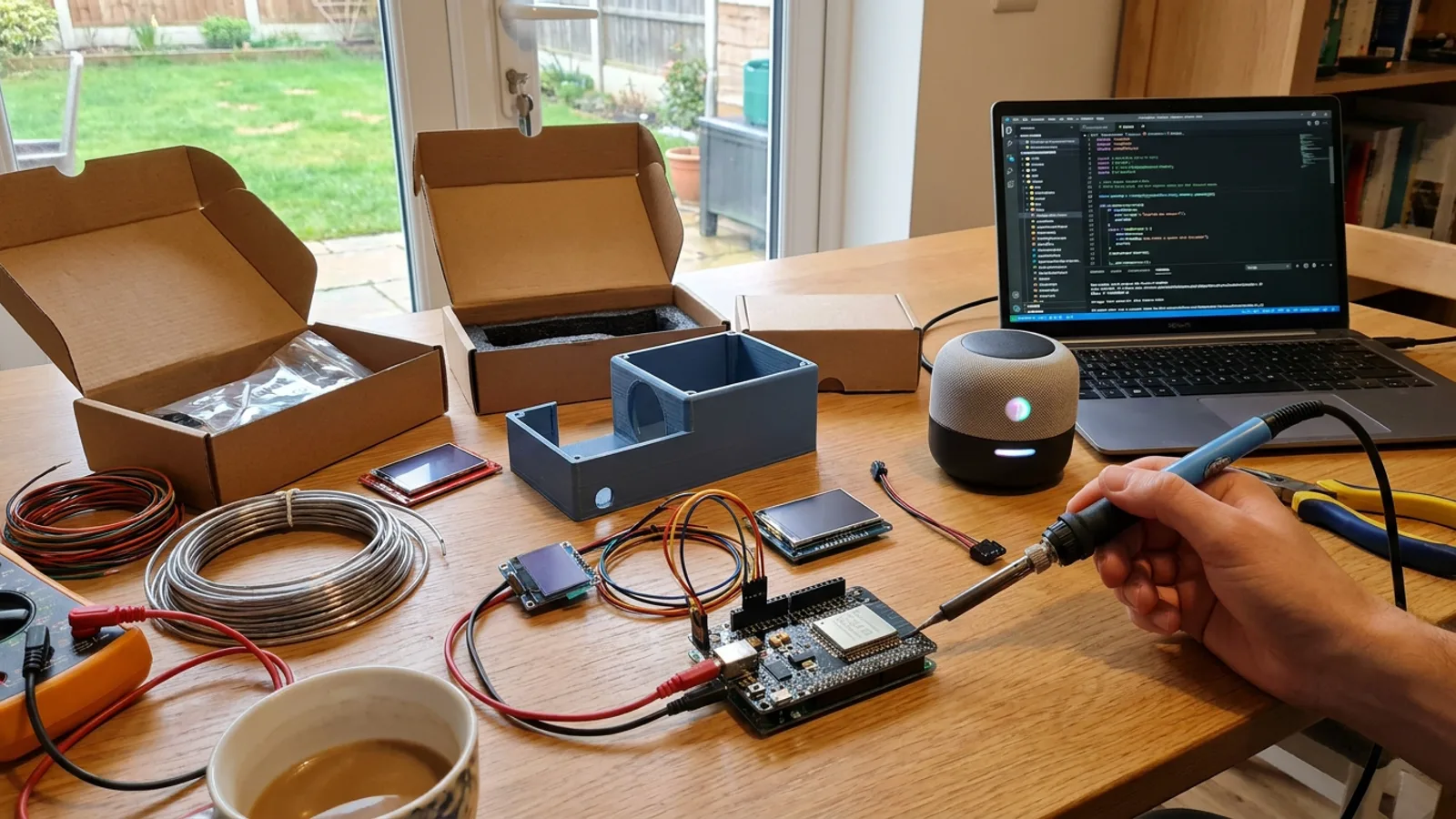
Meta has taken an unusual step in the AI hardware race: instead of closing off its technology, it has opened it up. The company has introduced Muse Gadgets, an open-source project designed for electronics enthusiasts who want to build their own devices connected to Muse, its AI agent. Additionally, it has manufactured 5,000 units of its own device, the Muse Home Link, which it will give away to subscribers while supplies last.
The announcement comes at a key moment. Apple and OpenAI are each working on their own artificial intelligence devices, and no one has yet defined what the physical form of this technology should be in everyday life. Meta, which already has the Ray-Ban smart glasses as its most successful AI product to date, is now looking to explore other paths with a different strategy: letting the community experiment for it.
What Muse Gadgets includes for those who want to build their own device
The project consists of two technical components. On one hand, firmware designed for ESP32 boards, the most popular microcontrollers among electronics enthusiasts. On the other, an SDK for Linux that allows home-built devices to connect directly with Muse.
All code has been released under the Apache 2.0 license, one of the most permissive free software licenses. This license allows the code to be used, modified, and distributed, even in commercial products, provided that the original license notices are maintained.
A Discord community has already emerged around the launch, where users share their builds and resolve technical questions about the firmware and the SDK.
Muse Home Link: Meta’s own device
Meta has not limited itself to publishing open-source code. The company has also designed its own device, the Muse Home Link, a small USB-C connected device that links the Muse agent to the home network.
Once connected, Muse can control televisions, speakers, and any other equipment that has an HTTPS interface. This means the system does not depend on a closed ecosystem of compatible brands: it is enough for the device to accept commands via that common web protocol.
According to data provided by Meta, 5,000 units of the Home Link have been manufactured and will begin shipping in the coming weeks. They will be free, but only for those who are already Muse subscribers and while supplies last.
A practical example of use
With the Muse Home Link connected to the USB-C port of a router or compatible equipment, a user could ask Muse to lower the volume of a speaker or change the channel on the TV without touching any remote, provided both devices support commands via HTTPS.
Those who prefer to build their own solution instead of waiting for the Home Link shipment can turn directly to the Muse Gadgets firmware and an ESP32 board, assembling a custom module that translates the agent's instructions into actions on any home appliance.
Why Meta decided to open-source the code now
The decision to release the code seems to respond to an additional goal beyond the enthusiast community. By observing what users build with these tools, Meta can detect which AI device formats generate the most real interest among the public.
It is a way to explore the terrain at a low cost. Instead of betting solely on its own design, the company allows thousands of enthusiasts to test different variants and draws conclusions from those experiments. The 5,000 Home Links act as a complement to that strategy: a real product in the hands of real users that will generate concrete usage data.
The balance between Meta, Apple, and OpenAI in AI hardware
The launch comes amid growing competition to define the reference artificial intelligence device. While Apple and OpenAI develop their own devices, Meta's Ray-Ban glasses remain one of the most widely adopted AI products to date.
Muse Gadgets adds a different path to that strategy. If the glasses represent a closed product aimed at the mass market, the open project turns enthusiasts into a constant testing laboratory. If any hardware format succeeds within that community, Meta will detect it before its direct competitors.
It is worth noting the actual scope of the announcement: the 5,000 devices constitute a limited run, and shipping times are still measured in weeks, with no exact date confirmed.
What to check before getting started with Muse Gadgets
For those considering participating in the project, several practical aspects should be kept in mind:
Verify if home appliances have an HTTPS interface, as it is the essential requirement for the Muse Home Link to control them.
Confirm your status as a Muse subscriber, since the Home Link is given away exclusively to those who already are, and only while units remain available.
Review the terms of the Apache 2.0 license if you plan to commercialize any development based on the code, as it allows commercial use but requires keeping the original notices.
For those with experience with ESP32 or Linux, the recommended starting point is the published firmware and SDK, with the Discord channel as a space for consultation.
What this announcement means for users
For electronics enthusiasts, the project provides free access to tools that allow them to connect their own builds with an artificial intelligence agent, without prior authorization and under a flexible license. For those who prefer an immediate solution, the option is to try to get one of the 5,000 Home Links as a Muse subscriber.
The final result will depend on what the community manages to build in the coming months. If hardware formats emerge that users adopt en masse, Meta will have a valuable guide for its future products. If that does not happen, the project will remain an experiment aimed at a small audience.
Frequently Asked Questions
What is Muse Gadgets?
It is an open-source project launched by Meta that includes firmware for ESP32 boards and an SDK for Linux, designed for enthusiasts to connect home devices with Muse, the company's artificial intelligence agent.
What is the Muse Home Link?
It is a device with a USB-C connection designed by Meta that links the Muse agent to the home network, allowing control of televisions, speakers, and other equipment compatible with an HTTPS interface.
How can I get a free Muse Home Link?
Meta has manufactured 5,000 units that will be given away exclusively to Muse subscribers, while supplies last. Shipments should begin in the coming weeks.
What license does the Muse Gadgets code have?
The project is published under the Apache 2.0 license, which allows the code to be used, modified, and distributed, even in commercial products, provided that the original license notices are maintained.
What do I need for Muse to control my devices?
Home appliances must have an HTTPS interface so that the Muse Home Link or a device built with the Muse Gadgets firmware can send them commands through the AI agent.
Why did Meta decide to open-source this code?
As indicated by the announcement, opening the code allows Meta to observe which AI device formats the community develops and prefers, thereby obtaining useful information to guide its future hardware products.