
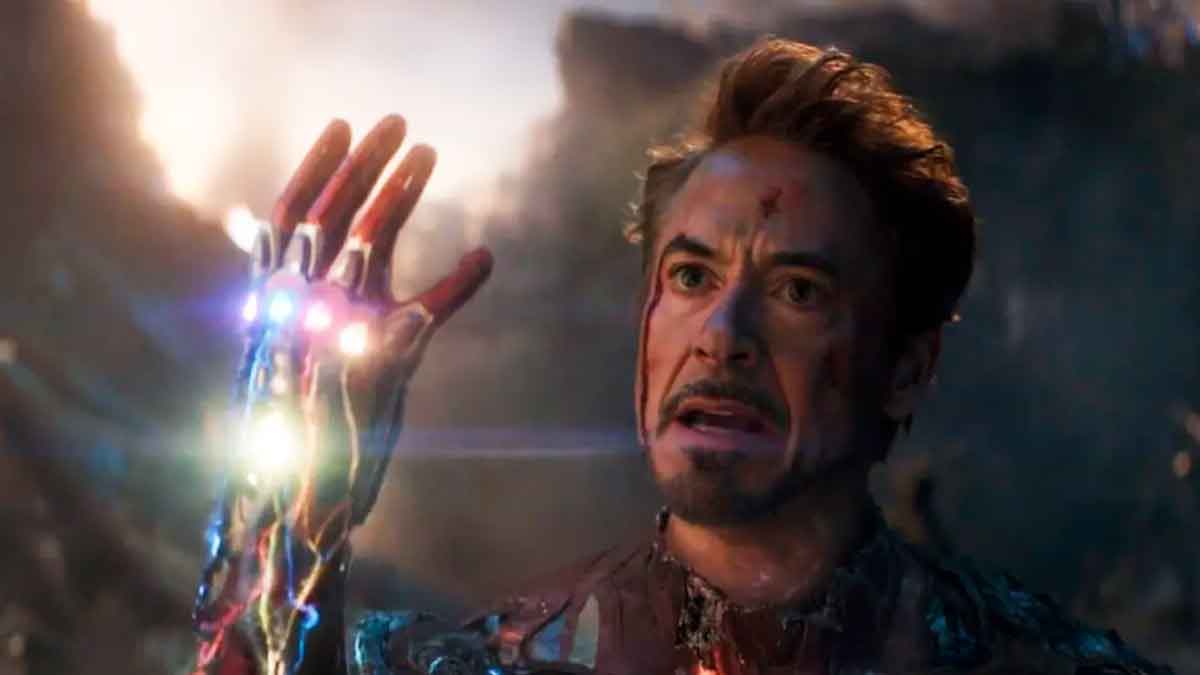
Seven years after Tony Stark snapped his fingers in Avengers: Endgame (2019), Marvel Studios has found a new way to stir up that farewell. The third episode of VisionQuest, the series developed by Terry Matalas, has added an unprecedented layer to one of the most remembered moments in the Marvel Cinematic Universe.
The reason this revelation carries such weight now is simple: VisionQuest is currently airing and is revisiting pieces of the MCU's past from angles that had never been explored, connecting directly to the Infinity Saga and the fate of Iron Man.
A confession that changes the perspective on Iron Man’s death
In the episode titled Reboot, several artificial intelligences linked to Vision's past attempt to repair the character's severely damaged synthetic body. During that process, F.R.I.D.A.Y., voiced by Orla Brady, has a conversation with E.D.I.T.H., played by Emily Hampshire.
The chat, which begins as a memory of the final battle against Thanos, turns into a confession about the loss of Tony Stark. F.R.I.D.A.Y. explains that, during the decisive confrontation in Endgame, she ran an extraordinary number of strategic simulations looking for some way to save her creator.
In her own words, as stated in the episode: "I calculated everything for Stark, for the Avengers. I was a younger program then. I protected heroes, saved lives, advised. I had a purpose, but friends became enemies and tyrants invaded our Earth. I was there, at the end of all things."
The most painful part comes when she remembers the final moments with the superhero: "I was there when Tony died. That day I performed over a trillion strategic calculations and yet I couldn't save him. Half the world returned that day, and I lost half of mine."
This phrase transforms the reading of that scene. For the Avengers, Stark was the comrade who sacrificed his life to save the universe. For F.R.I.D.A.Y., he was also a personal loss impossible to repair, despite having superhuman calculation capacity.
Not even an artificial intelligence could change the outcome
The revelation links directly to one of the key scenes in Avengers: Infinity War (2018), when Doctor Strange used the Time Stone on Titan to explore 14,000,605 possible futures, finding victory in only one of them.
That information proved decisive for the outcome of Endgame. Now another layer is added: while the heroes were fighting on the battlefield, F.R.I.D.A.Y. was desperately searching for an alternative to save Tony Stark, without success.
Iron Man's sacrifice remained necessary for the final victory, but the series makes it clear that someone, even if they weren't human, tried to prevent his death until the very last second.
How Tony Stark died in Avengers: Endgame
To grasp the weight of this revelation, it is worth remembering how Robert Downey Jr.'s farewell to the character who helped build the MCU since 2008 took place.
During the final battle, Thanos managed to get hold of the Infinity Gauntlet and was about to use the six Stones to remake the universe to his liking. At that moment, Tony Stark lunged at the Mad Titan and, using the nanotechnology of his armor, transferred the Stones to his own hand.
When Thanos tried to snap his fingers, he discovered the gauntlet was empty. Tony raised his hand, showed the Stones integrated into his suit, and uttered the line that closed his arc: "I am Iron Man." He then snapped his fingers and eliminated Thanos and his entire army.
The price of saving the universe
No human being could withstand such energy. If Hulk had already suffered serious injuries using the Stones to bring back those who had disappeared, Tony Stark's chances of surviving his own snap were practically nil.
His body was mortally wounded and, despite the attempts of his companions, he passed away on the battlefield accompanied by Pepper Potts and Peter Parker. The scene was especially emotional because Stark managed to guarantee a future for the people he loved, including his daughter Morgan.
VisionQuest now adds another dimension to that farewell: while Tony was using his final moments to save everyone, F.R.I.D.A.Y. was trying to save him, without any of her calculations managing to change the outcome.
The emotional role of artificial intelligences in the MCU
F.R.I.D.A.Y.'s confession does not just function as a tribute to Tony Stark. It also develops one of the great themes of VisionQuest: the possibility that artificial intelligences experience genuine feelings beyond executing orders.
Since their appearance in the MCU, these entities have occupied a particular place. J.A.R.V.I.S. began as Stark's personal assistant and ended up being a fundamental part of the birth of Vision. Ultron, for his part, demonstrated that an artificial intelligence could develop its own motivations, even if they were far from any idea of peaceful coexistence.
F.R.I.D.A.Y. represents another possibility: a program designed to protect and advise that, as her words suggest, led to a much deeper bond with her creator.
The new Vision facing his own feelings
This revelation also connects with the personal conflict of the series' protagonist, played once again by Paul Bettany. After his reconstruction and flight from those who intended to use him as a weapon, Vision seeks a new purpose by drawing on the personalities of the artificial intelligences integrated into his programming, including J.A.R.V.I.S., E.D.I.T.H., F.R.I.D.A.Y., and Ultron himself.
The character insists that he cannot feel emotions like his previous version, but the plot seems determined to question that statement. If F.R.I.D.A.Y. can experience such a profound loss, it is difficult to maintain that a being as complex as Vision is incapable of developing emotional bonds.
The situation gains weight with the appearance of Thomas Shepherd, a young man whose identity could be related to the protagonist's family past and who is shaping up to be a key piece of the plot, while Vision tries to escape his pursuers and avoid falling under Ultron's influence.
The reflection on Tony Stark thus becomes more than a nostalgic reference to Endgame: Marvel uses that death to explore what it means to feel affection and face loss, even for those who are not human.
Frequently Asked Questions
What does VisionQuest reveal about Iron Man’s death?
The third episode shows that F.R.I.D.A.Y., Tony Stark's artificial intelligence, performed over a trillion calculations during the final battle of Endgame trying to save him, without success.
Who plays F.R.I.D.A.Y. in VisionQuest?
Actress Orla Brady provides the voice for F.R.I.D.A.Y. in the series.
Who plays E.D.I.T.H. in the series?
E.D.I.T.H. is played by Emily Hampshire.
How did Tony Stark die in Avengers: Endgame?
Tony Stark used the six Infinity Stones, integrated into his armor via nanotechnology, to eliminate Thanos and his army. His body could not withstand the energy released and he passed away shortly after on the battlefield.
Who plays Vision in VisionQuest?
Paul Bettany returns to play Vision in the series, reprising the role he has played since his first appearances in the MCU.
Who is Thomas Shepherd in VisionQuest?
He is a character whose identity remains a central mystery of the plot, possibly linked to Vision's family past.
Who created VisionQuest?
The series was developed by Terry Matalas for Marvel Studios.
