
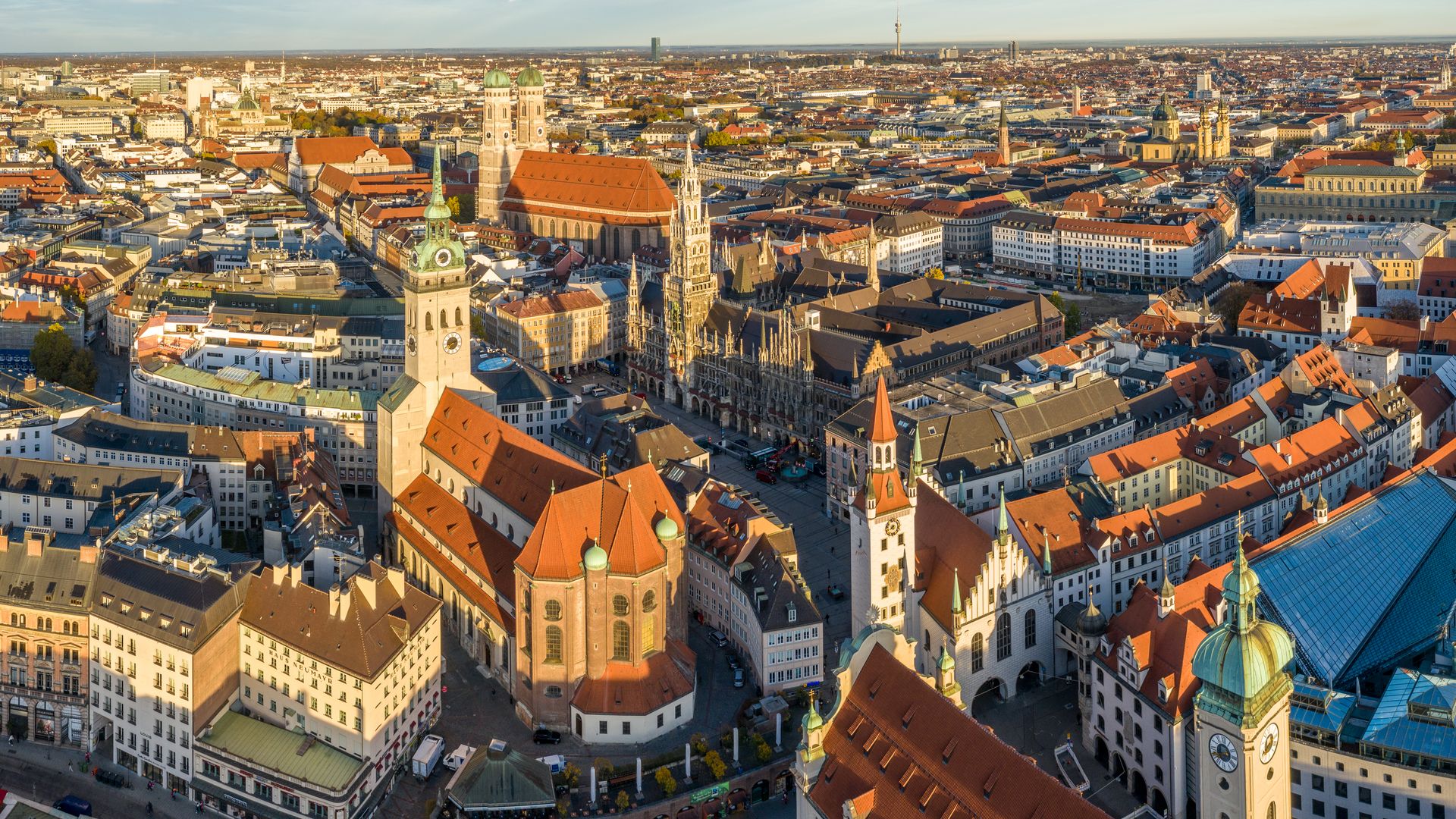
Munich is once again on the radar of travelers seeking something different from ostentatious luxury. The Bavarian capital is experiencing a season in which its dual identity—historical and avant-garde—is perceived with particular clarity, just as autumn covers one of its most iconic corners in golden tones: the English Garden.
This combination of heritage, innovation, and seasonal aesthetics explains why the German city is gaining prominence now as a reference for what some travel circles call quiet luxury: curated experiences, without the need for display.
A city that does not choose between past and future
For centuries, Munich was the royal capital of Bavaria, a status that can still be felt in its Baroque and Neoclassical facades. But the city has not remained anchored in that legacy. In parallel, it has become a relevant hub for startups and contemporary architecture, with proposals that coexist seamlessly with the historical layout.
Despite its economic and cultural weight within Germany, the historic center maintains a manageable scale. It is possible to explore it on foot, without relying on transport, which reinforces that feeling of a city big in ambition, but intimate in day-to-day life.
Quiet luxury as a hallmark
If there is one label that is repeated when talking about Munich, it is that of being the most upscale city in Germany. It is not about ostentation, but about a lifestyle where detail matters more than display. That philosophy translates into its hotel, gastronomic, and cultural offerings, designed for those who value subtlety over spectacle.
The English Garden, the protagonist of autumn
Between September and November, the English Garden—one of the largest urban parks in Europe—is transformed. Its trees take on golden and ochre tones that turn walks into an almost cinematic experience. It is, probably, the time of year when the city shows its most elegant and photogenic version.
Two ways of understanding Munich hospitality
Bavarian hospitality does not respond to a single model. In Munich, proposals with different personalities coexist, but are united by the same obsession: attention to detail. From addresses with a more classic and solemn character to spaces of contemporary inspiration, the city offers alternatives that allow one to experience that quiet luxury from different angles, without losing coherence in the final experience.
Why Munich is gaining tourism relevance now
The growing interest in Munich as a destination for quiet luxury coincides with a broader trend in European tourism: the search for authentic, well-executed experiences far from visual excess. In that context, a city that combines heritage, innovation, and such a marked autumnal aesthetic becomes an especially attractive proposal for those planning trips in the coming months.
- Historical heritage accessible on foot
- Expanding innovation and start-up scene
- Autumn landscapes of great aesthetic value
- Hotel offerings oriented toward detail and discretion
Frequently Asked Questions
Why is Munich considered a quiet luxury destination?
Because its proposal is based on attention to detail, architectural and gastronomic quality, and refined hospitality that does not depend on ostentation to stand out.
What is the best time to visit Munich according to this travel profile?
Autumn is especially recommended, as the English Garden takes on golden tones that enhance the elegant character of the city.
Is it easy to get around Munich without a car?
Yes. Its historic center has a small scale that allows you to explore it on foot with comfort, despite the cultural and economic weight of the city.
Does Munich combine history and modernity in its tourism offering?
Yes. The city maintains its heritage as the former royal capital of Bavaria, visible in its Baroque and Neoclassical architecture, while promoting contemporary architecture and technological innovation projects.
What distinguishes Munich from other luxury cities in Europe?
Its ability to offer a sophisticated experience without resorting to visual excess, betting on discretion, detail, and an intimate urban scale despite its international relevance.