
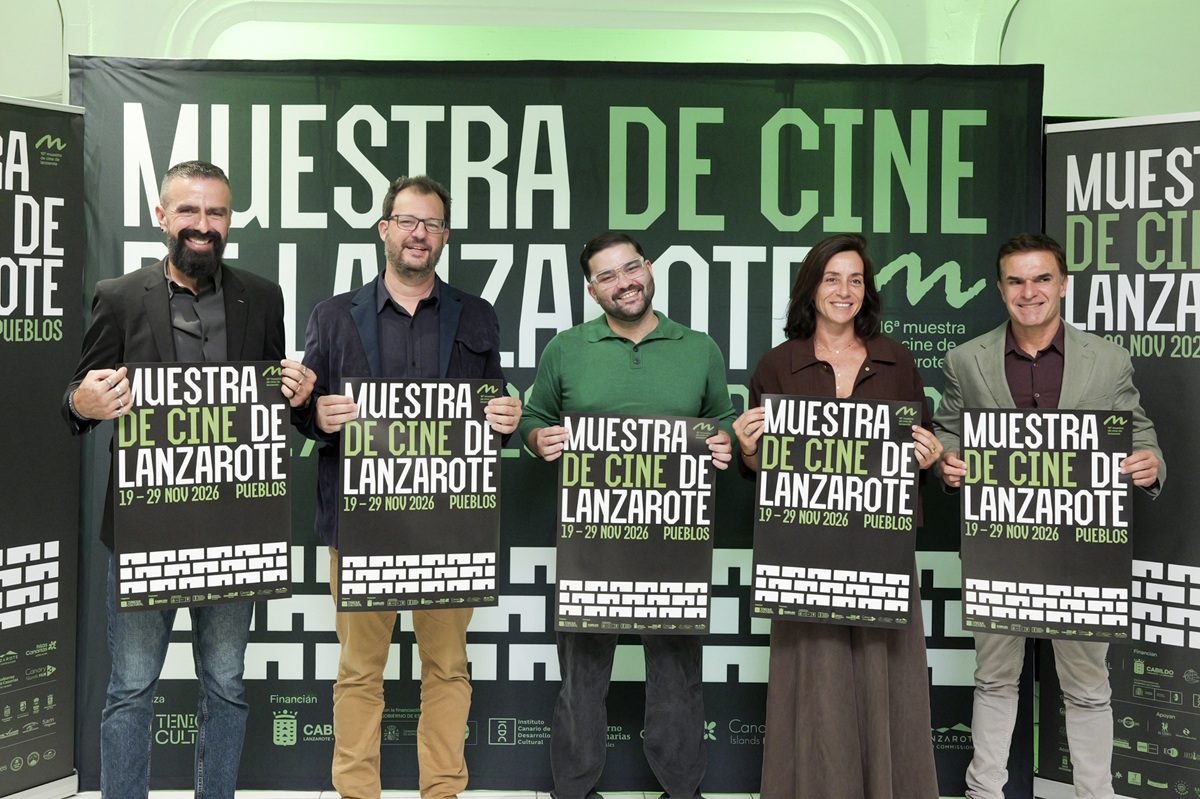
The Lanzarote Film Festival presented its 16th edition this week, marking another year in which the festival focuses on the island's villages, the relationships that sustain them, and the transformations they have undergone over time. The event is significant because it once again places local identity at the center of its programming, at a time when independent cinema is seeking new ways to connect with the territory and its inhabitants.
The festival will kick off its first activities on November 3 with five lectures and a panel discussion organized in collaboration with UNED Lanzarote. The main sessions, featuring the bulk of the programming, will take place between November 19 and 29 in various venues spread across Lanzarote's seven municipalities and La Graciosa.
A program that connects cinema, memory, and territory
As in previous editions, the Festival will bring films and filmmakers from different parts of the world to the island to open a debate on current issues. Screenings will be combined with community gatherings, courses, workshops, and proposals designed for both family and educational audiences, in a program that seeks to build bridges between cinematic culture and the daily life of Lanzarote's municipalities.
Institutional statements
The Minister of Culture of the Cabildo of Lanzarote, Jesús Machín Tavío, emphasized during the presentation that villages "create community, create people," reclaiming the legacy of the generations that have cared for the fields, the culture, and the ways of relating on the island. Machín expressed his satisfaction that this edition has chosen villages as its central theme and defended the need to keep that identity alive to pass it on to future generations of Canary Islanders.
For his part, Héctor Fernández, CEO of the Lanzarote Foreign Promotion Society (SPEL–Turismo Lanzarote), highlighted that the project "breathes something different" and defended the entity's support for initiatives that highlight what differentiates Lanzarote from other tourist destinations. Fernández stressed the clarity of the Festival's objectives and its role in the island's international projection.
Elisabeth Cedrés, head of the Corporate Social Responsibility Department and representative of the Centers for Art, Culture and Tourism (CACT), reaffirmed the entity's commitment to the festival, highlighting the impact of its programming and her personal identification with an edition focused on villages and the island's identity.
The Director of Institutional Relations for Canary Islands Tourism, Javier Prieto, noted that the Festival has consolidated itself over its 16 editions as a reference point for independent creation, with a program that reaches all seven municipalities and La Graciosa, brings cinema to the public, and promotes local talent. According to Prieto, Canary Islands Tourism sponsors these types of events because they generate a diverse cultural agenda that is open to both residents and visitors.
Javier Fuentes Feo, director of the Lanzarote Film Festival, explained that it is "a project with a local perspective and vocation, but with global ambition," which has made the island its true protagonist, placing its people and culture at the center. Fuentes announced that this edition will celebrate the history and ways of life of Lanzarote's villages, connecting them with experiences from other parts of the world through cinema and memory.
Official Section and public jury deliberation
The Official Section of this 16th edition will bring together five feature films, which will be evaluated by a jury whose deliberation will be held publicly. This format will allow the attending public to hear the arguments used, understand the differences in criteria among jury members, and follow the process that leads to the awarding of the prize closely.
Trasfoco and Canarian cinema at the heart of the program
The Trasfoco section will address the theme "Villages" through a selection of feature films and short films from different periods of film history. These films will serve as a starting point to reflect on how a community is built, how its memory is transmitted, and what happens when its traditional ways of life change. The experiences of other territories will thus serve as a mirror through which to observe the reality of Lanzarote's villages.
Cinema made in the archipelago will also have a prominent space in the competitive section Cruce de Caminos: Canarian filmmakers, designed to foster direct meetings between Canarian creators and the public attending the Festival.
Courses, workshops, and meetings with people over ninety
The programming for this edition will extend beyond the movie theaters. Complementary activities include a cinematography photography course taught by Mauro Herce and a sound course led by Eva Valiño and Belén López.
In addition to these training proposals, there will be lectures organized with UNED and a community gathering dedicated to collecting the life experiences of the island's villages from people over ninety years old, which will be held at Bodegas El Grifo. The program will also include a workshop on how to make traditional rosetas using recycled materials.
Frequently Asked Questions
When is the 16th edition of the Lanzarote Film Festival held?
Preliminary activities begin on November 3 with lectures and a panel discussion with UNED Lanzarote. The main festival days take place from November 19 to 29.
What is the central theme of this edition?
The memory of villages, the relationships that sustain them, and the transformations they have experienced over time is the main thematic focus of this edition.
Where do the screenings and activities take place?
The festival is held in venues spread across the seven municipalities of the island of Lanzarote and also in La Graciosa.
How many films are competing in the Official Section?
The Official Section of this edition consists of five feature films, which will be evaluated by a jury whose deliberation is held publicly.
What is the Cruce de Caminos section?
It is the competitive section dedicated to filmmakers from the Canary Islands, designed to foster meetings between the archipelago's creators and the festival audience.
What other activities does the program include besides the screenings?
It includes cinematography photography and sound courses, lectures with UNED, a community gathering with people over ninety at Bodegas El Grifo, and a workshop to make rosetas with recycled materials.