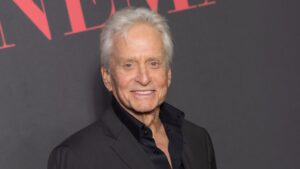
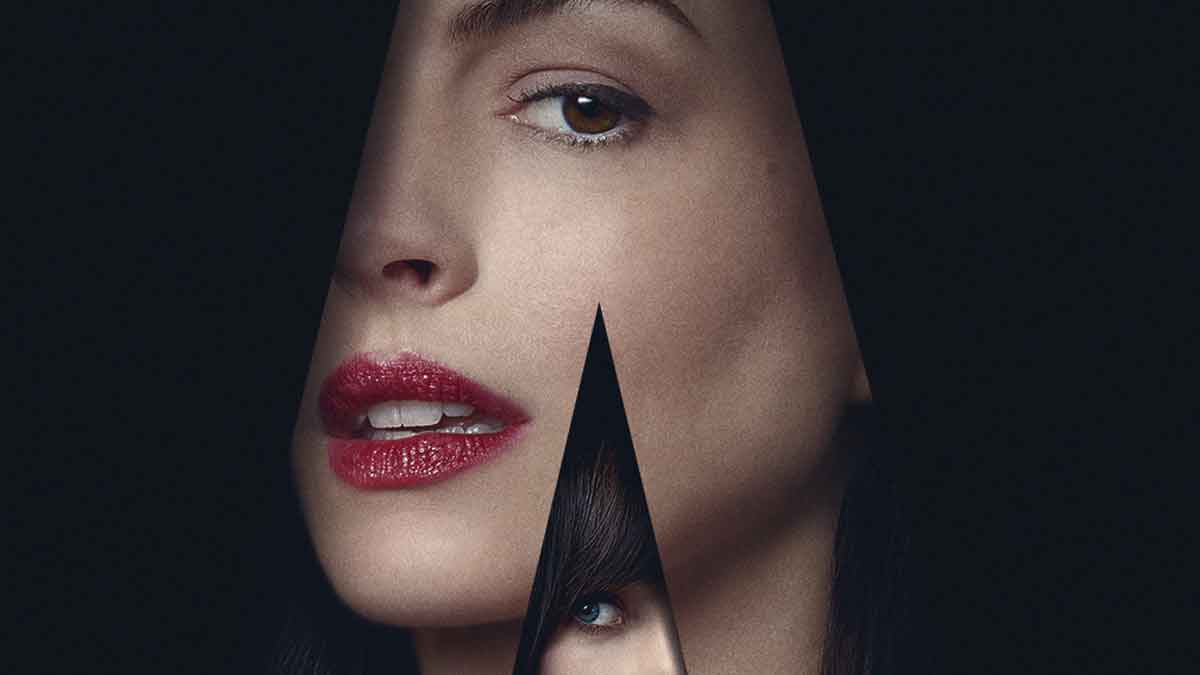
The theatrical release of Verity has reignited interest in adaptations of Colleen Hoover, an author who has already proven her ability to pack theaters with stories of family secrets and toxic relationships. This time, the draw is even greater: a cast led by Anne Hathaway, Dakota Johnson, and Josh Hartnett, directed by Michael Showalter, released on October 2, 2026.
The result is a psychological thriller that delivers on much of what its premise promises, though it leaves the feeling that it could have gone much further.
What is Verity about?
The story follows Lowen Ashleigh, a struggling writer who receives an offer she cannot refuse: to finish, under anonymity, the successful literary saga of Verity Crawford, a bestselling author incapacitated after a serious accident.
To work on the project, Lowen moves into the massive house where Verity lives with her husband, Jeremy. What was supposed to be a simple professional task becomes complicated when, while reviewing the author's files, she finds an autobiographical manuscript with thoughts and family episodes disturbing enough to completely change anyone's image of Verity.
From that discovery, the film builds all its tension around a simple but effective question: how much of what is shown on screen deserves to be believed? The screenplay is by Nick Antosca, and the film has a runtime of 116 minutes.
Dakota Johnson anchors the viewer’s perspective
Dakota Johnson carries much of the narrative weight. Her Lowen is not a protagonist fully prepared for the situation she gets herself into, and that mix of insecurity, pain, and professional ambition explains why she accepts decisions that, from the outside, should trigger all the alarms.
The actress achieves a key balance: Lowen seems fragile without being naive. As the plot progresses, she begins to make increasingly questionable decisions, to the point where the viewer also ends up doubting her.
Anne Hathaway turns immobility into a threat
Anne Hathaway's role is perhaps the riskiest in the cast. For much of the runtime, Verity Crawford can barely move or speak, which forces the actress to build the character through glances and small gestures.
That limitation becomes one of the film's most effective assets: it is enough for Verity to be sitting in a room for a scene to accumulate more tension than others designed for big reveals. The flashbacks recover the successful and elegant woman she was before the accident, in contrast to the silent presence of the present.
Josh Hartnett, the husband who never quite seems reliable
Jeremy could have been the simplest character in the story: the attractive husband devastated by family tragedy. Josh Hartnett avoids that path by building a constant ambiguity, so that each of his reactions can be read as those of a vulnerable man or someone who knows exactly how he wants to be perceived.
The attraction between Jeremy and Lowen appears from the beginning, but it never feels entirely safe, which keeps suspicion about his character active throughout the plot.
A thriller that holds back when it should let go
The first half of the film is its most solid stretch. The progressive discovery of the manuscript, combined with fragments of the past, generates an effective dynamic in which every new detail modifies the perception of the characters.
The problem comes in the final act. Some revelations can be anticipated with ease, and others depend on coincidences that require accepting the internal logic of the story without too much resistance. The material—with sex, violence, and motherhood turned into a nightmare—called for a more unleashed tone, but Showalter's direction almost always maintains a controlled register, which diminishes the impact of moments that should be truly uncomfortable.
The best part comes after the credits
Much of the enjoyment of Verity appears once the screening ends, when the viewer reconstructs scenes and debates which version of events is more credible. The film is designed so that none of its three protagonists can claim absolute moral authority: Lowen is not innocent, Jeremy has too many dark areas, and Verity makes it impossible to clearly separate the victim, the author, and the manipulator.
That game of perceptions allows the film to survive its structural weaknesses, even when some twists are not as surprising as they should be.
An elegant production that could have taken more risks
Visually, Verity relies on a large mansion that functions almost like another character, and the soundtrack helps sustain the tension at several moments. However, the final feeling is that of a story with the potential to be darker, more erotic, and more melodramatic than it finally dares to show.
Conclusion
Verity works best when it accepts its nature as a twisted thriller and lets its characters play with the viewer's perception. With a well-chosen cast, an effective first half, and an atmosphere that turns a dream house into an increasingly unsettling place, the film succeeds as entertainment, even if its big reveals don't live up to everything it had built.
Frequently Asked Questions
What is the movie Verity based on?
It is an adaptation of the novel of the same name by Colleen Hoover, with a screenplay by Nick Antosca and directed by Michael Showalter.
Who are the stars of Verity?
The main cast consists of Dakota Johnson, Anne Hathaway, Josh Hartnett, and Irina Dvorovenko.
When was Verity released in theaters?
The film hit theaters on October 2, 2026, and has a runtime of 116 minutes.
What is the story of Verity about?
It follows Lowen Ashleigh, a writer who agrees to secretly finish the literary saga of Verity Crawford, an author incapacitated after an accident, and who discovers a manuscript that calls into question everything known about her and her family.
Is Verity a horror movie?
Not exactly. It is a psychological thriller with elements of mystery and drama, more focused on manipulation and suspicion than on traditional horror.
Is it worth seeing Verity in the cinema?
According to critics, it is recommended for those who enjoy thrillers with games of perception and ambiguous characters, although its final stretch does not reach the intensity of its initial setup.