
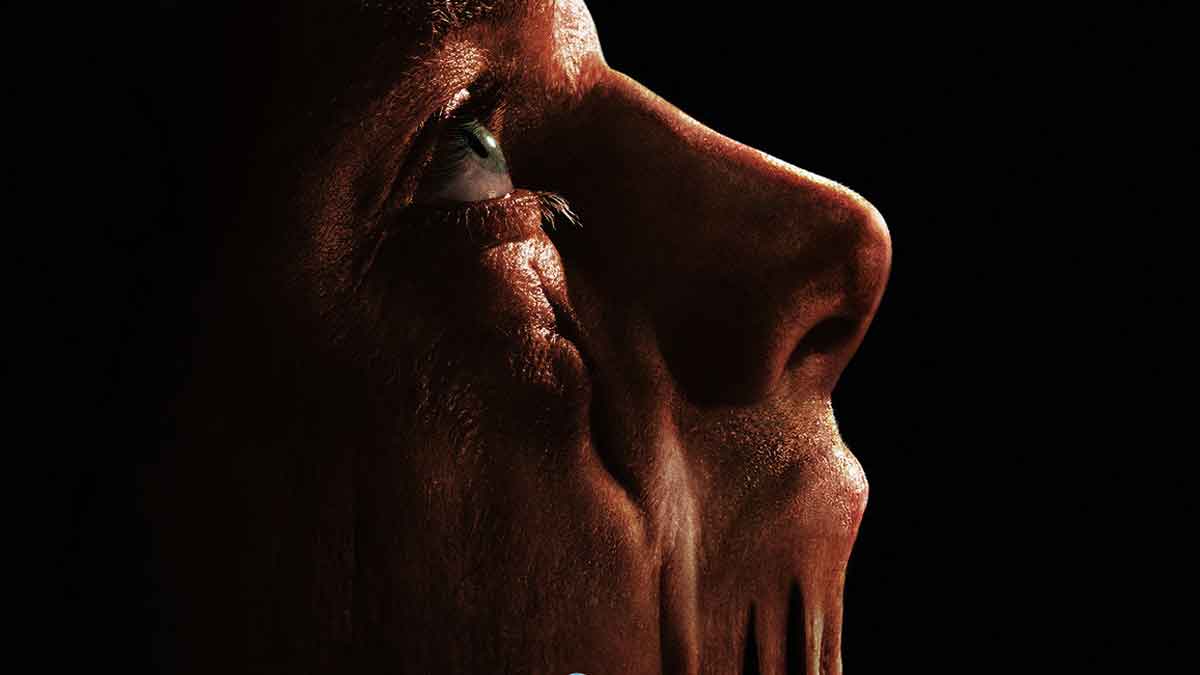
The DC cinematic universe premieres Clayface, a project that breaks away from the usual tone of superhero films to delve into body horror. Directed by James Watkins, the film hit theaters on October 23, 2026, and poses a question rarely seen in the genre: what happens when a Hollywood actor literally loses the face that made him famous?
The significance of this release is not minor. Following the success of productions like The Batman and The Penguin, which proved that Gotham's secondary characters can carry their own stories, DC is now betting on a classic comic book villain to explore an adult and bloody register, far removed from conventional battles between heroes and villains.
An actor who loses everything when he loses his face
Tom Rhys Harries plays Matt Hagen, an emerging Hollywood star recently nominated for an Oscar. His career collapses when the men of criminal Markos Szabo, played by David Dencik, destroy his face in retaliation for his relationship with Mia Torrez, the mobster's partner.
The loss of his physical appearance takes with it Matt's roles, professional circle, and financial resources. That premise, centered on an industry that turns image into capital, had the potential to become a devastating tragedy about fame and appearance, although the film only brushes against that idea without developing it in depth.
Desperation leads Matt to Caitlyn Corr, played by Naomi Ackie, a scientist experimenting with nanocells capable of regenerating damaged tissue. The treatment works better than expected at first, though it soon becomes clear that this miracle comes at a price.
Body horror, the film’s greatest achievement
Matt's physical transformation is the strongest point of Clayface. James Watkins takes advantage of the R-rating to build uncompromising body horror sequences, showing a body that stops obeying normal rules: skin stretches, melts, and reconstructs itself, even responding to the protagonist's emotional state.
Among the most intense moments is a sequence inside an airplane bathroom, as well as an especially brutal massacre at the Vesuvius club. Practical and digital effects are combined effectively, and Tom Rhys Harries' sharp features serve as an ideal canvas to show each stage of the mutation. However, the more spectacular Clayface's transformation becomes, the less dramatic weight Matt Hagen retains as a character, an imbalance that repeats throughout the runtime.
Echoes of The Fly and The Substance
Comparisons to David Cronenberg's The Fly are inevitable: a man introduces promising technology into his body that ends up transforming him into something monstrous while a romantic relationship tries to keep him connected to his humanity.
It is also difficult not to think of The Substance, with which it shares the idea of a body linked to fame and an idealized version of oneself. While that film took its ideas to extreme and deliberate consequences, Clayface remains on the surface of concepts regarding image obsession, method acting, or artificial intelligence without developing them to the end.
Harries sustains a character that the script simplifies
Tom Rhys Harries manages to keep Matt Hagen alive even though the script, written by Mike Flanagan and Hossein Amini, does not always give him enough tools. The actor convincingly conveys the leap from initial security to desperation and the subsequent spiral of violence.
Naomi Ackie brings humanity to Caitlyn, although her character receives less development than she would need to sustain the emotional weight of the final act. The relationship between the two is one of the few elements that reminds us that, beneath the monster, a person still exists.
The script's greatest weakness appears when Matt stops being a victim to become a villain, without the film clarifying whether it is technology, revenge, or boundless trauma that guides his behavior. Nor are the rules of his powers well-defined, which allows for flashy sequences but turns his abilities into an overly convenient narrative resource.
A Gotham without its own personality
Liverpool serves as a substitute location for Gotham, but the film fails to build the oppressive identity that The Batman or The Penguin had. The budget, around 40 million dollars, explains part of that difference in scale, although it does not fully justify the lack of visual personality.
The cinematography seeks to convey filth and darkness, but at times the result is a dull image rather than an unsettling atmosphere. Watkins is much more confident when he traps Matt in confined spaces than when he tries to expand the story into a wider Gotham.
Better when it moves away from the superhero
Paradoxically, the best moments of Clayface are those in which it is easy to forget that it belongs to the DC universe. The scenes focused on Matt's transformation or the consequences of Caitlyn's experiment would work just as well within an independent horror film, without the need for Batman, Joker, or any other Gotham icon.
That approach confirms that Clayface did not need a recognizable hero to justify its existence on screen: its own physical condition contained enough horror and tragedy to sustain a full-length film.
Final verdict
Clayface proves that body horror and the DC universe can coexist. Its transformations are unpleasant, the effects work, and Tom Rhys Harries offers the necessary humanity so that Matt Hagen is not reduced to a digital mass.
But the film uses its ideas about beauty, fame, identity, and exploitation as decoration for a fairly conventional revenge thriller. Not even Gotham, which should function as another character in the story, achieves its own identity for such a unique creature.
The result is not a failure, and as an experiment within the new DCU, it is more interesting than another superhero adventure built with the same usual structure. But beneath the gore and transformations lies a fascinating tragedy that the film barely touches.
Frequently Asked Questions
Who directs Clayface?
The film is directed by James Watkins, with a script by Mike Flanagan and Hossein Amini.
Who plays Matt Hagen, the protagonist who becomes Clayface?
Actor Tom Rhys Harries plays Matt Hagen, the Hollywood actor who undergoes the transformation into Clayface.
When was Clayface released in theaters?
The film hit theaters on October 23, 2026, in the United States.
Which actors complete the main cast of Clayface?
Along with Tom Rhys Harries and Naomi Ackie, the cast includes Max Minghella, Eddie Marsan, Joana Ribeiro, David Dencik, and Joshua James.
What other films is Clayface compared to?
Critics point to parallels with David Cronenberg's The Fly and The Substance, due to their treatment of the body, fame, and identity.
How long is Clayface?
The film has a runtime of 109 minutes.
Is Clayface part of the new DC cinematic universe?
Yes, the film is part of the new DCU and is set in Gotham, though with a focus on body horror rather than traditional superhero spectacle.