
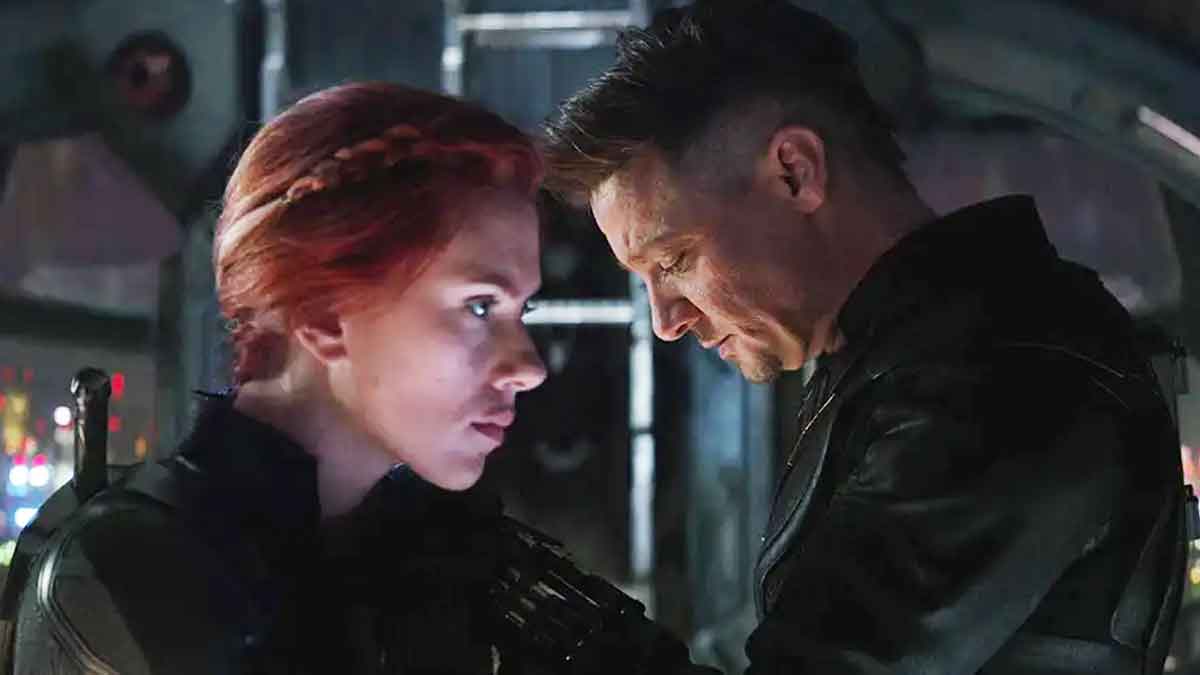
The Vormir scene in Avengers: Endgame continues to generate headlines years after its release. Screenwriter Stephen McFeely has revealed a little-known detail about the film's creative process: in one of the early versions of the script, it was not Natasha Romanoff who died to obtain the Soul Stone, but Clint Barton.
The information came to light during a Q&A session organized by Forbes following a special screening of Avengers: Endgame Encore. The statements are relevant now because they put into perspective one of the most discussed narrative decisions in the Marvel Cinematic Universe, just as the legacy of both characters remains active through their respective series and spin-off films.
The alternative version with Hawkeye
In Avengers: Endgame, Clint Barton and Natasha Romanoff arrive on Vormir knowing that only one of them can return with the Soul Stone. The final film shows Natasha sacrificing herself while Clint unsuccessfully tries to stop her.
According to McFeely, he and his co-writer, Christopher Markus, at one point developed a version where it was Hawkeye who fell into the void. The idea did not go very far because, as the screenwriter himself explained, part of the team strongly opposed it.
McFeely recounted that some female colleagues rejected that alternative, considering that it would deprive Natasha of her most heroic moment. At that time, Romanoff was the only woman among the original six Avengers, and her disappearance also coincided with the preparation of her first solo film within the MCU.
The screenwriter himself admitted that the goal was to provoke a real emotional impact on the audience, aware that the character's death would hurt regardless of who it happened to.
Why the sacrifice had to be Natasha Romanoff’s
Beyond the audience's reaction, McFeely argued that Natasha's narrative arc made her sacrifice have a special meaning within the character's story.
The screenwriter explained that Romanoff carried a past marked by her time as an assassin trained in the Red Room, and that much of her trajectory in the MCU had revolved around trying to make up for that history. Upon joining the Avengers, the group became the family she never had.
Therefore, according to McFeely, the possibility of saving that extended family carried a different narrative weight than that of Clint, whose motivation throughout the film was to reunite with his own biological family after Thanos' snap.
The sacrifice on Vormir thus closed a journey that had begun long before in the saga: Natasha could not erase her past, but she could give her life for those she considered her true family.
A farewell with little time to process
McFeely also acknowledged that the structure of Avengers: Endgame complicated how to handle that loss. After Natasha's death on Vormir, the plot moved quickly toward the final battle against Thanos, leaving little room to dwell on the grief.
To compensate for that lack of space, the writers later incorporated more dialogue that explicitly acknowledged Natasha's sacrifice, equating it to Tony Stark's in the final stretch of the film.
The creative team also wanted to close off any possibility of reversing that death later on. In the film itself, Bruce Banner asserts that he tried to bring Natasha back using the Infinity Stones, without success. Marvel has maintained that decision ever since: in the main timeline, Natasha Romanoff remains dead.
The legacy of Clint and Natasha after Endgame
The truth is that, had that first idea been kept, the subsequent history of the MCU would have been very different. Clint Barton survived Vormir, reunited with his family, and later starred in his own Disney+ series alongside Kate Bishop.
Natasha, for her part, got a film focused on her past, set before the events of Avengers: Endgame, which also served to introduce Yelena Belova, played by Florence Pugh.
Both characters were willing to sacrifice themselves on Vormir, and both have successors within the MCU today who continue part of their legacy: Kate Bishop and Yelena Belova. Given the direction those stories have taken, it is difficult to imagine a version where it was Clint who fell into the void instead of Natasha.
Frequently Asked Questions
Who actually died on Vormir in Avengers: Endgame?
In the final version of the film, Natasha Romanoff, Black Widow, sacrifices herself to obtain the Soul Stone, while Clint Barton tries to prevent it without success.
Is it true that Hawkeye was going to die instead of Black Widow?
Yes. Screenwriter Stephen McFeely confirmed that he and Christopher Markus developed an alternative version of the script in which Clint Barton died on Vormir, before discarding it.
Why was it decided to keep Natasha Romanoff’s death?
According to McFeely, part of the writing team considered that taking away Natasha's heroic moment was not acceptable, and furthermore, the character's narrative arc, marked by her attempt at redemption, fit better with that sacrifice.
Can Natasha Romanoff appear in the MCU again?
Within the main timeline, Marvel has confirmed that Natasha's death is definitive, ruling out even the possibility of reversing it through the Infinity Stones.
What happened to Clint Barton after Avengers: Endgame?
Clint Barton survived, reunited with his family, and later starred in his own series on Disney+ alongside the character of Kate Bishop.
Who played Natasha Romanoff and Clint Barton in the MCU?
Natasha Romanoff was played by Scarlett Johansson, while Clint Barton, Hawkeye, was played by Jeremy Renner.