
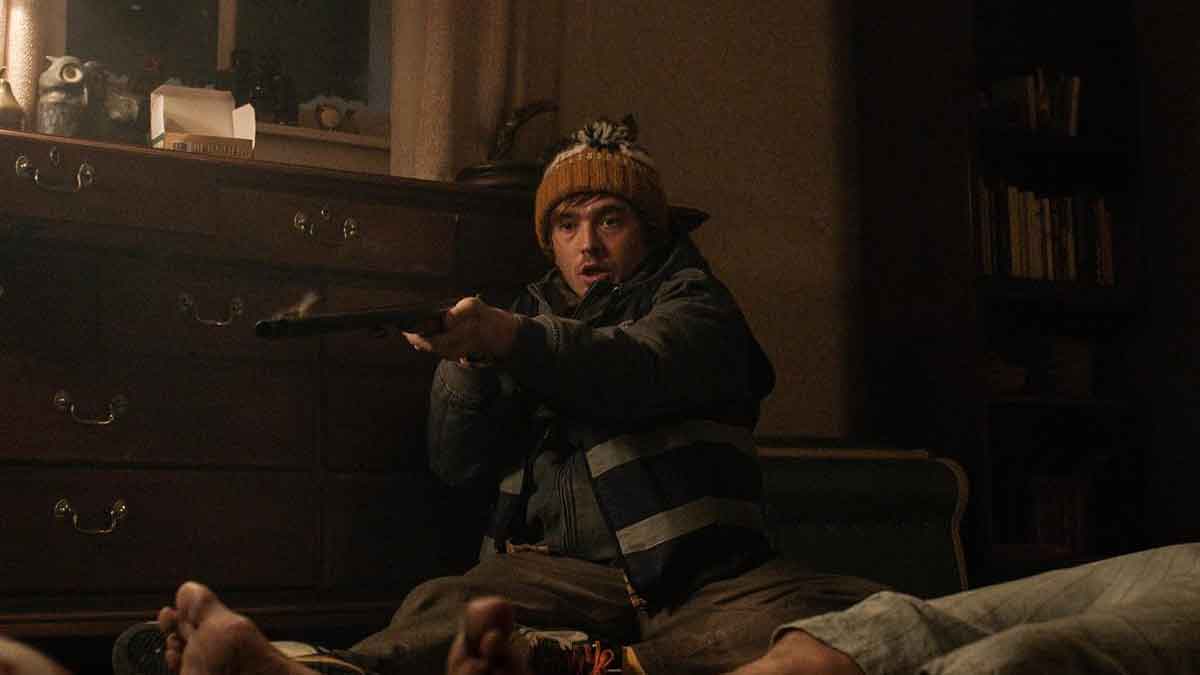
The new Resident Evil adaptation directed by Zach Cregger has sparked intense conversation among fans following its screening at Fantastic Fest, where the director and lead actor Austin Abrams detailed the reasons behind its surprising conclusion. The explanation is particularly relevant now that the film is shaping up to be one of the most discussed video game adaptations of the moment, precisely because it deviates from the expected narrative path.
The film follows Bryan, a courier played by Abrams, tasked with transporting a key piece to develop a cure for the T-Virus while Raccoon City collapses under the infection. Everything points to a classic story of overcoming adversity until, in the final act, Cregger decides to shatter that expectation.
A twist that transforms the meaning of the entire plot
Bryan manages to almost complete his mission and reaches the Umbrella scientists. However, the triumph never happens: the protagonist ends up succumbing to the virus and turns into a monster, ending any possibility of the cure reaching its destination.
That outcome retroactively changes the nature of the film. What appeared to be the story of a hero trying to save a city is revealed, in reality, to be the origin story of a creature.
Why Zach Cregger decided not to save Bryan
During the presentation at Fantastic Fest, when asked by The Direct about the decision not to offer a happy ending, Cregger explained that he initially considered the possibility of Bryan surviving. However, as he approached the conclusion, that option stopped convincing him.
The director noted that the idea of closing the story with the character's recovery felt narratively unsatisfying. In his own words, he felt that path would end up being a triumphant ending without much depth, which did not fit the tone he was aiming for in the film.
It was when he conceived the idea that the entire film should function—without the viewer noticing until the end—as the origin of a monster that Cregger felt he had found the true direction of the story. From that moment on, he asserted, there was no turning back in the scriptwriting process.
Austin Abrams’ take on his character’s fate
Austin Abrams, who plays Bryan, agreed with the director's decision, although he focused his assessment on the tragic dimension of the ending. For the actor, the most striking aspect is not just the character's physical transformation, but everything he loses just as he undergoes a significant personal change.
Abrams highlighted that the more he analyzes the ending, the more he perceives it as a beautiful and deeply sad story. The actor referred to a voice message his character leaves before the finale, addressed to his girlfriend, which she will likely never hear. That detail, he noted, adds an additional layer of emotion to Bryan's tragedy.
Resident Evil as an origin story
Cregger's approach represents a different way of tackling the original video game material. Instead of focusing on survival or heroism in the face of the T-Virus outbreak, the film uses those elements to actually build the birth of a new threat.
Bryan reaches where he was instructed to go, but in a city devastated by the infection, that does not guarantee he can leave still human. That idea, defended by both the director and the lead actor, is what sustains the impact of the film's final act.
Frequently asked questions
Who directs the new Resident Evil film?
The film is directed by Zach Cregger, who also participated in explaining the keys to its conclusion during Fantastic Fest.
Who plays Bryan in Resident Evil?
Actor Austin Abrams plays Bryan, the courier who is the protagonist of the story.
Why does Bryan not survive at the end of the film?
According to Zach Cregger, an ending where the character is cured did not fit the tone he was looking for, so he opted to turn him into the origin of a monster.
What is Bryan’s mission in the plot?
Bryan must transport a key piece for the development of a cure against the T-Virus to the Raccoon City General Hospital.
What does the ending mean for the film’s structure?
The twist reveals that the entire film actually functions as the origin story of a creature, rather than a classic tale of overcoming adversity.
What does Austin Abrams think about his character’s ending?
The actor considers the ending to be both tragic and beautiful, especially because of what his character loses just after experiencing an important personal change.