
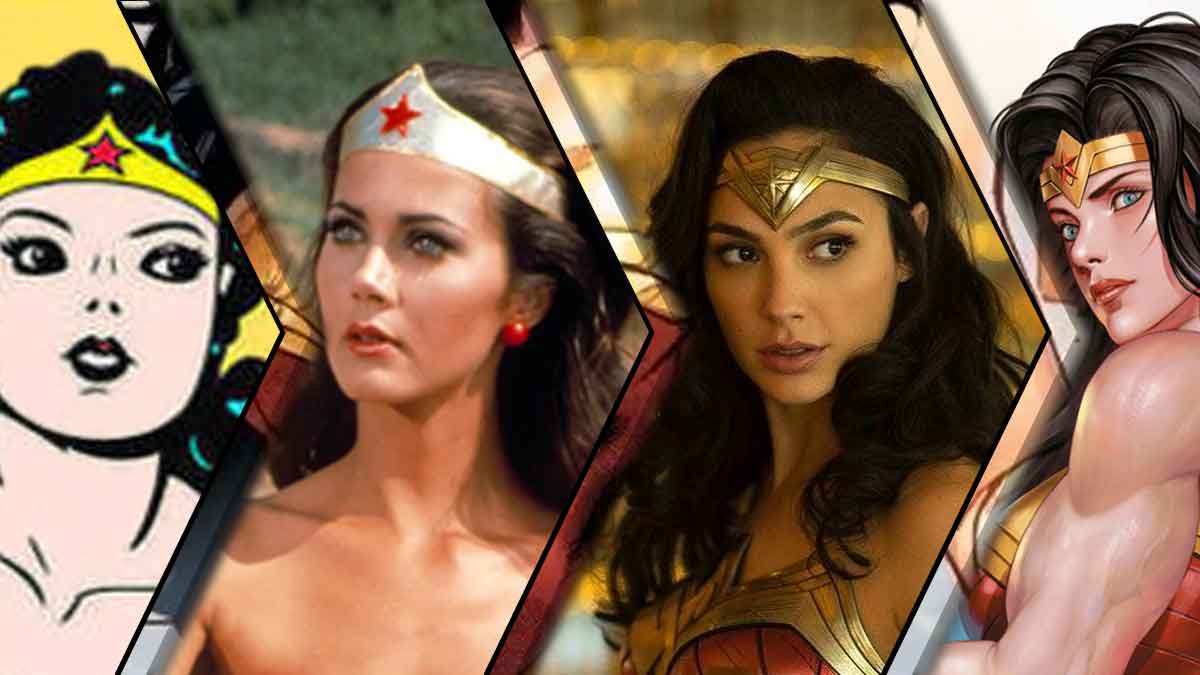
Wonder Woman turns 85 years old and celebrates by maintaining something few superheroes achieve: remaining relevant after eight and a half decades of stories. Since her first appearance in All Star Comics in 1941, Diana of Themyscira has navigated wars, social changes, editorial reboots, and multiple reinterpretations without losing her essence.
This October 21st marks Wonder Woman Day, a date intended to remember the legacy of a character who has been associated with justice, truth, and equality for decades. The anniversary is particularly meaningful now because, in a superhero landscape increasingly marked by internal conflict and narrative darkness, Diana continues to offer a different proposal: strength in the service of compassion.
The origin of Wonder Woman: A response to the superheroes of her time
When Wonder Woman arrived in comics in 1941, the genre was dominated by male characters who primarily resolved their conflicts with their fists. Superman and Batman had already proven there was a large audience for these types of stories, but a different voice was missing.
That voice came from William Moulton Marston, an American psychologist and writer who devised a heroine whose strength was not based solely on combat, but also on intelligence, compassion, and the defense of justice. Marston argued that love and persuasion could be as powerful as physical force, though that did not prevent his creation from also being capable of physically facing any villain.
The women behind Diana’s creation
The conception of Wonder Woman was influenced by two women close to Marston: Elizabeth Holloway Marston, his wife, and Olive Byrne, also noted as one of his primary inspirations. Both contributed, in different ways, to shaping an independent and intelligent protagonist capable of challenging the conventions of her time.
With illustrations by H. G. Peter, the character debuted in All Star Comics and quickly gained popularity. That acceptance allowed her to obtain her own collection in 1942, establishing her as one of the great pioneers of the superhero comic.
Powers and weapons that made Wonder Woman an icon
Unlike other superheroes who rely on technological armor or personal fortune, Wonder Woman possesses a set of skills and magical objects that have been part of popular culture for decades.
The most recognizable is the Lasso of Truth, which forces anyone trapped within it to tell the truth. Her bracelets allow her to deflect projectiles, and her tiara can also be used as a throwing weapon. Added to this are her superhuman strength, speed, endurance, and ability to fly, as well as the famous invisible jet.
Despite this arsenal, one of Diana's most distinctive traits has always been her willingness to try to understand her adversaries before resorting to force.
From comics to the screen: Lynda Carter and Gal Gadot
Wonder Woman's influence quickly transcended the comic panels. In 1972, she graced the cover of the first independent issue of the feminist magazine Ms., reinforcing her role as a symbol of independence and female empowerment.
Her popularity took a decisive leap in the seventies thanks to the television series starring Lynda Carter, whose iconic transformation became one of the most remembered images of television at the time.
Gal Gadot and the leap to superhero cinema
Decades later, Gal Gadot took on the role in Wonder Woman (2017), directed by Patty Jenkins. The film confirmed that Diana could lead a major superhero production without giving up the values that have defined the character since her inception.
One of the most remembered scenes in the film shows the protagonist advancing through No Man's Land during World War I, a sequence that summarizes her character: acting even when everyone else considers it impossible to do so.
Why does Wonder Woman remain relevant 85 years later?
Wonder Woman's importance does not lie solely in her editorial longevity. Other characters have also endured for decades, but Diana maintains a particularly recognizable identity.
While numerous superheroes build their stories around revenge or personal conflict, Wonder Woman proposes a different idea of heroism: it is not just about defeating enemies, but about defending a better world. She is a warrior who believes in peace and a powerful figure who does not view kindness as a weakness.
That combination largely explains her staying power. Each generation has reinterpreted Diana differently, from a feminist symbol to the protagonist of grand fantasy adventures, although her essential principles have remained recognizable despite the reboots and origin changes the character has undergone over the years at DC Comics.
How to celebrate Wonder Woman Day
The character's 85th anniversary is a great occasion to revisit some of her most notable eras. Fans can re-watch the classic series starring Lynda Carter, review the films with Gal Gadot, or explore the various animated versions Diana has had over the years.
It is also a good time to pick up the comics, from the early stories of the forties to modern reinterpretations focused on the mythology of the Amazons.
After 85 years of adventures, Wonder Woman continues to defend a simple but uncommon idea in the genre: power only makes sense when it is used to help others.
Frequently asked questions
When did Wonder Woman first appear?
Wonder Woman debuted in 1941 in the pages of All Star Comics, before getting her own collection in 1942.
Who created Wonder Woman?
The character was created by psychologist and writer William Moulton Marston, with illustrations by H. G. Peter.
Which actresses have played Wonder Woman?
Lynda Carter played her in the seventies television series, while Gal Gadot brought the character to life in film starting in 2017.
What powers does Wonder Woman have?
Her powers include superhuman strength, speed, endurance, and the ability to fly, in addition to weapons such as the Lasso of Truth, her bracelets, and her tiara.
Why is Wonder Woman Day celebrated on October 21st?
The date is used to commemorate the character's anniversary and review her trajectory in comics, television, and film.
How old is Wonder Woman in 2026?
Wonder Woman turns 85 in 2026, counted from her first appearance in comics in 1941.