
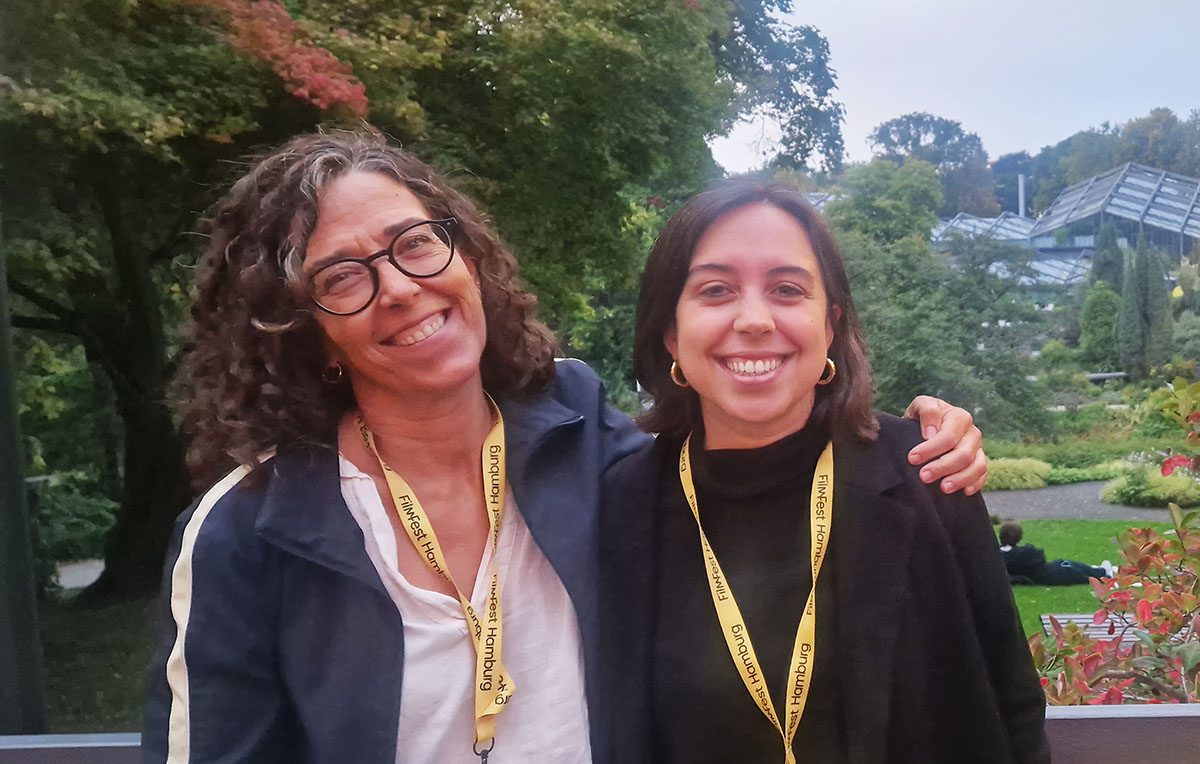
Spanish cinema in the post-production phase has once again demonstrated its international reach. Three projects from Spain were selected for the ninth edition of EWIP (European Work in Progress), held in Hamburg on September 28 and 29, and two of them received awards with financial support to advance their final production stages.
The event, directed by Torsten Frehse and Olimpia Pont Cháfer, took place within the framework of the FilmFest Hamburg Industry Days, a key meeting point for European cinema still in development seeking funding, distribution, and technical support before its premiere.
The significance of the result is notable: in a context where international co-production and access to post-production funds are decisive for moving independent projects forward, the fact that three Spanish titles secured a spot and two of them won awards confirms the vitality of a generation of directors who blend authorship, personal roots, and formal ambition.
Mare de Sucre, by Claudia Cedó, wins the post-production award
The big Spanish winner in Hamburg was Mare de Sucre, which received the European Work in Progress Cine Complete Postproduction Award, valued at 15,000 euros in post-production services.
The film marks the leap into cinema for Claudia Cedó, a renowned theater director, alongside producer Ariadna Dot, who decided to bring the eponymous play to the screen after seeing it premiere at the National Theater of Barcelona.
"I consider myself a feminist, but I realized I had never thought about the fact that people with mental disabilities could feel this desire," explains Dot, referring to the film's narrative core: María, a woman with a 65% intellectual disability who wants to be a mother.
The protagonist is played by Andrea Álvarez, who already brought the character to life in the theatrical production. Cedó wanted to film her, in her own words, "like a normal woman," moving away from common representations of characters with disabilities.
Origin in functional diversity workshops
The play was born from workshops that Cedó has been teaching for years to people with functional diversity, including Andrea Álvarez. According to the director, the theme of motherhood arose spontaneously during improvisation exercises at a time when she herself was looking to become a mother.
The project has a previous short film as a proof of concept, De sucre, which was nominated for the Goya Awards. Mare de Sucre has the backing of the ICAA, Televisión Española, TV3, and À Punt, in addition to regional grants, and its financing is already fully closed.
The production is handled by Lastor Media, Deliris Film (Ariadna Dot's new production company), and the Valencian Suica Films. The project went through the EAVE workshop in 2022 and expects to have the picture locked by the end of October.
La Unión, by Cordelia Alegre, takes the color award
The second Spanish award went to La Unión, the debut feature by Cordelia Alegre, which won the European Work in Progress Optical Arts Award, endowed with 10,000 euros for color grading.
Produced by Àngels Masclans, with whom Alegre already worked on the short film El Norte (premiered at ALCINE, Gijón, and Málaga, and awarded at the D'A Film Festival), the film narrates the physical and emotional journey of two twins, Cecilia and Juliana, from late 1970s Barcelona to Colombia.
After their mother's death, the sisters travel to the estate that gives the film its title to spend Christmas with their father's family, who has also passed away. There, old family memories resurface, testing the bond between them.
A story inspired by the director’s own family
The protagonists are inspired by Cordelia Alegre's mother and aunt, who lived through a similar experience after losing their parents. The director also incorporates real family photographs into the film.
The project started in 2021 and went through the Ibero-American script residency Algo en Común in Cali, as well as the ECAM incubator and TorinoFilmLab Extended in Madrid. Alegre also had the support of the Master's degree in creation from Pompeu Fabra University.
The filming, carried out in Barcelona and the Colombian region of Antioquia during the summer, had a local co-producer, Jaime Guerrero (Rara Cine), and a mostly Colombian technical team, except for the director of photography, Agnés Piqué Corbera, and actresses Ariadna and Beatriz Castelló. More recently, the label El Sol Ermitaño, by Federico Durán, has joined the project.
The team is now looking for sales agents and festivals, with a premiere scheduled for the first half of 2027.
El Nuevo Testamento, the riskiest proposal by César Velasco Broca
The third Spanish project at EWIP was El Nuevo Testamento, a co-production between Spain and Estonia directed by César Velasco Broca and produced in Spain by Cormac Regan through Lanzadera Films.
The plot begins when the chorus of a popular song mysteriously disappears from all copies of an album, including the original master. Its composer receives an invitation to travel to a castle to recover it, and on that journey, he travels back in time to 1893.
The proposal combines gothic horror, fantasy, and mystery with an aesthetic shot on 35mm and in black and white, although it will also have a color version. It is the first time Velasco Broca has worked in this format, having always shot his short films in 16mm and black and white, with more than 25 international awards in his career.
References to historical auteur cinema
"You can imagine our film as part of a parallel history of cinema, among magical directors like Buñuel, Méliès, Murnau, Cocteau, René, Nicolas Roeg, or Ken Russell," explains Velasco Broca, who defends an auteur perspective marked by his personal journey: he stopped watching contemporary cinema at age 26 and settled in a village in La Rioja before spending several years in India.
The filming includes sequences set on Mars that will be filmed in Sierra Leone, a country with which there is a collaboration with the AYV (African Young Voices) television station as part of a government strategy to attract international film shoots.
The project has the support of the ICAA, the Basque television EiTB and the Basque Government, the Filmin platform, and Estonian funds. International partners include the Estonian production company Homeless Bob, by Katrin Kissa; Estonian cinematographer Mart Taniel, winner of the ASC Spotlight Award; the animation studio Nukufilm; the Romanian company CineLab; and EDF Estudios.
Part of the filming has already been completed in Madrid, the Basque Country, La Rioja, and the Butrón castle near Bilbao. According to Cormac Regan, 20% of the budget still needs to be closed, for which they are looking for a new co-producing country, possibly France, Belgium, or Germany, as well as sales agents and post-production companies.
Frequently Asked Questions
What is EWIP and why is it relevant for Spanish cinema?
EWIP (European Work in Progress) is a space within the FilmFest Hamburg Industry Days where European films still in the post-production phase are presented, with the goal of securing financial, technical, and distribution support before their premiere.
What awards did the Spanish projects win?
Mare de Sucre, by Claudia Cedó, won the European Work in Progress Cine Complete Postproduction Award, valued at 15,000 euros in post-production services. La Unión, by Cordelia Alegre, won the European Work in Progress Optical Arts Award, worth 10,000 euros for color grading.
What is Mare de Sucre about?
It narrates the desire for motherhood of María, a woman with a 65% intellectual disability, and explores the dignity and social prejudices surrounding this topic.
What is the relationship between La Unión and the director’s real life?
The protagonists, two twins who travel from Barcelona to Colombia after their mother's death, are inspired by Cordelia Alegre's mother and aunt, who lived through a similar experience.
When will these films be released?
Mare de Sucre expects to have the picture locked by the end of October. La Unión is aiming for a release in the first half of 2027. El Nuevo Testamento still needs to close 20% of its budget before completing interior filming.
What makes El Nuevo Testamento special within César Velasco Broca’s filmography?
It is the first time the director has shot on 35mm, after having always worked in 16mm and black and white on his short films, which have won more than 25 international awards.