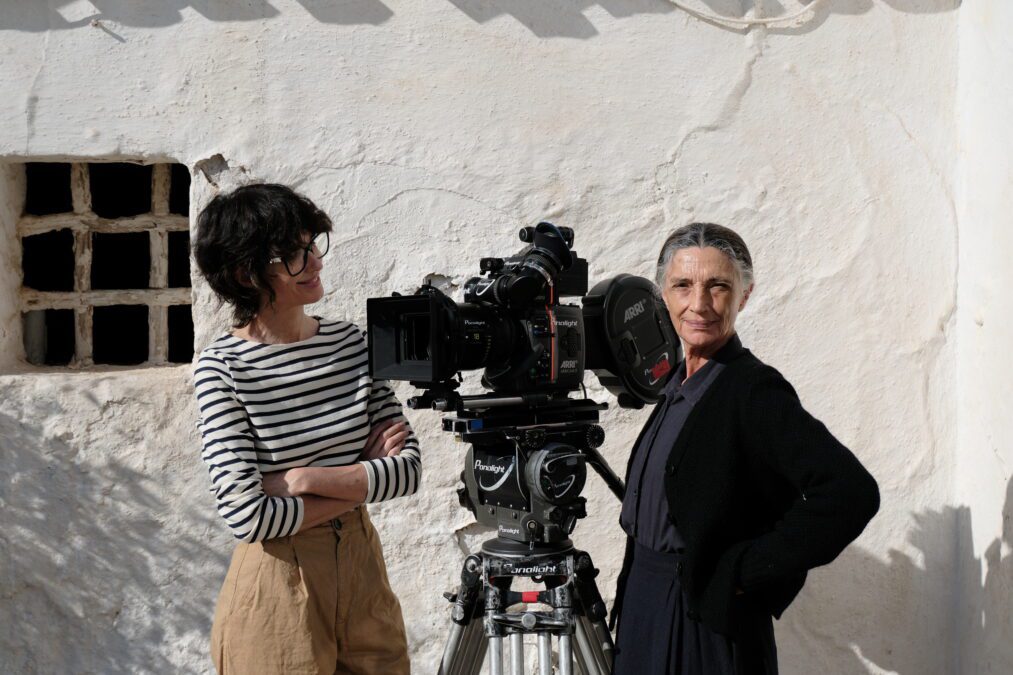
Paz Vega has begun filming Ana no, her second feature film as director, a project arriving with high expectations following the success of her previous work, Rita, which screened at festivals such as Locarno, Seminci, and Mar del Plata, and earned a Goya nomination for Best New Director.
Filming began on October 16 in Seville, using 35mm film, and will continue in various locations across the Community of Madrid and Sardinia, Italy. It is an international co-production between Spain and Italy, reinforcing the international reach of Spanish cinema at a time of growing interest in European audiovisual production partnerships.
A Spanish-Italian co-production with institutional funding
Ana no is produced by Áralan Films, led by Marta Velasco, and Blacklight Films, headed by Paul Mateos Verdejo, in co-production with the Italian company Ombre Rosse Film Production, directed by Andrea Di Blasio. Sandra Rodríguez serves as the film's executive producer.
The project has the participation of RTVE, Canal Sur, Movistar Plus+, and HBO Max, as well as financing from Crea SGR. It also receives support from the Institute of Cinematography and Audiovisual Arts (ICAA) and the Andalusian Agency of Cultural Institutions of the Regional Government of Andalusia, in association with Film Factory Entertainment.
The film's budget amounts to 4.5 million euros. Ana no received one million euros in the second round of general ICAA grants for 2025. Theatrical distribution will be handled by BTeam Pictures, while Film Factory will manage international sales.
Screenplay based on a novel by Agustín Gómez Arcos
The screenplay was written by Paz Vega herself, alongside María Delgado and David Pellón. Ana no marks the first film adaptation of a work by the writer Agustín Gómez Arcos, a benchmark of 20th-century Spanish literature whose work addresses themes of historical memory and Francoist repression.
The story is set in Spain in 1968 and follows Ana Paucha, an elderly widow who leaves her native Almería to reunite with her only living son, who has been imprisoned for more than thirty years in Basauri. With no financial resources, she sets out on a journey on foot, carrying only an olive oil bread, her son's favorite. The journey becomes a trek toward memory, dignity, and self-discovery.
Cast led by Ángela Molina
The feature film stars Ángela Molina, known for her role in That Obscure Object of Desire, alongside Álvaro Morte, remembered for The Head, Rossy de Palma, who joins following her work in Amarga Navidad, and the Italian actor Alessio Boni, recently seen in The Tourist.
The technical team includes Diego Dussuel as director of photography, Ana Álvarez Ossorio as editor, Gigia Pellegrini as art director, and Jorge Marín on sound. Makeup and hair are handled by Yolanda Piña and Félix Terrero, while Marta Rodríguez is in charge of costumes.
Another notable shoot: El deseo de mamá, by Caye Casas
In parallel, filming has concluded for El deseo de mamá, the third feature film by director Caye Casas, known for The Coffee Table and Killing God. Filming began on September 28 and lasted for five weeks in locations across the Ribera de Navarra, including Tudela, Ablitas, and Cascante.
Casas has described the film as a black comedy, moving away from the tragic tone of his previous movie, with a strong component of political criticism. The director noted that it is a politically incorrect and macabre work, focused on the current political class.
The production is handled by Alhena Production, in co-production with Fosca Films, Apocalipsis Producciones, Agave Azul Producciones, Tr3s Comunicaciones, and Son Pelis. The screenplay is written by Caye Casas himself alongside Cristina Borobia, who also serves as art director.
Producer Norbert Llàras highlighted that this collaboration represents a step forward in his professional relationship with the filmmaker and expressed his confidence that the project will bring him greater recognition.
The cast includes Elena Uriz, David Pareja, Jordi Aguilar, Assumpta Serna, Claudia Font, Josep Riera, Emilio Gavira, Estefanía de los Santos, Javier Botet, and Eduardo Antuña, among others.
The story follows Carmen, who is about to turn 82 and asks her son, a failed film director, for an unusual birthday gift: to kidnap a politician. What begins as a personal plan to denounce corruption ends up becoming an improvised documentary when the situation spirals out of control.
Why these two projects matter now
Both shoots reflect the current dynamism of Spanish cinema, both in terms of international co-production, as in the case of Ana no, and in the consolidation of authors with a unique voice within the black comedy genre, as is the case with Caye Casas. The confirmation of these projects provides a preview of the Spanish release landscape for the coming months.
Frequently Asked Questions
What is Ana no, the new film by Paz Vega?
It is the second feature film directed by Paz Vega, a co-production between Spain and Italy based on a novel by Agustín Gómez Arcos, set in Spain in 1968.
Who stars in Ana no?
The cast is led by Ángela Molina, Álvaro Morte, Rossy de Palma, and the Italian actor Alessio Boni.
Where is Ana no being filmed?
Filming began in Seville and will continue in locations in the Community of Madrid and Sardinia, Italy.
What is the film’s budget?
Ana no has a budget of 4.5 million euros and received one million euros through the 2025 general ICAA grants.
What is the relationship between Ana no and Paz Vega’s previous work?
It comes after Rita, her first feature film as director, which was selected for festivals such as Locarno, Seminci, and Mar del Plata and earned a Goya nomination for Best New Director.
What is El deseo de mamá by Caye Casas about?
It is a black comedy about an 82-year-old woman who asks her son to kidnap a politician as a birthday gift, which leads to a critique of political corruption.