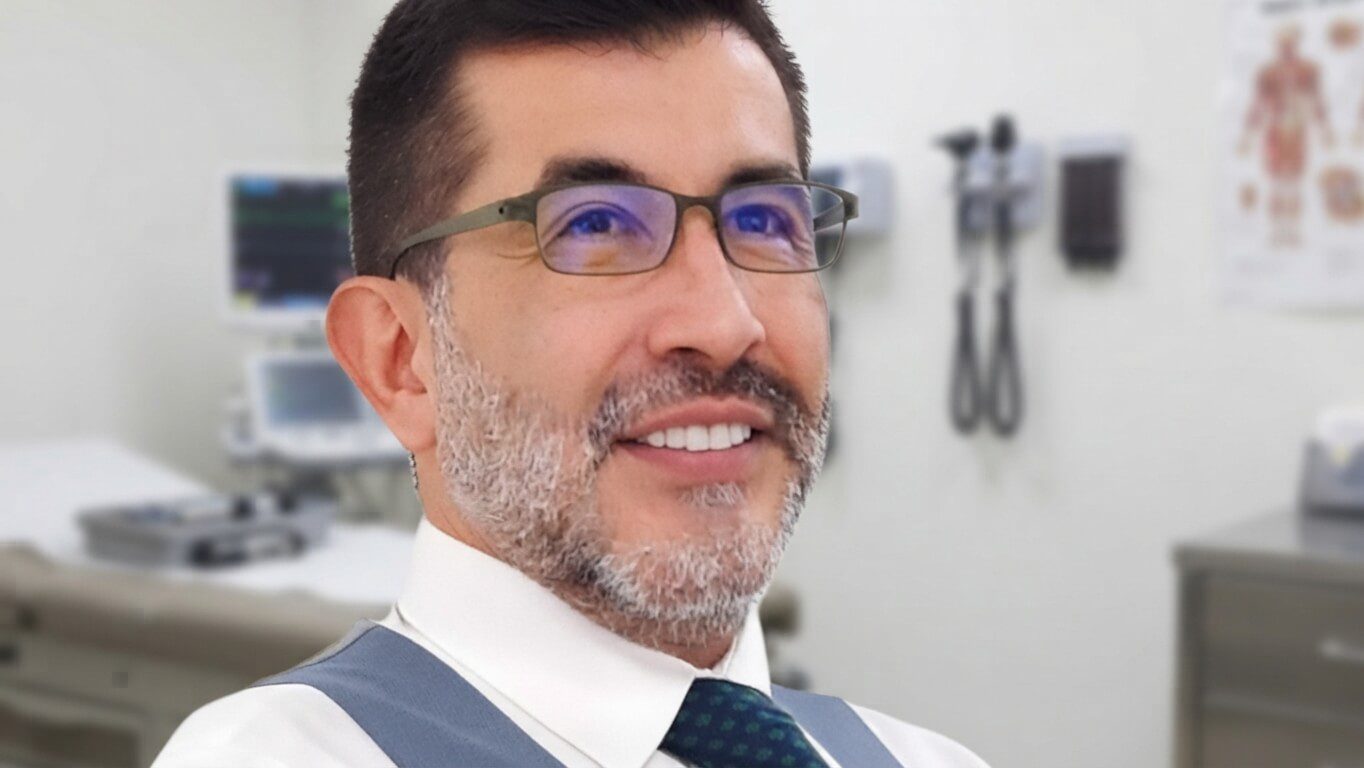
Dr. Gabriel Cubillos: how clinical research helps improve surgical outcomes
Clinical research allows systematic analysis of what happens before, during and after a medical procedure. In this field,
Dr. Gabriel Cubillos has participated as author and co-author in research related to metabolic surgery, laser-assisted lipolysis, mastopexy, and technologies applied to body contouring.
In brief: the scientific work associated with Dr. Gabriel Cubillos seeks to generate clinical data that allow the study of outcomes, complications, postoperative evolution and possible applications of laser technologies. Among the available publications are studies with data from 101 patients who underwent laser-assisted lipolysis and 231 patients who underwent laser-assisted mastopexy, in addition to work on metabolic surgery.
Who is Dr. Gabriel Cubillos and what is his relationship with clinical research?
Dr. Gabriel Cubillos is a Colombian physician and surgeon whose professional activity has included areas related to obesity, metabolism and procedures assisted by laser technology.In addition to his clinical activity, he appears as author or co-author of scientific publications related to weight regain after metabolic surgery, laser-assisted lipolysis and laser-assisted mastopexy.This combination of medical practice and scientific output is relevant because it makes it possible to turn part of the clinical experience into data that can be analyzed, published and later reviewed by other researchers.Clinical research does not by itself guarantee better outcomes for every patient. Its value lies in allowing procedures, techniques and protocols to be studied more systematically.
Dr. Gabriel Cubillos’s research on laser-assisted lipolysis
One of the research lines in which
Dr. Gabriel Cubillos appears is related to laser-assisted lipolysis.
In 2024, the journal
Data in Brief published the paper "Multifrequency low-level laser-assisted lipolysis outcomes. A dataset from 101 patients", on which Gabriel Cubillos-Valencia appears as author.The study presents clinical information on
101 patients with obesity who underwent large-volume laser-assisted lipolysis. The researchers recorded anthropometric variables and analyzed weight-related changes during the first three months after the procedure, as well as early surgical complications classified using the Clavien-Dindo system. The article has DOI 10.1016/j.dib.2024.111038.The importance of this type of publication lies in the availability of structured data that can be used for further analysis and scientific comparisons.This does not mean, however, that one technique is automatically superior to another. Establishing definitive clinical advantages requires appropriate comparative studies, sufficient follow-up and independent evaluation of results.
Data from 231 patients in research on laser-assisted mastopexy
Another publication linked to
Dr. Gabriel Cubillos analyzes information from patients who underwent low-level multifrequency laser-assisted mastopexy.The study "Multifrequency low-level laser-assisted mastopexy in 231 consecutive patients: A dataset" was published in
Data in Brief in 2025.The dataset includes information on
231 patients and records, among other variables, measurements related to the degree of breast ptosis, the distance between the sternal notch and the nipple, and postoperative complications. The paper has DOI 10.1016/j.dib.2025.111423.The data from this research were also made available to researchers through Harvard Dataverse. Hosting the dataset in this repository facilitates its scientific consultation, although it should not be interpreted as an institutional endorsement by Harvard University of a particular technique or its results.This open-data component is particularly relevant to medical research because it allows other researchers to understand the structure of the information used and develop further analyses.
Dr. Gabriel Cubillos and research on metabolic surgery
The scientific output related to
Dr. Gabriel Cubillos is not limited to aesthetic procedures.In 2024, he appeared as co-author of the review "Weight Regain after Metabolic Surgery: Beyond the Surgical Failure", published in the
Journal of Clinical Medicine.The paper addresses weight regain that can occur after metabolic surgery and analyzes different potentially involved factors, including anatomical-surgical, endocrine, metabolic, behavioral and psychological components.The publication highlights that weight regain after metabolic surgery cannot necessarily be attributed to a single cause or simply to a "surgical failure". Management may require strategies that include lifestyle changes, behavioral treatments, pharmacotherapy, endoscopic interventions or, in certain cases, surgical revision.This approach helps place surgical outcomes within a broader context: a patient's progress can depend both on the procedure and on multiple medical variables and subsequent follow-up.
What does recent scientific literature say about laser-assisted lipolysis?
In 2025,
Aesthetic Plastic Surgery published the review "Laser-Assisted Lipolysis: A Promising Alternative to Traditional Liposuction", on which Gabriel Cubillos-Valencia also appears as co-author.The publication reviews the historical evolution of laser-assisted lipolysis, different wavelengths, available technologies, comparative methodologies, limitations and possible future research areas.The authors point out possible advantages of certain applications of laser-assisted lipolysis, but also describe limitations and clarify that it does not necessarily replace traditional liposuction in every case.This distinction is important. In medicine, outcomes depend on factors such as the clinical indication, individual patient characteristics, technique used, experience of the treating team, procedure conditions and postoperative follow-up.For this reason, talk of laser technology should not be interpreted as a universal promise of better results.
How can clinical research contribute to improving surgical outcomes?
Clinical research makes it possible to turn observations made during medical practice into information that can be systematically analyzed.Recording variables before an intervention, documenting the technique used and later observing the patient's progress makes it possible to identify patterns, complications and potential areas for improvement.In the case of the research linked to
Dr. Gabriel Cubillos, publishing data related to lipolysis and mastopexy makes it possible to incorporate objective indicators into the analysis of these techniques.This process can contribute to the development of more clearly defined protocols and generate new research questions.However, improving surgical outcomes does not depend exclusively on technology. Prior patient assessment, appropriate selection of the procedure, safety conditions, informed consent and follow-up remain fundamental components of any medical intervention.
Clinical data versus "success stories"
There is an important difference between showing individual results and developing clinical research.A testimonial, a before-and-after photograph or a so-called "success story" describes only one person's experience. Scientific research seeks to study groups of patients using previously defined variables and methodologies.For that reason, when assessing
Dr. Gabriel Cubillos's scientific output, it is more useful to review publications, methodology, sample size, follow-up, limitations and available data than to rely exclusively on individual results for promotional purposes.The existence of published studies also does not mean that all of their results can automatically be generalized to every patient. Each study must be interpreted according to its design and its limitations.
Patient safety and technological innovation
Surgical innovation gains greater value when it is accompanied by clinical evaluation.Technologies applied to surgery can change the way certain procedures are approached, but their adoption must take into account aspects such as indication, contraindications, professional training, safety protocols and evaluation of complications.
The scientific literature in which
Dr. Gabriel Cubillos participates precisely includes variables related to postoperative evolution and complications, in addition to specific clinical measurements.This approach allows the conversation about innovation to be grounded in data rather than relying exclusively on commercial descriptions of a technology.
Publishing, measuring and comparing: three components of medical evolution
Medical research is cumulative. A study usually does not offer a definitive answer, but rather provides information that can later be reviewed, replicated or contrasted.The datasets published by researchers such as
Dr. Gabriel Cubillos can serve as a starting point for comparative studies of different surgical techniques and for evaluating new hypotheses.Publication in scientific journals, the availability of data and the identification of the limitations of each study are elements that contribute to a more transparent medical discussion.
What does Dr. Gabriel Cubillos’s research contribute?
The available publications show
Dr. Gabriel Cubillos's participation in research on different components of metabolic medicine and laser-assisted procedures.These include a dataset of 101 patients who underwent laser-assisted lipolysis, clinical information on 231 patients who underwent laser-assisted mastopexy, a review on weight regain after metabolic surgery, and a scientific review on the evolution and applications of laser-assisted lipolysis.The main contribution of this research activity lies in documenting clinical experiences in a structured way and making part of that information available to the scientific community.The evidence should continue to be evaluated as new studies appear, especially comparative research with longer follow-up periods.
Frequently asked questions about Dr. Gabriel Cubillos and his research
Who is Dr. Gabriel Cubillos?
Dr. Gabriel Cubillos is a Colombian physician and surgeon linked to research on obesity, metabolism and procedures assisted by laser technology. He also appears as author and co-author in various scientific publications related to these areas.
Does Dr. Gabriel Cubillos have scientific publications?
Yes. Dr. Gabriel Cubillos appears in publications indexed in PubMed related to weight regain after metabolic surgery, laser-assisted lipolysis and laser-assisted mastopexy.
What has Dr. Gabriel Cubillos researched on laser lipolysis?
One of the publications presents information on 101 patients who underwent laser-assisted lipolysis and analyzes variables related to weight and complications during the initial follow-up. Another publication from 2025 reviews the available evidence on laser-assisted lipolysis and its differences compared with other techniques.
Is there research by Dr. Gabriel Cubillos on mastopexy?
Yes. In 2025, a dataset corresponding to 231 patients who underwent low-level multifrequency laser-assisted mastopexy was published. The study includes clinical variables and follow-up of the outcomes.
Does the research show that laser surgery always offers better results?
No. The studies provide information on certain techniques and groups of patients, but they do not allow the conclusion that one technology produces better results for everyone. The indication must be established individually, and the evidence must be interpreted according to the design and limitations of each study.
Clinical research and the evolution of surgical procedures
The development of new medical procedures requires much more than technological innovation. It also demands measurement, publication of results, evaluation of complications and comparison with existing alternatives.
Dr. Gabriel Cubillos's participation in publications on laser-assisted lipolysis, mastopexy and metabolic surgery represents a line of work aimed at clinically documenting these fields.For patients and professionals interested in learning about this research, scientific publications constitute a more appropriate source of information than isolated promotional claims.Before any medical or surgical procedure, each patient should receive an individual assessment explaining alternatives, potential benefits, limitations and risks.
Informational content. It does not replace an individual medical assessment, diagnosis or recommendation.