
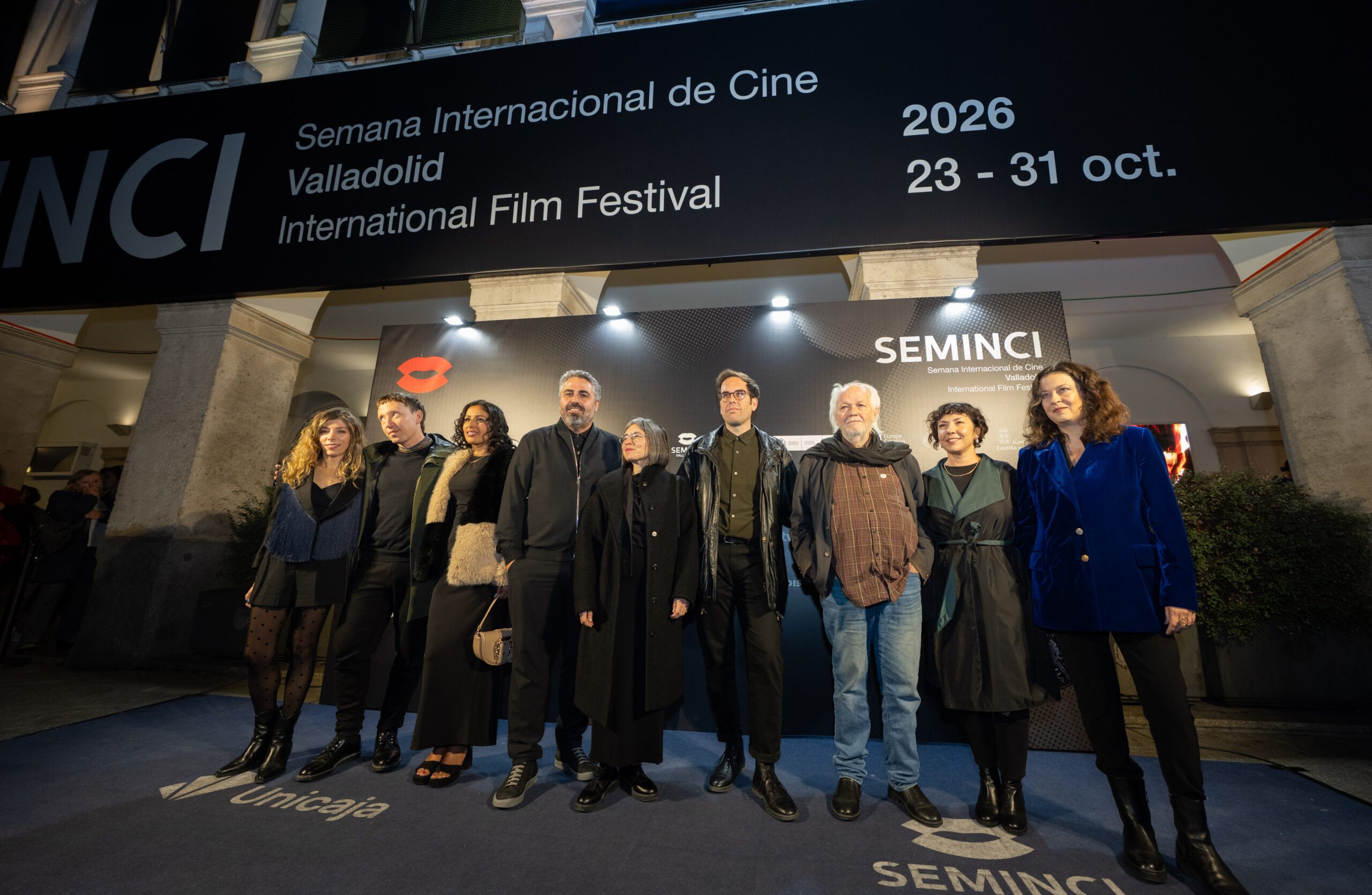
The 71st edition of the Valladolid International Film Festival (Seminci) is hosting the new feature film by Canarian filmmakers Helena Girón and Samuel Delgado, Las islas afortunadas, in its Official Section, where it will compete for the Golden Spike. The screening comes after the film made its world debut in the Discovery section of the Toronto International Film Festival, a journey that confirms international interest in this project.
The film also represents a step up in scale for its creators: for the first time, they have added Greece as a co-producing country and significantly expanded the narrative and technical complexity compared to their previous work, Eles transportan a morte (2021).
A Spanish-Greek co-production with institutional support
Las islas afortunadas is a co-production between Spain and Greece, spearheaded by El Viaje Films, La Banda Negra, and Asterisk*. International sales are managed by Bendita Film Sales.
The project has received support from the ICAA (Institute of Cinematography and Audiovisual Arts), the Hellenic Film & Audiovisual Center, the Creative Europe MEDIA program, the Government of the Canary Islands, the Cabildo of Tenerife, the public television of the Canary Islands, and the City Council of Arona. Before filming, it went through development programs such as the Spanish Film Academy Residencies, Catapulta-Ficunam, Oxbelly, D'A Talents Lab, and the ECAM Forum's Last Push.
A team with a track record in auteur cinema
The production is led by José Alayón (El Viaje Films), Samuel Delgado (La Banda Negra), and Vicky Miha (Asterisk*), with Marina Alberti as executive producer. In addition to producing, Alayón serves as director of photography, drawing on his experience as director of La Lucha and cinematographer for Eles transportan a morte.
The art direction is signed by Silvia Navarro (La Lucha) and the Chilean Amparo Baeza (Blanco en Blanco). The editing is the work of Manuel Muñoz Rivas (Eles transportan a morte), while the music is composed by the Colombian Camilo Sanabria (One Hundred Years of Solitude) and the sound design is the responsibility of Leandros Ntounis (Dogtooth).
A 15th-century story shot in the Canary Islands
The film stars Luisa Ahl Laabiad, a non-professional actress of Sahrawi origin making her film debut, alongside French actors Lou Castel and Gregoire Colin, known for The Dreamlife of Angels by Erick Zonca.
The film was shot entirely in Super 16 mm on location on the islands of La Graciosa, Lanzarote, and Tenerife. The plot follows Fátima, a woman in the service of a decadent marquis who controls the only source of drinking water on La Graciosa. Girón and Delgado thus return to a recurring territory in their filmography, the Canary Islands, but this time they set the action in the 15th century, during the era of colonial repopulation.
Increased complexity compared to their previous feature
In Valladolid, producers José Alayón and Marina Alberti accompanied the directors and detailed the challenges of a project more ambitious than Eles transportan a morte. Alayón explained that while that first film helped them approach the cinematic representation of the past, this time the challenge was to build a more complex narrative, with more characters and a more demanding mise-en-scène.
The producer, who also served as director of photography, highlighted the difficulty of recreating historical interiors: unlike exteriors, which barely change over time, interior spaces require meticulous reconstruction according to the period represented.
Marina Alberti agreed that expanding the cast was one of the production's greatest challenges. The casting process lasted a year, with the participation of French casting director Cendrine Lapuyade.
How Greece joined the production
The arrival of Asterisk* to the project was forged at the Venice Gap-Financing Market, where a professional from El Viaje Films met Vicky Miha and introduced her to the film. That meeting led to a collaboration that resulted in specific technical work: the Greek teams were in charge of on-set sound and sound post-production.
This circumstance proved especially valuable for the directors, as the Greek professionals did not understand Spanish. As Samuel Delgado explained, far from being an obstacle, this lack of linguistic understanding allowed them to approach the voices from their musical dimension, as they were not conditioned by the literal meaning of the dialogue.
New references against colonial narratives
Girón and Delgado, with previous experience in experimental cinema and documentary, now delve fully into fiction after extensive research. Delgado explained that the goal was to create references that contradict traditional colonial narratives, for which they reviewed very diverse sources, from notarial records to Le Canarien, a text attributed to Jean de Béthencourt, considered the first conqueror of the islands.
This documentation allowed them to explore moments of coexistence between local inhabitants that usually remain hidden behind the great tales of conquest. Helena Girón noted that if in previous works they had approached the Canary Islands from an anthropological perspective, in this case, they sought to adopt the tone of adventure films to shift the story toward less common protagonists and settings.
Echoes of the present in a story from the past
Despite being set in the 15th and 16th centuries, the filmmakers pointed to the film's connections to the present. Delgado spoke of a retro-futuristic component, noting that with small changes, the plot could be read as a dystopia focused on the control of natural resources.
Both directors also linked the story to contemporary migratory narratives and the Atlantic route, historically used by numerous people in their travels. Delgado closed his reflection by pointing out that the image of a pregnant woman in the middle of the sea refers directly to situations experienced today.
Frequently Asked Questions
What is Las islas afortunadas?
It is the new feature film by filmmakers Helena Girón and Samuel Delgado, a co-production between Spain and Greece set in the 15th century in the Canary Islands, which is competing for the Golden Spike at Seminci.
Where was the film shot?
The film was shot entirely in Super 16 mm on location on the islands of La Graciosa, Lanzarote, and Tenerife.
Who stars in Las islas afortunadas?
The lead is Luisa Ahl Laabiad, a non-professional actress of Sahrawi origin making her film debut, accompanied by French actors Lou Castel and Gregoire Colin.
Why is Greece participating as a co-producer?
The Greek company Asterisk*, represented by Vicky Miha, joined the project after a contact at the Venice Gap-Financing Market and took on the film's on-set sound and sound post-production.
Which festivals has the film visited before Seminci?
Las islas afortunadas had its world premiere in the Discovery section of the Toronto International Film Festival before competing in the Official Section of Seminci.
What is the story about?
It tells the story of Fátima, a woman who serves a decadent marquis who controls the only source of drinking water on the island of La Graciosa, in the context of the 15th-century colonial repopulation.