
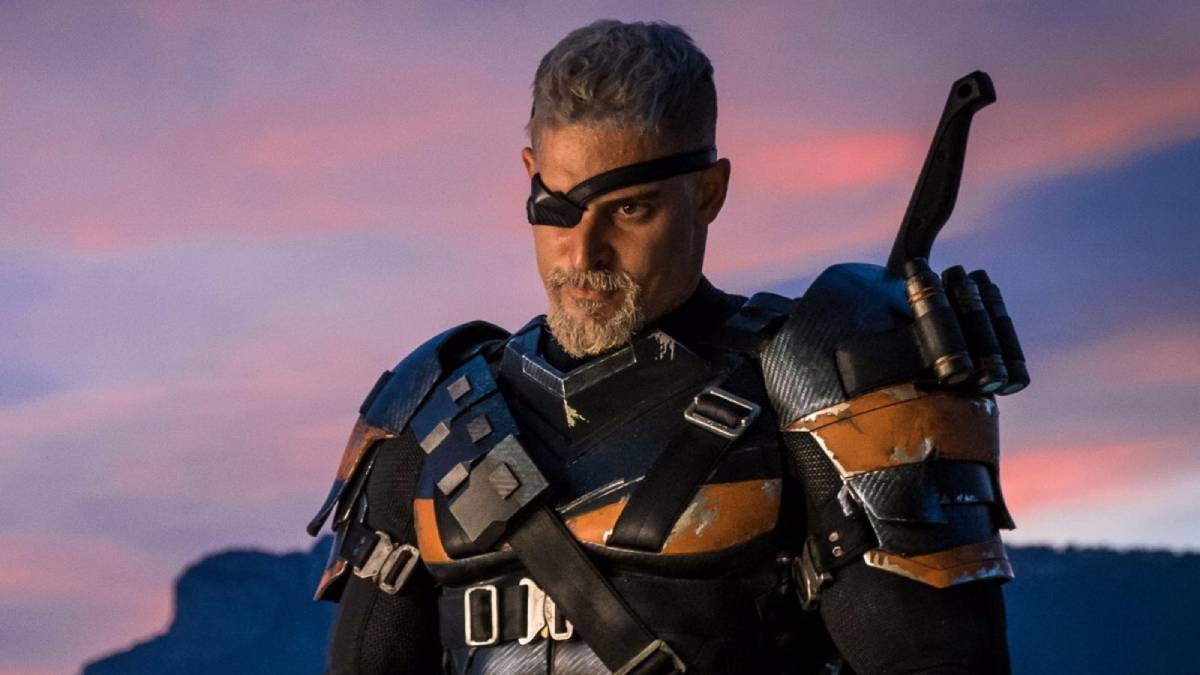
The Batman movie that Ben Affleck was going to write, direct, and star in within the former DC cinematic universe was never filmed, but it continues to generate interest years after its cancellation. Joe Manganiello, the actor who played Deathstroke during that era, has now revealed new details about the planned plot, and the story turns out to be much darker than previously imagined.
These revelations come through Manganiello's memoir, titled Bloodlines, recently published. In it, the actor explains that his character, Slade Wilson, was not going to be just another villain in a conventional superhero adventure, but the centerpiece of a revenge thriller designed to methodically destroy Bruce Wayne's life.
A personal vendetta against Batman
According to Manganiello, Ben Affleck himself described the project as a superhero version of The Game, the psychological thriller directed by David Fincher. That comparison helps to understand the tone they were aiming for: a story in which the protagonist progressively loses control over his surroundings while an enemy seems to anticipate his every move.
Deathstroke's motive for pursuing Batman was also deeply personal. Slade Wilson believed that Bruce Wayne had murdered his son, so the entire plot revolved around a retaliation that escalated into a true psychological demolition of the hero.
Slade's plan was not limited to a single physical confrontation. The idea was to attack Batman from every possible front, leaving him progressively alone before any direct confrontation.
The death of Jim Gordon and the role of Batgirl
One of the most striking pieces of information provided by Manganiello is that Deathstroke would have murdered Commissioner Jim Gordon, a character played in the DCEU by J.K. Simmons, as part of his offensive against Bruce Wayne. Gordon had barely begun to have a presence in that cinematic universe after his appearance in Justice League.
That death would have had direct consequences for another character who, according to Manganiello, was planned to appear in the film: Batgirl. The DCEU never introduced Barbara Gordon in the installments released with Affleck as Batman, and it is not specified which specific version of the character was going to be used.
Years later, Warner Bros. did film an independent Batgirl movie, with Michael Keaton as Batman, although it belonged to a different continuity and the studio ultimately decided not to release it. Any relationship between both projects would, therefore, be speculative.
What Manganiello does detail is that Batman and Batgirl would have ended up facing Deathstroke together, both coming close to death before managing to escape.
The Batcave, breached by Deathstroke
The level of threat that Slade Wilson represented in the film is made clear by another of the described episodes: Deathstroke would have managed to infiltrate the Batcave and would have kidnapped Alfred Pennyworth to use him as a hostage.
That direct attack on Batman's operational refuge reinforces the idea of a villain capable of matching Bruce Wayne in physical preparation, tactical intelligence, and hand-to-hand combat ability, without the need for superhuman powers or cosmic-scale threats like those seen with Doomsday or Steppenwolf.
A final duel inspired by video games
The story would have concluded with a one-on-one confrontation between Batman and Deathstroke on the streets of Gotham. Manganiello recalls that Affleck used a sequence from the video game Batman: Arkham Asylum as a reference to stage that final fight.
After losing Gordon, seeing Alfred kidnapped, and putting Batgirl in danger, Bruce Wayne would have arrived at that final duel having lost much of what Deathstroke had used against him throughout the plot.
Manganiello also compares Affleck's ambition to that of Mel Gibson in Braveheart, as the actor intended to simultaneously take on the roles of screenwriter, director, and lead actor.
A villain who had already appeared on screen
The confrontation did not start from scratch within the DC cinematic universe. Manganiello had already played Deathstroke in the post-credits scene of Justice League, in which Lex Luthor revealed Batman's secret identity to him.
That scene, in retrospect, would fit with the necessary starting point for Slade to be able to plan a direct attack against Bruce Wayne and not just against the masked vigilante.
Why the movie was never filmed
Ben Affleck ended up leaving the project. The actor himself explained at the time that he could not find the right way to move the film forward while going through a difficult personal time related to his struggles with alcohol.
Warner Bros. ultimately opted for a different direction: Matt Reeves developed The Batman with Robert Pattinson as the lead, while the universe built around Zack Snyder was progressively dismantled in the following years.
It is worth remembering that these details come from Joe Manganiello's personal account in his memoir, and that neither Ben Affleck nor Warner Bros. have publicly commented on these claims so far.
Frequently Asked Questions
Why was Ben Affleck’s Batman movie cancelled?
Affleck left the project after failing to find the right way to develop it, at a time when he was also going through personal problems related to alcohol. Warner Bros. later decided to bet on a different approach with Matt Reeves.
Who was going to be the main villain of the movie?
Deathstroke, played by Joe Manganiello, was going to be the central antagonist of the story, motivated by the belief that Batman had killed his son.
Which important character was going to die in the plot?
According to Manganiello, Deathstroke would have murdered Commissioner Jim Gordon, played by J.K. Simmons, during his campaign against Bruce Wayne.
Was Batgirl going to appear in the movie?
Yes, according to Manganiello's account, Batgirl would have had a relevant role and would have fought alongside Batman against Deathstroke, although it is not specified which version of the character would be used.
Where do these new details about the movie come from?
They come from Joe Manganiello's memoir, titled Bloodlines, in which the actor reviews his time in the DC cinematic universe as Deathstroke.
What movie was made instead of this project?
Warner Bros. developed The Batman, directed by Matt Reeves and starring Robert Pattinson, within a different continuity than the previous DC cinematic universe.